
24/7 Customer Support

Free returns

Same-day & Next-day Delivery

Quality Guaranteed

Unlock Your Welcome Offers: FREE Delivery | Up to 80% OFF | Free 30-day JoyPlus trial
Download the APP
From powering your laptop to charging your electric car, the humble charging cable has become an essential part of modern life in the UK. Yet, buying a replacement is often a frustrating experience. Many cables promise high speeds but deliver a trickle of power, while others fray and fail within months. This guide cuts through the marketing jargon to help you identify the key features that matter, ensuring you get a reliable cable that performs as expected.
Before you add another cable to your basket, let's look at the common pitfalls that lead to disappointment and wasted money.
To make an informed choice, you need to look past the packaging and focus on three core parameters. Understanding these will ensure the cable you buy is compatible, safe and built to last.
The single most important factor is the cable's power handling capability. This determines how quickly it can charge your device.
Ensure the connectors on the cable match your device and power source.
A cable's lifespan is directly related to its construction. Look for features that indicate enhanced durability.
Instead of a one-size-fits-all approach, we have matched a few standout options to specific user needs.
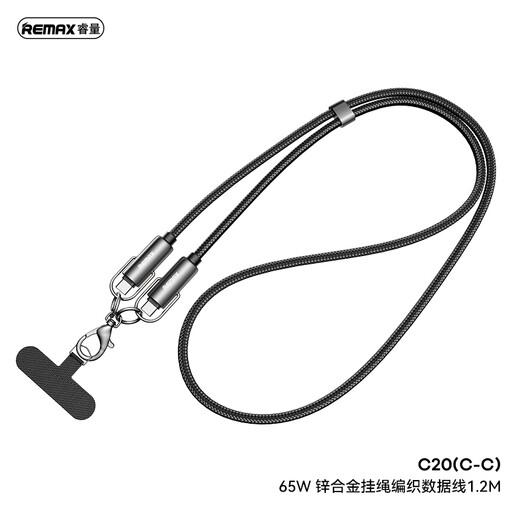
Why This Fits Their Persona: This is an ideal upgrade from the standard cables that come with phones and tablets. It's perfect for someone in the UK who needs a reliable cable for charging their laptop, phone and other USB-C gadgets at home or in the office without paying for extreme power they don't need.
The braided nylon exterior directly counters the flimsy construction flaw, preventing fraying. Its clear 65W power rating also avoids the vague "fast charging" trap, confirming its suitability for many laptops.
Durable zinc alloy connectors and a clever adjustable collar for strain relief enhance its lifespan. It also supports high-speed data transfer for syncing files.
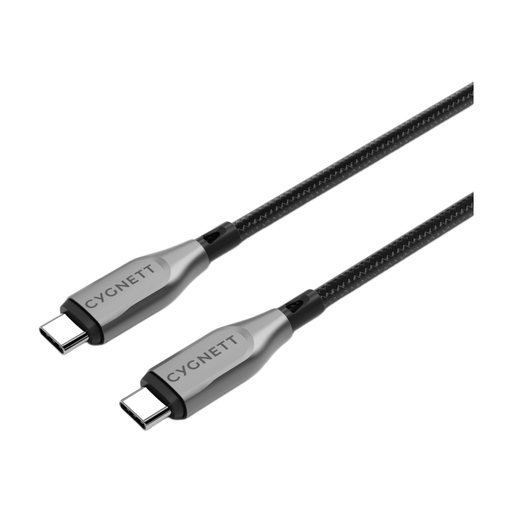
Why This Fits Their Persona: For professionals, creatives and tech enthusiasts who rely on high-performance laptops and need rapid data transfers. This user cannot afford downtime from a failed cable or slow charging.
This is a true armoured cable, reinforced with aramid fibre to prevent breakage. It delivers a genuine 100W of power, satisfying the needs of the most demanding laptops and eliminating any "fast charging" ambiguity.
It supports 10Gbps data transfer speeds, which is up to 20 times faster than standard USB 2.0 cables. The metallic alloy connectors and double-braided exterior provide superior durability.
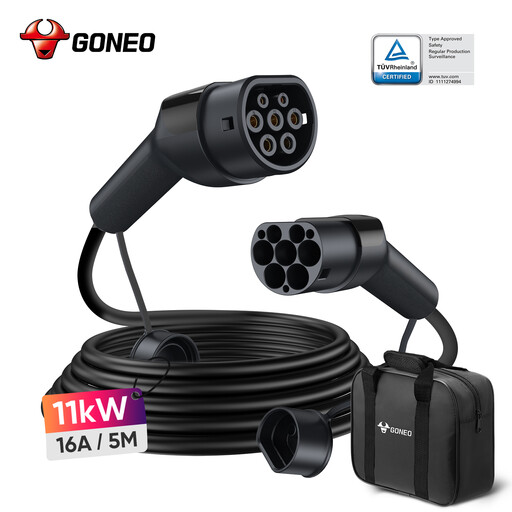
Why This Fits Their Persona: For the growing number of UK drivers with an electric vehicle (EV) or plug-in hybrid (PHEV). They need a safe, robust and correctly specified cable for charging at home or at the thousands of public charging points.
This cable is independently certified (T?V, CE and UKCA), addressing the critical safety pitfall. It has a clear 11kW power rating, ensuring users can match it to their vehicle's capabilities for optimal charging speed.
It features a durable, all-weather TPU jacket and an IP54 rating for dust and water resistance. The 5-metre length is practical for most home and public charging situations.
We have compiled a complete, real-time list of products that fully satisfy these strict selection criteria and UK safety regulations.
1. How do I know which EV charging cable is right for my car? The most important step is to check your vehicle's specifications for its maximum AC charging rate, also known as the on-board charger (OBC) capacity. This is usually 7.2kW, 11kW or 22kW. For the fastest possible charge, choose a Type 2 EV charging cable with a kW rating that matches or exceeds your car's OBC rating. For example, if your car has an 11kW OBC, an 11kW or 22kW cable will allow it to charge at its maximum speed, but a 7.2kW cable will act as a bottleneck.
2. Is a 100W USB-C cable safe to use with my 25W smartphone? Yes, it is perfectly safe. Modern devices and chargers communicate to determine the correct amount of power. A 100W USB C cable is simply capable of handling up to 100 watts. When you plug it into a smartphone that only requires 25W, the phone will only draw 25W. Using a higher-rated cable is a good way to future-proof your purchase for more powerful devices later on.
3. Why do my braided charging cables still break at the end? While a braided charging cable provides excellent protection along its length, the joint between the cable and the connector head remains a point of high stress. To maximise lifespan, look for cables that feature extended, flexible strain relief at this joint. This small rubber or silicone collar absorbs the stress from bending and pulling, significantly reducing the chances of the cable fraying or breaking internally.