Phone-first short-trip travellers
A power bank and the right phone cable can cover charging away from a socket during a delay, connection or onward journey. Check the battery’s Wh marking and the operating airline’s rules before choosing one.


Choose a power bank for charging away from a socket, but check its watt-hour (Wh) marking and every operating airline’s current rules before relying on it during a journey. A multi-port wall charger is useful where a socket is available; cables must fit your devices, and any travel adapter must suit the destination socket and the charger’s input range. Keep a power bank accessible in cabin baggage, as the UK Civil Aviation Authority says it must not go in checked luggage.
A power bank and the right phone cable can cover charging away from a socket during a delay, connection or onward journey. Check the battery’s Wh marking and the operating airline’s rules before choosing one.
Compare a power bank’s USB-C output with the laptop’s charging requirements rather than judging it by battery capacity alone. A multi-port wall charger is a separate option for charging several devices when a socket is available.
Check the sockets where you expect to charge, including on the return journey, and match them to your adapter and charger. Airline rules and airport procedures may also differ along the itinerary.
Work out where you will charge, which devices must connect at the same time, and which airline and destination conditions apply before choosing the accessories.
| Priority | What to check | Your needs |
|---|---|---|
| Power-bank carriage | Find the battery’s Wh marking. Check each operating airline’s current capacity, quantity, storage and in-flight-use rules; the UK Civil Aviation Authority says power banks belong in the cabin, not checked luggage. | I need power at the gate or after landing, but I also need somewhere permitted and accessible to carry the battery. I cannot assume it may be used during the flight. |
| Device charging | Match the port and cable to each device. Check stated output for the device you intend to charge and how output is allocated when several ports are in use. | My phone, tablet and laptop may need charging on the same trip; a capacity figure or port count alone will not tell me whether the setup meets each device’s requirements. |
| Destination sockets | Check the destination’s plug type and electrical standards, as advised by the International Electrotechnical Commission. Compare the charger’s stated input-voltage range and the adapter’s supplied plug heads. | Where will I need a wall socket, including on the way home? I want an adapter that fits those locations without assuming plug fit settles electrical compatibility. |
| Accessible packing | Keep devices charged enough to switch on if requested. Protect electronics while keeping the power bank easy to remove if a cabin bag is placed in the hold. | I want to reach my phone, laptop and battery without unpacking everything. GOV.UK says a device that cannot switch on when requested will not be allowed onto the aircraft. |
Capacity expressed in mAh does not replace the Wh figure needed to check an airline’s battery rule. Airlines may also set conditions on storage and use.
Find the model’s Wh marking and compare it with every operating airline’s current policy before buying. The UK Civil Aviation Authority says to carry power banks in the cabin, not in checked luggage.
A change to how your cabin bag is carried can leave the power bank in the wrong place. British Airways directs passengers to keep power packs in their smaller under-seat item; Ryanair says power banks must not be in cabin baggage stored in overhead lockers.
Pack the battery where you can remove it promptly, and follow the storage rule of the airline operating each flight.
A charger’s maximum output may not describe what each connected device receives when several ports are occupied.
Check the exact model’s per-port and simultaneous-output specifications against the charging requirements of the devices you plan to connect together.
Socket fit does not establish that a charger accepts the local supply. Adapter safety also matters: the UK Office for Product Safety and Standards reported an electric-shock risk for a specific international travel adaptor with accessible live parts.
Check destination plug and voltage information, your charger’s stated input range, and current official product-safety alerts for the adapter you are considering.
Anker UK lists the Nano A1259 power bank with a built-in USB-C cable, 10,000mAh capacity and 30W bidirectional charging.
Belkin UK describes its BPB044 power bank as a 10,000mAh model with up to 60W USB-C charging, two USB-C ports and one USB-A port.
UGREEN UK lists travel chargers for socket-based charging and advises choosing by carried devices, required ports and destination plug type.
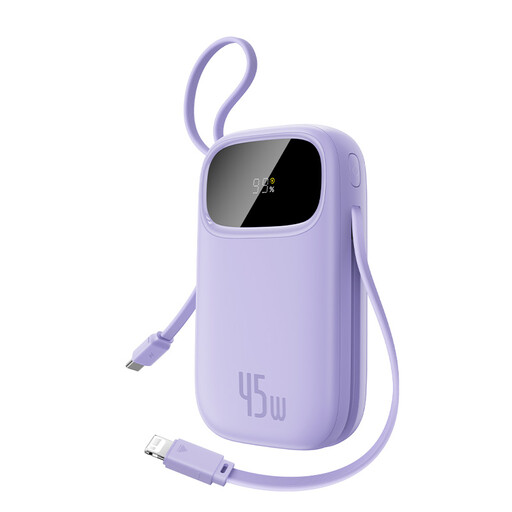
This portable option addresses charging away from a wall socket during a journey. Check its battery marking, your devices and the operating airline’s rules before relying on it.
 No image available
This power bank is an option for charging away from a socket if its cables fit your devices. Check its Wh marking and the operating airline’s carriage and use conditions; the listed 45W figure alone does not establish laptop compatibility.
No. The UK Civil Aviation Authority says power banks must stay with you in the cabin, not in checked luggage. Check the operating airline’s instructions for where to keep yours within the cabin.
Check the power bank’s Wh marking against the current rules of every operating airline, rather than relying only on its mAh label. Also check any conditions on quantity, storage and in-flight use.
Check the operating airline before planning to do so. easyJet says power banks must not be used to charge other devices or recharged while onboard; its rule should not be assumed to describe every airline’s policy.
Yes. GOV.UK says an electronic device that does not switch on when requested will not be allowed onto the aircraft. Heathrow Airport also asks passengers to ensure electronic devices are fully charged.
Do not assume it will. Check the socket type and electrical standards for each place where you expect to charge, then compare them with the adapter’s plug heads and the charger’s stated input-voltage range. The International Electrotechnical Commission advises checking destination plug types, voltages and standards.