High-protein, reduced-fat cheddar is worth comparing if you want cheese as one part of a post-workout snack, but check saturated fat, salt and the amount you will eat rather than relying on the front-of-pack description. If quick refuelling matters, the British Dietetic Association advises carbohydrate-rich food and fluids after exercise; cheddar should not be your only consideration. Dairy cheddar is unsuitable for someone with a milk allergy.
Who is this choice for?
The useful comparison depends on whether you are planning a whole snack, watching particular label values or checking an allergen.
People adding cheese to a post-training snack
Cheddar can be the cheese component of a snack or meal. When quick refuelling is important, the British Dietetic Association advises starting with carbohydrate-rich food and fluids after exercise, while University College London Hospitals describes snacks containing carbohydrate and protein around exercise.
Shoppers comparing fat and salt
A high-protein or reduced-fat description does not settle what the saturated-fat and salt figures say. Compare both per 100g and consider the portion you intend to eat.
Shoppers checking lactose and milk ingredients
Lactose-free cheddar can still contain milk. Tesco’s listing for Arla Lactofree cheddar explicitly says it is unsuitable for people with a milk allergy, so check the current pack’s allergen declaration rather than treating “lactose-free” as “dairy-free”.
What should you check?
Start with the role cheddar will play in the snack, then compare labels on the same per-100g basis and check the portion you plan to use.
| Priority | What to check | Your needs |
|---|
| Protein and refuelling |
Compare protein per 100g. Plan the rest of the snack separately: the British Dietetic Association advises carbohydrate-rich food and fluids when quick recovery is required. |
I want cheese to contribute to a post-training snack, without relying on it for every part of that snack. |
| Fat and saturates |
Read total and saturated fat per 100g, not just “half-fat” or “lighter”. The NHS classifies more than 5g saturated fat per 100g as high. |
If I eat cheddar regularly, I want to compare the actual saturated-fat figure as well as any reduced-fat description. |
| Salt |
Compare salt per 100g and for the amount you will eat. The NHS classifies more than 1.5g salt per 100g as high; ASDA Groceries lists 1.9g per 100g for ASDA Protein Half Fat Mature Cheddar. |
A protein-focused label should not distract me from checking how much salt is in my portion. |
| Portion format |
Check the pack size and any per-portion figures against the amount you intend to use. Sainsbury’s lists 6.1g protein per 20g block for Cathedral City High Protein Half Fat mini blocks. |
I would find a measured portion useful, or I can cut the amount I want from a larger block. |
| Milk ingredients |
Read the current allergen declaration. A lactose-free cheddar may still contain milk; the Tesco listing for Arla Lactofree cheddar says it is unsuitable for people with a milk allergy. |
If I need to avoid milk, a lactose-free claim alone does not answer my ingredient question. |
Common buying mistakes
-
Treating high-protein cheddar as the whole recovery snack
Protein is only one consideration when quick refuelling is needed. The British Dietetic Association specifically advises carbohydrate-rich food and fluids as soon as possible after exercise in that situation.
Decide what else the snack needs to include, rather than choosing the cheese in isolation.
-
Reading “half-fat” as low in salt or saturated fat
A reduced-fat comparison does not describe every nutrient. ASDA Groceries lists 1.9g salt per 100g for ASDA Protein Half Fat Mature Cheddar, above the NHS high-salt threshold of 1.5g per 100g.
Check the saturated-fat and salt figures per 100g, then relate them to the amount you will eat.
-
Confusing lactose-free with dairy-free
A cheddar made from milk can be labelled lactose-free without being suitable for someone with a milk allergy. Tesco’s Arla Lactofree cheddar listing explicitly warns against that use.
For a milk allergy, do not choose dairy cheddar on the strength of a lactose-free claim; check the current allergen declaration.
-
Relying on the online listing when eating the cheese
The pack is the practical place to check the particular cheese you have bought, including its ingredients, nutrition, date and storage instructions.
Read its current label before use, especially when an allergen or portion figure affects your choice.
Cheddar brands and retailer references
These references describe particular listed products or formats, not every cheese made or sold under each name.
ASDA
ASDA Groceries lists a Protein Half Fat Mature Cheddar block alongside standard mature cheddar, making their per-100g figures useful to compare.
- Its Protein Half Fat Mature Cheddar listing gives 33g protein and 15g fat per 100g.
- The same listing gives 1.9g salt per 100g, above the NHS high-salt threshold.
Cathedral City
The listed High Protein Half Fat Mature Cheddar comes in grated and individually portioned formats.
- Tesco lists 30g protein per 100g for the grated product; Sainsbury’s lists 6.1g protein per 20g mini block.
- Check the label for the particular format and portion rather than transferring one pack’s figures to another.
Sainsbury’s
Sainsbury’s Lighter Mature Cheese is a block option for shoppers comparing reduced-fat mature cheese.
- Sainsbury’s describes it as having 30% less fat than its own standard mature cheddar.
- That comparison alone does not establish its saturated-fat or salt classification; read the pack values separately.
Pilgrim’s Choice
The 550g Mature Cheddar listed by ASDA Groceries provides a standard mature-cheddar comparison.
- Its listing gives 25.4g protein per 100g.
- The same listing gives 34.9g fat and 21.7g saturated fat per 100g.
Applewood
Applewood Original Slices are an option to consider when that particular cheese and sliced format appeal.
- Applewood’s product information lists 24.9g protein per 100g.
- It also lists 34.5g fat and 21.6g saturated fat per 100g.
Tesco
Tesco is a retailer reference for the listed Cathedral City High Protein Half Fat grated cheddar, rather than a claim about all Tesco cheeses.
- Its listing states 30g protein per 100g and describes the product as having 50% less fat than standard cheddar.
- Use the current pack to check the figures and ingredients for the product you buy.
Cheddar options on Joybuy
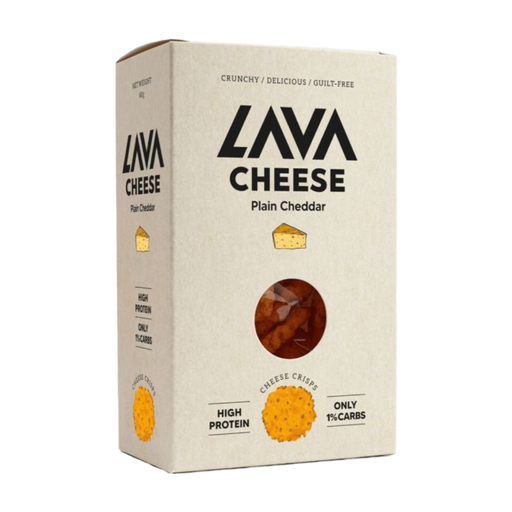
The option here is a 60g plain cheddar snack to consider as the cheese component of a post-workout snack or meal.
 No image available
Lava Cheese Plain Cheddar 60g
The 60g pack offers a snack-sized cheddar option. If protein, saturated fat or salt matters to your choice, compare the current pack’s per-100g figures with the amount you plan to eat, and check its milk allergen declaration. Include a carbohydrate-rich food separately when quick refuelling is important.
View on Joybuy
Questions about cheddar after training
Is cheddar enough for a post-workout snack?
Do not rely on cheddar alone if quick refuelling is important. The British Dietetic Association advises starting carbohydrate-rich food and fluids as soon as possible after exercise when quick recovery is required; cheddar can be one component of the food you plan.
How can I compare high-protein and standard cheddar?
Compare protein, fat, saturated fat and salt per 100g, then consider your portion. ASDA Groceries lists 33g protein and 15g fat per 100g for its Protein Half Fat Mature Cheddar, against 25g protein and 35g fat per 100g for its listed standard Mature British Cheddar. Those figures compare those two products, not every cheddar in either category.
Is lactose-free cheddar suitable for someone with a milk allergy?
No—not if that cheddar still contains milk. Tesco’s listing for Arla Lactofree cheddar explicitly says it is unsuitable for people with a milk allergy. Check the current ingredients and allergen declaration instead of treating “lactose-free” as “dairy-free”.


