Space-limited shared-kitchen cook
You freeze compote in portions but need to preserve usable kitchen space. Compare the containers you plan to store with the freezer's dimensions and the space available to other users.


Choose a chest freezer after measuring the permitted floor area and lid-opening space, then counting the labelled compote portions that must fit alongside other users' food. A compact model suits modest batches where space is tight; a larger chest makes sense for frequent bulk preserving only if its footprint and shared-storage arrangements work. Electrical Safety First advises placing a freezer near a wall socket rather than using an extension lead.
You freeze compote in portions but need to preserve usable kitchen space. Compare the containers you plan to store with the freezer's dimensions and the space available to other users.
You prepare repeated or large batches and need room for labelled portions alongside other frozen food. An open chest layout can accommodate bulk storage, but finding older portions takes organisation.
You need an agreed installation position and a clear routine for labelling and allocating freezer space. Electrical Safety First's advice on a nearby wall socket and ventilation is particularly relevant before several people start using the appliance.
For cooled apple compote in a shared kitchen, decide how much space the freezer and its contents can use before comparing batch-freezing features and shared-use arrangements.
Choose when: floor space is tight and compote is stored in modest, portioned batches.
Trade-off: the smaller cavity leaves less room for other users' food; check the exact model for any controls or warning features you need.
Choose when: preserving sessions are frequent or substantial shared frozen storage is planned.
Trade-off: more floor space is needed, and labelled zones become more important when several people share a deep cavity.
| Concern | What to check | Who this matters to |
|---|---|---|
| Space and capacity | Measure the floor area, access route and lid-opening space. Count your usual containers and agree how much room remains for other users' food. | I need room for labelled compote portions without taking over the shared kitchen or crowding out someone else's food. Around 42% of consumers would put usable space and storage capacity first. |
| Batch controls and warnings | Check the exact model for a fast-freeze setting, temperature controls or a high-temperature warning; a feature name alone does not establish freezing performance. | When I add cooled portions in repeated batches, I want controls I can understand and a way to notice a temperature problem. About 33% of consumers would make batch management their primary concern. |
| Safe shared use | Check the model's ventilation instructions and position it near a wall socket, as Electrical Safety First advises. Agree a routine for sealing, dating and labelling portions. | If several people use the freezer, I need a safe installation position and a clear way to identify everyone's food. Roughly 25% of consumers would prioritise safe shared use and upkeep. |
A freezer can have enough stated capacity yet block the walking route, prevent its lid from opening fully or leave too little ventilation space. Beko UK lists the 98-litre CF4098 at 54.5 cm wide and deep; Haier UK lists the 418-litre HCE420EK at 1320 mm wide and 750 mm deep.
Measure the proposed position and access route, then check the selected model's required clearances. Decide how much storage is reserved for compote before choosing a capacity.
Fast-freeze settings and warning lights are model features, not proof that two freezers freeze food at the same speed or maintain the same conditions. Which? says its freezer tests examine fresh-food freezing, energy efficiency and realistic storage capacity.
Confirm features against the exact model specification and consult independent test results where available rather than comparing feature names alone.
Electrical Safety First advises installing a fridge or freezer near a wall socket without an extension lead, and leaving space behind the appliance for air circulation.
Choose a position with a suitable nearby socket, follow the model's ventilation instructions and make sure the cable will not be trapped beneath the freezer.
Without names and dates, users can struggle to tell whose compote is in the freezer or which portions should be used first. For food intended for children, the NHS advises cooling it quickly before refrigeration or freezing.
Use sealed, dated, portion-sized containers and agree an allocation system. If the compote is supplied through a food business, check the applicable food-business registration and food-safety requirements separately.
Beko UK's CF4098 illustrates a compact option: it lists 98 litres of freezer volume and measures 85 cm high by 54.5 cm wide by 54.5 cm deep.
Hotpoint UK describes its chest-freezer range as offering an open layout for bulk or bulky frozen foods.
Haier UK's HCE420EK illustrates a large-capacity option, listing 418 litres and dimensions of 1320 mm wide by 750 mm deep by 845 mm high.
These chest freezers span compact and larger storage capacities for portioned compote. Compare each model's stated capacity with your container count, shared allocation and measured installation space; capacity alone cannot establish how many containers will fit.
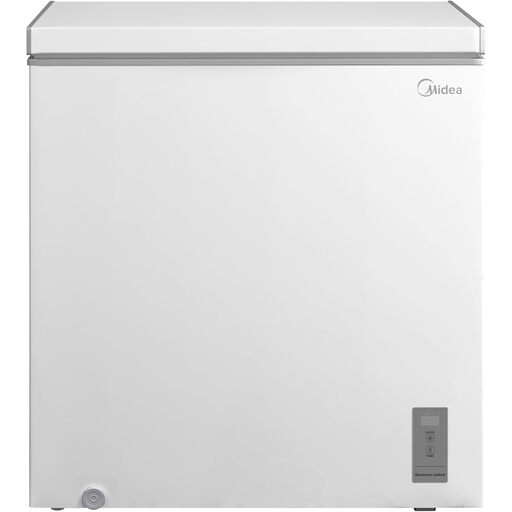 No image available
Consider this model when modest compote batches need space alongside other users' food; count the containers before deciding whether 198L is sufficient.
The product name states an E energy rating. Check the exact model's installation clearances and energy information before choosing its position.
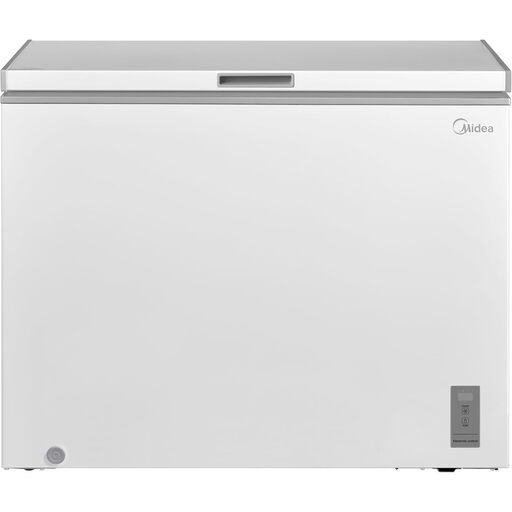 No image available
The 249L stated capacity is worth considering for larger batches, provided the shared kitchen has room for the appliance and an agreed allocation for other food.
The product name states an E energy rating. Measure the location and lid-opening space, and check the model's installation instructions.
 No image available
Consider its stated 297L capacity for substantial compote batches or shared storage only if the wider appliance fits the floor area and access route.
Check lid and ventilation clearances against the exact-model instructions. Plan for periodic defrosting, which is identified as a requirement for this model.
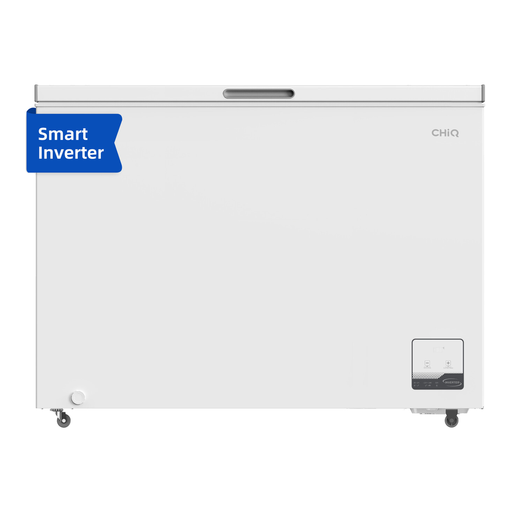 No image available
Its stated 299L capacity may suit larger batches where there is also room for other users' frozen food; establish the shared allocation before buying.
Digital inverter appears in the product name, but does not by itself establish freezing performance or energy use. Check the energy information and installation clearances for this exact model.
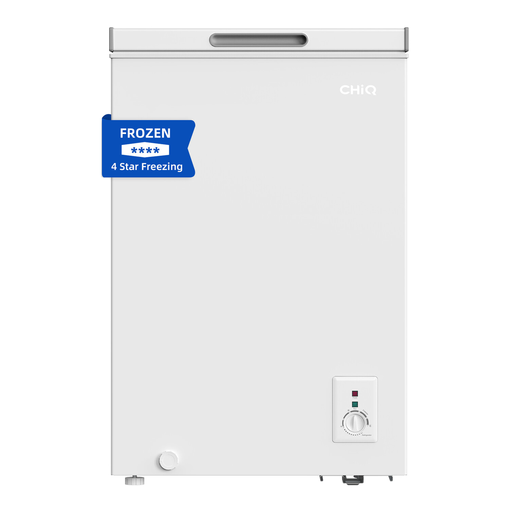 No image available
Consider this 99L model for modest, portioned batches where kitchen space is constrained. Check that compote and other users' food will fit within the agreed allocation.
The product name states an E energy rating. If a batch-freezing function matters to you, confirm the exact model's controls; also check its required installation clearances.
Yes, once it has cooled appropriately for its intended use. For food intended for a child, the NHS advises cooling it as quickly as possible, ideally within one to two hours, then putting it in the fridge or freezer; smaller portions or shallow containers can help it cool.
Electrical Safety First advises placing a fridge or freezer close to a wall socket and not using an extension lead. Check the proposed position and the appliance's ventilation instructions before ordering.
Compare the energy information for the exact models you are considering, rather than assuming capacity predicts energy use. GOV.UK says an energy label must be displayed at the point of sale, including online, for products within the applicable energy-labelling rules.
Private cooking and operating a food business are different situations. If you are starting a food business to supply compote, the Food Standards Agency says a new food business must register with its local authority; check the activity's status and the applicable food-safety requirements before operating.