Shared-kitchen batch cooks
If several people freeze cooled vegetable soup for household meals, look for enough accessible space for labelled containers without taking over the kitchen floor.


Choose a chest freezer only after checking the available floor space, lid clearance and number of labelled soup containers you need to reach regularly. For household use, match capacity to normal batch sizes and agree how everyone will organise and maintain the freezer. If the kitchen operates as a food business, the Food Standards Agency also calls for adequate freezing and temperature-monitoring facilities as part of its food-safety controls.
If several people freeze cooled vegetable soup for household meals, look for enough accessible space for labelled containers without taking over the kitchen floor.
Repeated or larger batches call for capacity that accommodates the usual stock, plus a workable way to keep older portions separate from newly frozen ones.
For a shared kitchen operating as a food business, freezer storage must sit alongside temperature monitoring and documented food-safety controls, as described in Food Standards Agency and GOV.UK guidance.
Start with the cooling and storage process, then check whether the appliance fits the shared space and the normal volume of soup. A litre figure alone cannot tell you how many of your containers will remain easy to find.
| Concern | What to check | Who this matters to |
|---|---|---|
| Cooling and temperature control | Plan how soup will be cooled and portioned before freezing. For a food operation, establish how temperatures will be monitored and unsuitable readings handled. | I need a controlled way to cool soup before it goes into storage, particularly if our kitchen supplies food as a business; roughly 36% of consumers put cooling and temperature control first. |
| Space and organisation | Measure the installation area, lid clearance and access route; check the exact model for baskets and room for your usual containers. | When several people use the freezer, I need to find my labelled portions without shifting everyone else’s food. Space and organisation come first for roughly 36% of consumers. |
| Batch capacity and upkeep | Allow for the normal maximum batch and other users’ food; check the model’s defrost instructions and agree who will handle maintenance. | If I freeze soup repeatedly, I need room for the next batch without losing track of older portions; roughly 28% of consumers prioritise batch capacity and upkeep. |
A larger capacity may be unusable if the appliance cannot pass through the access route or its lid cannot open in the intended position. Fridgemaster lists its MCF96E at 546 mm wide and its MCF297E at 1,114 mm wide; those figures describe different models, not a universal size range.
Measure the route and location, then consult the exact model’s ventilation and lid-clearance instructions before settling on a capacity.
Fast Freeze is a freezer feature, not a replacement for cooling cooked food appropriately before storage. The Food Standards Agency warns that harmful bacteria can grow when food is not chilled down as quickly as possible.
Follow a cooling process appropriate to your setting and portion the soup before freezing it. Check the exact model’s instructions for any Fast Freeze function.
Similar-looking containers can be difficult to identify in deep storage, especially when several people add and remove food.
Agree how containers will be sealed, dated and identified, who owns each storage area, and how older portions will be rotated. A food operation should include relevant separation and hygiene controls in its food-safety system.
A freezer’s capacity or advertised functions cannot establish that a food business has an adequate food-safety system. GOV.UK states that food businesses must make and follow a system for managing food safety.
If the kitchen supplies food as a business, establish which registration and operating requirements apply to the activity before relying on a household freezer arrangement.
A chest-freezer range to compare if you need storage for recurring batches.
Chest freezers with open storage; Hotpoint describes Fast Freeze and Frost Away on selected models.
A range with differently sized examples for comparing footprint against batch volume.
A larger-capacity option represented by Haier’s HCE420EK chest freezer.
These chest freezers offer different stated capacities for storing cooled, portioned soup. Compare each model with your available space, usual batch size and plan for organising shared food.
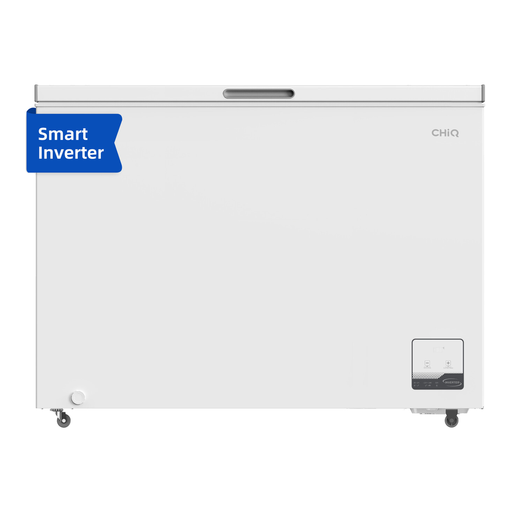 No image available
Consider this 299L model if recurring larger batches and other users’ food call for substantial storage. Check its installation space, lid clearance and temperature-monitoring arrangements before choosing it for a shared kitchen.
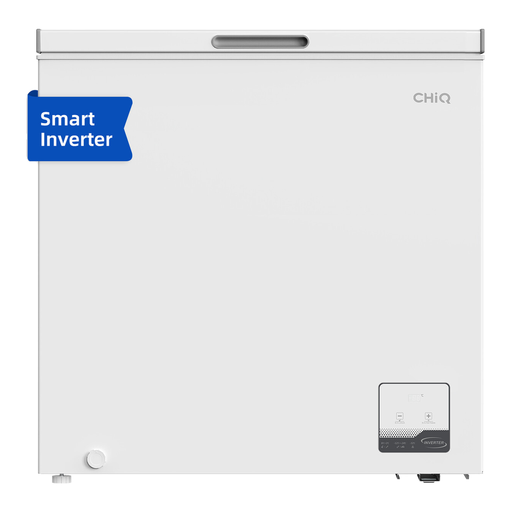 No image available
The stated 199L capacity is a size to consider for repeated batches when a larger freezer would be difficult to accommodate. Check how your labelled containers fit and who will manage monitoring and defrosting.
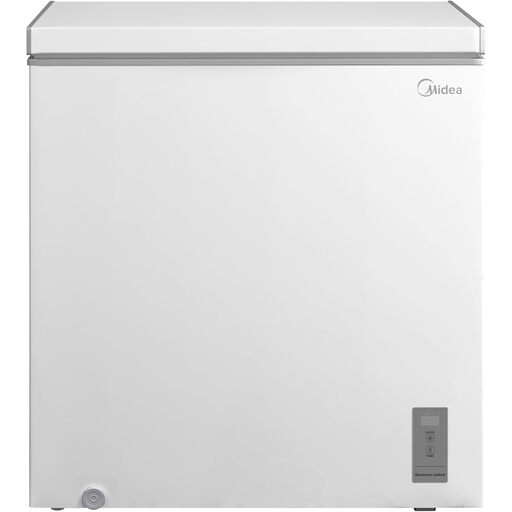 No image available
Its stated 198L capacity offers another size to assess for regular soup batches. Confirm the footprint, internal organisation and defrost instructions for this exact model; cooling soup safely remains a separate step before freezing.
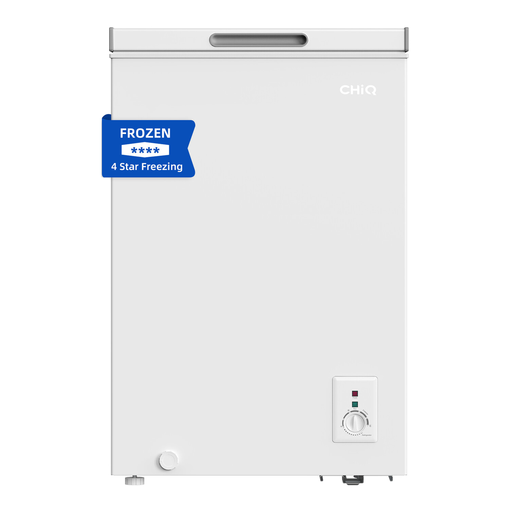 No image available
Consider the stated 99L capacity for smaller batches when floor space is limited. Check whether your normal number of labelled containers will fit while leaving other users’ food accessible.
 No image available
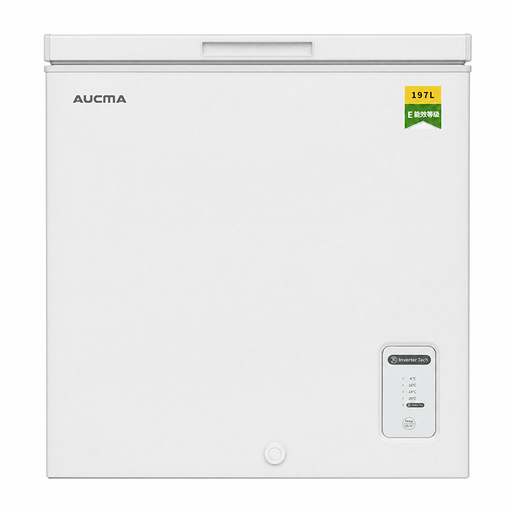
For recurring batches, assess whether its stated 197L capacity suits the space shared with other food. The product name specifies a removable basket and freezer-to-refrigerator conversion; keep it in freezer mode for frozen soup and check its maintenance and monitoring instructions.
No: a chest freezer should not replace an appropriate cooling process for cooked soup. The Food Standards Agency warns that harmful bacteria can grow when food is not chilled down as quickly as possible. Cool and portion the soup appropriately for your setting before freezing it; a food operation should include its cooling method in documented controls.
Choose a size that fits the installation space and holds the normal maximum number of accessible, labelled containers alongside other users’ food. For scale, Fridgemaster specifies its MCF96E as 95L and 546 mm wide, while its MCF297E is 297L and 1,114 mm wide; neither capacity establishes how many of your particular containers will fit.
Baskets can help separate containers, but shared rules for labelling, dates and ownership are just as important. Check the exact model’s temperature controls, any monitoring provision and defrost instructions; do not assume that a temperature setting also records temperatures or sounds an alarm.
They depend on the activity, not simply on sharing the kitchen. GOV.UK says a food business must register with its local authority and make and follow a system for managing food safety. If you prepare or supply soup through an organised operation, establish which requirements apply before relying on a household storage arrangement.
Check the exact model: Fridgemaster describes its MCF96E and MCF198E as manual-defrost freezers, while Hotpoint says selected models have Frost Away to reduce ice build-up. In a shared kitchen, agree who will follow the chosen model’s defrost and food-storage instructions.