Small-kitchen batch bakers
If you freeze biscuit dough in bags or tubs, compare the space a freezer needs after installation, not just its stated capacity. Leave room to open the lid and reach the portions you use most often.


Choose a chest freezer by its installed footprint before comparing litres: the cabinet needs its model-specific ventilation clearance, access to a wall socket and room for the lid to open. A compact 95–99L model may suit portioned biscuit-dough batches, while a larger model makes sense for more storage only if its dimensions and clearances work in your space. Check internal measurements separately if you intend to freeze dough on rigid trays.
If you freeze biscuit dough in bags or tubs, compare the space a freezer needs after installation, not just its stated capacity. Leave room to open the lid and reach the portions you use most often.
If you add newly prepared portions regularly, consider how much you load at once and whether the exact model offers a fast-freeze control. Capacity alone does not describe that loading routine.
Moving frozen dough out of the kitchen can release floor space, provided the chosen model is specified for the location and its expected ambient temperatures. Ventilation and a suitable nearby wall socket still matter.
Measure the intended position and check the exact model’s installation instructions before deciding how much dough capacity you need. Then consider how you will portion, load and retrieve the dough.
| Concern | What to check | Who this matters to |
|---|---|---|
| Installed space and access | Measure the cabinet position, required ventilation clearance and space to open the lid; check the route to a wall socket. | If kitchen floor space is tight, I need to reach my dough without obstructing the freezer’s installation space. Around 36% of consumers put fit and access first. |
| Loading fresh dough | Check for a fast-freeze control if you add portions frequently, and follow the appliance instructions on loading unfrozen food. | When I prepare several batches, I want a manageable way to load newly made portions. For around 29% of consumers, that freezing routine is the main concern. |
| Capacity and organisation | Match capacity to the portions you keep; check basket layout and internal dimensions if rigid trays must fit. | I need to find labelled dough packs without emptying the cabinet each time. Easy storage and retrieval come first for around 21% of consumers. |
| Alternative placement | For a garage or utility room, check the exact model’s permitted location and ambient-temperature range, plus socket access. | If the kitchen cannot accommodate a freezer, I need another suitable place to keep the dough. Around 14% of consumers make that placement decision their priority. |
Cabinet size and installed size can differ substantially. Midea’s instructions for the MDRC154FZE01 call for 20 cm between the sides and back and nearby walls, plus 70 cm above; Different clearances are listed for the Russell Hobbs RH99CF0E1W. Use the instructions for the model you actually choose rather than transferring either set of measurements to another freezer.
Litres also cannot tell you whether a particular baking tray will fit. If trays are essential to your dough-prep routine, measure them and obtain the freezer’s internal dimensions before ordering. Freezer-safe bags or containers offer another way to store portions without assuming a tray will fit.
A compact cabinet can still need considerable free space around and above it. The clearance specified for one model does not establish what another model requires.
Mark out the intended position using the chosen freezer’s dimensions and installation instructions, then check the lid’s opening path and socket access.
Capacity figures describe volume, not the usable width and depth available for a rigid tray. A basket can affect how you arrange smaller packs, too.
Compare your tray measurements with confirmed internal dimensions. Otherwise, plan to portion dough into freezer-safe bags or containers that suit the available space.
Midea’s freezer instructions warn that excessive quantities of food at normal temperature may not freeze fully when loaded together. A fast-freeze control does not replace sensible portioning.
Follow the recipe’s cooling and storage instructions, divide dough into manageable freezer-safe packs and label them before loading.
Suitability for an outbuilding depends on the exact model and location. Electrical Safety First advises placing a fridge or freezer near a wall socket rather than using an extension lead.
Check the manufacturer’s location and ambient-temperature instructions, keep the required ventilation space clear and plan for an appropriate wall socket.
These model examples show different space, capacity and access considerations; the stated features do not apply to every freezer from each brand.
The MDRC154FZE01 is a 99L option to consider if you want a compact cabinet and a manufacturer-described fast-freeze control for your dough-loading routine.
The MCF96E and MCF142E offer a choice between a 95L compact cabinet and a 142L cabinet for more storage.
The RH99CF0E1W is a 99L model to consider if a basket and counterbalanced lid would help you reach smaller dough portions.
These choices include a 99L chest freezer for a smaller storage requirement and two 198–199L models for consumers considering more capacity. For any of them, check the installed footprint and internal space against your kitchen and the way you pack biscuit dough.
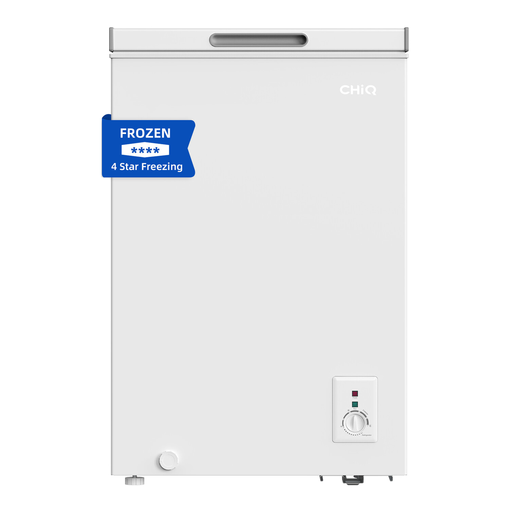 Image unavailable
Consider this 99L model if you store portioned dough and want to assess a smaller-capacity cabinet before moving to a larger one. Check its installed dimensions, lid clearance and internal space if you use rigid trays.
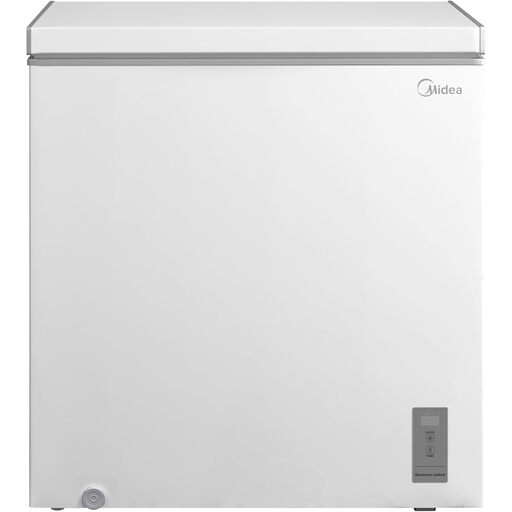 Image unavailable
Its 198L stated capacity makes this a model to assess if you keep more dough portions, provided a larger freezer works in your intended space. Confirm installation clearances and internal dimensions, and check the exact model’s controls if regularly loading fresh dough matters to you.
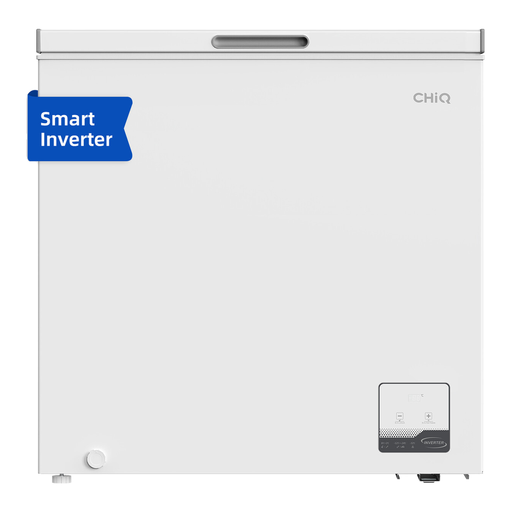 Image unavailable
Consider this 199L model if your dough-storage requirement justifies a larger cabinet. Measure the full installed space and check internal dimensions before relying on the stated capacity for your containers or trays.
Aim for around −18°C, in line with GOV.UK and Food Standards Scotland’s household freezer guidance. Follow your dough recipe’s storage and defrosting instructions as well; freezing does not make food safe to keep indefinitely.
Portion the dough and follow the recipe’s cooling and storage instructions before freezing it. Midea’s freezer instructions caution against loading excessive amounts of food at normal temperature at once, so avoid putting an entire large batch into the freezer as one mass.
Yes, if the exact freezer is specified for that location and its expected ambient temperatures. Fridgemaster lists Winter Guard suitability down to −15°C for the MCF96E and MCF142E; check the instructions for whichever model you choose, including its ventilation requirements.
Plan for a nearby wall socket instead. Electrical Safety First advises against using an extension lead for a fridge or freezer, particularly where other large appliances could overload it.