Occasional family batch bakers
If you freeze a few labelled dough portions at a time, consider a compact freezer for overflow storage. Check its external dimensions, defrost requirements and intended location before making room for it.


For occasional portions of biscuit dough, a compact chest freezer may provide enough supplementary space; choose more capacity if it will also hold family meals or bulk groceries. Measure the space and lid clearance before deciding, and choose a model explicitly suitable for a cold outbuilding if that is where it will stand.
If you freeze a few labelled dough portions at a time, consider a compact freezer for overflow storage. Check its external dimensions, defrost requirements and intended location before making room for it.
If dough shares freezer space with prepared meals and bulk groceries, allow room for the combined load and plan how you will find small portions. The open space of a chest freezer is described as useful for bulk storage and batch cooking.
If the freezer will stand outside a heated room, check the exact model’s stated operating conditions. The Bush BECFE99LW is listed as unsuitable for outbuildings, while listings for other models explicitly describe low-ambient operation.
Start with where the freezer will stand and what must fit inside it; then compare the upkeep involved in running the exact model.
| Concern | What to check | Who this matters to |
|---|---|---|
| Space and lid access | Measure the floor position, delivery route and space needed to open the lid; compare the exact external dimensions. | If floor space is tight, I need to reach the dough without the lid hitting a wall or cupboard. Around 33% of consumers put fit and access first. |
| Capacity and organisation | Allow for dough alongside other frozen food, and check the basket arrangement for small portions. | When I store family meals as well as dough, I want enough room without losing the smaller packages at the bottom. Roughly 27% of consumers make capacity and organisation their primary concern. |
| Outbuilding placement | Check the exact model’s minimum operating temperature and explicit suitability for its intended location. | If my freezer must go in an unheated garage or shed, its stated operating range matters before any other feature. Around 20% of consumers prioritise outbuilding suitability. |
| Energy and maintenance | Compare annual kWh figures for the exact models and check whether defrosting must be done manually. | I will run the freezer continuously and need to know whether periodic emptying and defrosting will suit my household. About 20% of consumers put ongoing use and maintenance first. |
The Bush BECFE99LW is listed as unsuitable for outbuildings, with a minimum operating temperature of 10°C. Other cited models have different stated conditions, so the appliance type alone does not settle the question.
Compare the exact model’s operating range and placement instructions with the intended location.
The 99L Bush BECFE99LW is 54.7cm wide, while Beko lists the 371L CF4371 at 130cm wide. A larger freezer also needs a workable delivery route and room to open its lid.
Measure the route in, final position and lid-opening space against the exact product dimensions and installation instructions.
A deep storage space can leave small packages beneath other frozen food, even when a model has a basket.
Label freezer-safe portions and keep frequently used dough near the top in a basket or a clearly defined storage area.
Which? reports that freezers with the same energy label can differ in annual running cost. Several of the cited chest-freezer models also require manual defrosting.
Compare annual kWh information for the exact models and decide whether you can periodically empty and defrost the freezer.
Manual defrosting takes time and requires temporary space for the food you remove.
These examples illustrate different storage and placement requirements; their specifications apply to the named models, not every freezer from the brand.
The BECFE99LW is a compact supplementary-storage example.
The RH99CF0E1B offers a compact-capacity example for buyers considering outbuilding placement.
The FC247D4AWLE and FC386D4AWLE illustrate larger storage choices for regular family batch cooking.
The CF4371 is a bulk-storage example for households that also need a stated low-ambient placement feature.
These options span compact supplementary storage and larger freezers for dough alongside family meals. Choose capacity around everything you intend to freeze, then check the exact model’s dimensions, maintenance requirements and placement instructions.
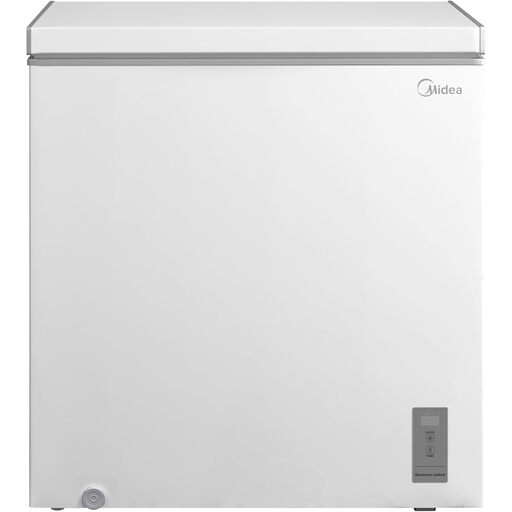 No image available
Consider its 198L capacity if biscuit dough will share space with family meals. The title lists energy class E; check the exact model’s dimensions, annual kWh figure, defrost method and installation conditions for your planned location.
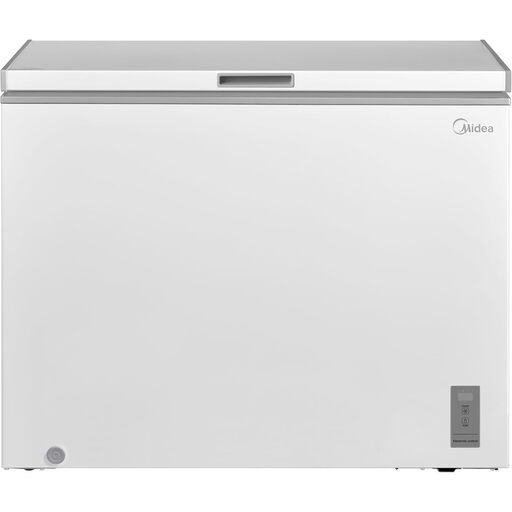 No image available
Its 249L capacity is worth considering when dough is only one part of a larger frozen-food load. The title lists energy class E; measure the available space and check the exact model’s annual kWh figure, defrost method and installation conditions.
 No image available
Consider this larger model if you regularly freeze dough alongside meals and bulk food. Icecat lists 297L capacity, a stated freezing capacity of 12kg per 24 hours and annual energy consumption of 231kWh. Allow for the larger footprint and manual defrosting, and check the installation instructions for your location.
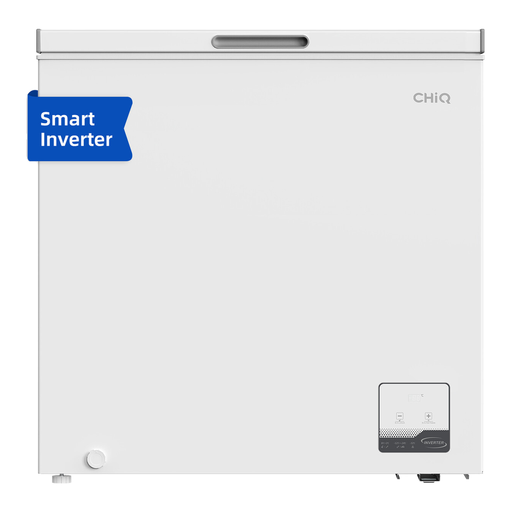 No image available
Its 199L capacity may suit dough stored alongside family meals. The title specifies Digital Inverter and energy class E; check its basket arrangement, annual kWh figure, defrost method and operating conditions before deciding whether it fits your routine.
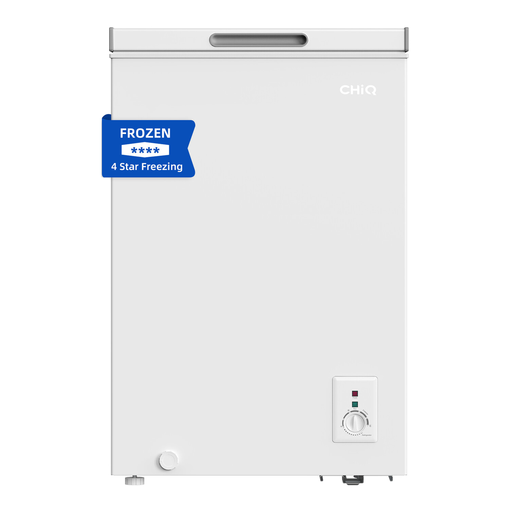 No image available
Consider 99L for occasional dough portions when you need supplementary frozen-food space rather than bulk storage. The title lists energy class E; check the full dimensions, defrost method and stated operating range, particularly if you plan to use it in an outbuilding.
Choose capacity for the dough and everything else you plan to freeze, rather than using dough portions alone as the measure. Compact 99L and larger 191L, 297L and 371L model examples appear in the cited retailer and product information; measure your containers and consider how you will separate dough from meals and other food.
Not necessarily; consider it if you regularly add fresh batches, but check the model’s freezing rating and temperature information as well. Which? advises keeping frozen food below -16°C and notes that getting it down to that temperature sooner is beneficial.
No: suitability depends on the exact model’s stated operating conditions. The Bush BECFE99LW is listed as unsuitable for outbuildings, while Beko states that its CF4371 can operate in ambient temperatures as low as -15°C; check the instructions against your intended location.
Use clean, well-sealed, labelled portions and follow the recipe and ingredient-pack storage instructions. For pre-packed foods with a use-by date, the Food Standards Agency says they can be frozen up to that date and should be consumed within 24 hours of defrosting; check instructions specific to the food you are using.
Check the energy label, product information sheet and annual kWh figure for each exact freezer model. GOV.UK describes energy-label and product-information requirements for products within its guidance, while Which? notes that models with the same energy grade can differ in annual running cost.