Seasonal pea preservers
If you freeze a garden harvest or several bulk-bought bags, you need room to organise portions and a way to handle each batch after it has cooled.


Choose capacity and floor space around the amount of peas you freeze, then consider a rapid-freeze function if you regularly add several cooled portions at once. Check the exact model’s operating conditions before putting it in a cold outbuilding, and decide whether you are willing to defrost it manually. Cool and portion blanched peas before freezing; Food Standards Agency guidance says a domestic freezer should be around −18°C.
If you freeze a garden harvest or several bulk-bought bags, you need room to organise portions and a way to handle each batch after it has cooled.
Extra storage is useful only if the freezer fits the available floor space, delivery route and space needed to open its lid.
For an unheated garage or outbuilding, the exact model’s stated ambient-temperature range matters as much as its storage capacity.
Start with the size of your batches and the space available. Then check the installation conditions and the defrosting work you are prepared to do.
| Concern | What to check | Who this matters to |
|---|---|---|
| Adding fresh batches | Check for a rapid-freeze function and, if stated, the rated freezing capacity. Cool and portion peas before loading them. | When I freeze several prepared portions together, I want to limit disruption to food already stored; around 31% of consumers put batch freezing first. |
| Capacity and fit | Compare storage capacity with external dimensions, delivery access, installation clearances and room to open the lid. | I need space for a harvest, but the freezer also has to fit through the door and into its intended spot. Capacity and fit come first for around 31% of consumers. |
| Cold outbuilding | Read the exact model’s low-ambient guidance and compare its stated operating range with the intended location. | If my freezer will stand in an unheated outbuilding, I need its operating conditions to suit that location; roughly 23% of consumers prioritise this requirement. |
| Defrosting and safeguards | Compare the defrost system and any stated temperature alarm or power-failure storage figure for the exact model. | I would rather reduce routine ice removal, or understand what the appliance indicates after a fault. Around 15% of consumers make maintenance and safeguards their primary concern. |
An outbuilding may reach temperatures outside a model’s stated operating range, putting stored food at risk if the freezer does not operate as intended.
Check the exact model’s installation guidance. Beko states that its CF4371 FreezerGuard model can operate in ambient temperatures as low as −15°C; that claim does not apply to other models.
A freezer can fit on the floor yet still be difficult to deliver or open.
Measure the access route and available width, depth and height, then check the selected model’s installation and lid-clearance requirements.
A large warm load can raise the freezer temperature. A rapid-freeze setting does not replace cooling and portioning food before freezing.
Drain, cool and divide blanched peas into smaller portions, following Food Standards Agency guidance. Use a rapid-freeze setting for a fresh load only as directed by the appliance instructions.
A manual-defrost model adds periodic ice removal to your routine; a frost-free model reduces that task.
Check the exact model’s defrost system before ordering and choose one whose upkeep you can accommodate.
The CF4371 is a 371-litre option for larger batches and an appropriately sized outbuilding.
The 191-litre MCF198E offers a smaller-capacity route with a basket and Winter Guard.
The 277-litre K280NCFGD25 suits consumers considering frost-free maintenance alongside frequent batch freezing.
The HCE301E UK is a 300-litre model for consumers comparing capacity and stated running-energy figures.
Its chest-freezer range is worth examining if reduced frost maintenance or bulk storage is a priority.
These chest freezers offer different stated capacities for storing batches of blanched peas. Compare their dimensions, operating conditions and defrost requirements against where and how you will use one.
 Image unavailable
Consider its stated 297 L capacity if you store larger seasonal batches. Check the installation guidance for your intended location and allow for manual defrosting.
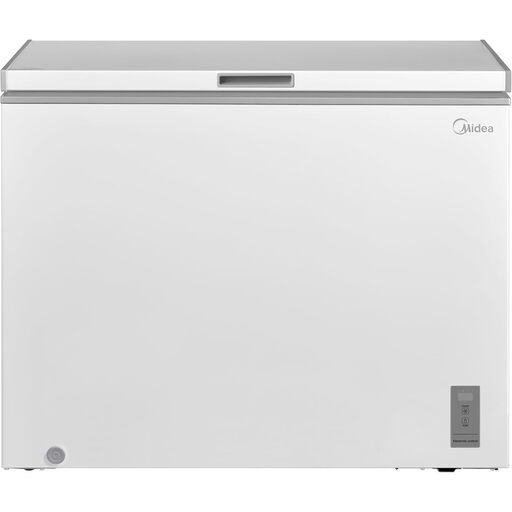 Image unavailable
Its stated 249 L capacity is a consideration for storing several batches. Confirm the defrost system and the model’s operating conditions before choosing a site.
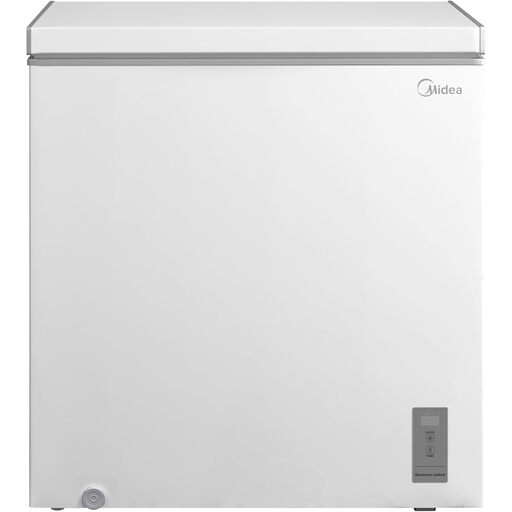 Image unavailable
Consider the stated 198 L capacity when you need batch storage but have less room. Check external dimensions, lid clearance and the defrost system for this model.
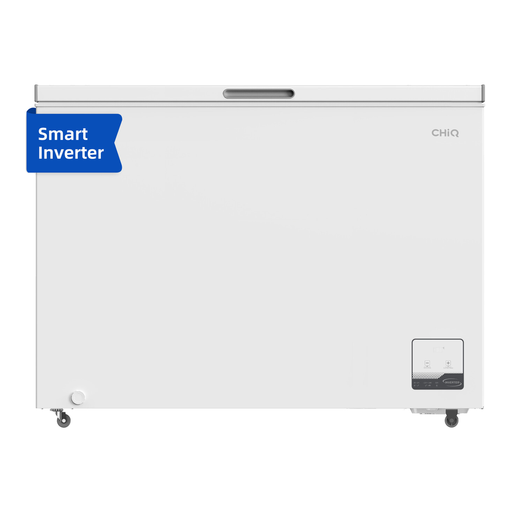 Image unavailable
Its stated 299 L capacity may suit a larger harvest alongside other frozen food. If you regularly add large fresh loads, check the rated freezing capacity as well as the available floor space.
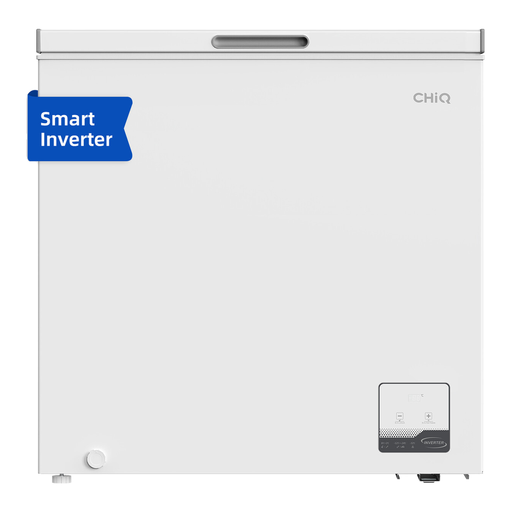 Image unavailable
Consider its stated 199 L capacity for smaller batches when floor space matters. Check the model’s dimensions and rated freezing capacity if you plan to add large loads regularly.
A domestic freezer should be around −18°C, according to Food Standards Agency guidance. Follow the appliance’s control instructions and use a suitable freezer thermometer if you need to check its temperature.
Cool them before freezing. Food Standards Agency guidance also recommends dividing food into smaller portions to help it cool quickly; portions make it easier to take out only the peas you need later.
No single garage-suitability rule applies to every model. Check the exact freezer’s stated ambient-temperature range against the conditions in your garage; Beko’s claim of operation down to −15°C applies specifically to its CF4371.
Choose frost-free if reducing routine ice removal is a priority; manual defrost remains an option if you are prepared to do that maintenance. Check the exact model’s defrost system rather than judging it by capacity alone.