Solo portion bakers with limited space
If you mainly freeze individually wrapped slices and occasional extra food, check the footprint, lid clearance and room for your containers before seeking more capacity.


For occasional cake slices, start by checking whether a compact chest freezer fits your floor space, lid clearance and portion containers, rather than choosing by capacity alone. A larger model makes more sense if you also freeze substantial amounts of other food; for a garage or outbuilding, check the exact model’s ambient-temperature range before deciding.
If you mainly freeze individually wrapped slices and occasional extra food, check the footprint, lid clearance and room for your containers before seeking more capacity.
If cakes share freezer space with prepared meals or larger baking runs, a wider chest freezer may be useful, provided its dimensions fit the planned location.
If the freezer will stand outside the main kitchen, check the exact model’s permitted ambient temperature, ventilation instructions and access to a suitable wall socket.
Decide how much space your cake portions and other frozen food need, then check the appliance’s footprint and lid opening. If the location can get cold, its suitability for that location is a separate decision—not a feature to infer from capacity.
| Concern | What to check | Who this matters to |
|---|---|---|
| Fit and capacity | Measure the footprint and lid-opening space; compare the cavity with the containers you intend to freeze. | I only need room for individual slices and occasional extras, so an appliance that fits and opens easily matters more to me than unused capacity. Around 40% of consumers put compact fit and practical capacity first. |
| Portion access | Check whether the selected model has a basket or other way to separate small portions; check its temperature-warning features if these matter to you. | When small slices share an open cavity with other food, I want to find and rotate them without digging through everything. Around 30% of consumers make portion organisation and storage-condition cues their primary concern. |
| Cold-room placement | Check the exact model’s ambient-temperature range, ventilation instructions and wall-socket access. | My available space is in a garage or outbuilding that can get cold, so I need to know whether the model is suitable for that location. For around 20% of consumers, placement suitability comes first. |
| Energy information | Compare the energy label and product information sheet for the exact model alongside the capacity and dimensions you need. | Once a freezer fits my space and storage routine, I want to compare its ongoing energy use with other suitable models. Around 10% of consumers place that comparison first. |
Low room temperatures can fall outside a freezer’s operating range. Beko says conventional models may require an ambient temperature of at least 10°C, while its specified Freezer Guard models are designed for operation down to -15°C.
Check the exact model’s ambient-temperature range and installation instructions. Keep the appliance in a dry, ventilated location protected from the weather.
A top-opening freezer needs room for both its body and its lid. More storage volume does not help if shelving or a worktop prevents access.
Measure the available height, width and depth, then allow for the model’s specified ventilation clearance and full lid-opening path.
Electrical Safety First warns that an extension lead used with large appliances can be overloaded, creating a fire risk.
Plan for a suitable wall socket near the freezer, follow the installation instructions and keep its mains cable from being trapped beneath it.
Freezing does not kill all harmful bacteria, so handling still matters for cake slices with chilled fillings or other perishable ingredients.
Follow any food-label instructions and applicable use-by date. Defrost suitable frozen slices in the fridge rather than treating freezing as a substitute for safe food handling.
Beko provides both a compact 98L CF4098 and a wider 198L CF4198 for different storage needs.
The MCF95E1 is a compact 95L option listed at 52.7cm wide and 44.4cm deep.
The 137L HHCH142ELK is relevant if cake slices will share space with substantial amounts of other frozen food.
The CF126EWE0UK is a 98L chest freezer with model-specific storage and placement details.
These models cover compact storage for occasional personal portions and larger capacities for cake slices alongside other frozen food. Choose by the space and storage you need; check an exact model’s ambient-temperature range before planning garage use.
 No image available
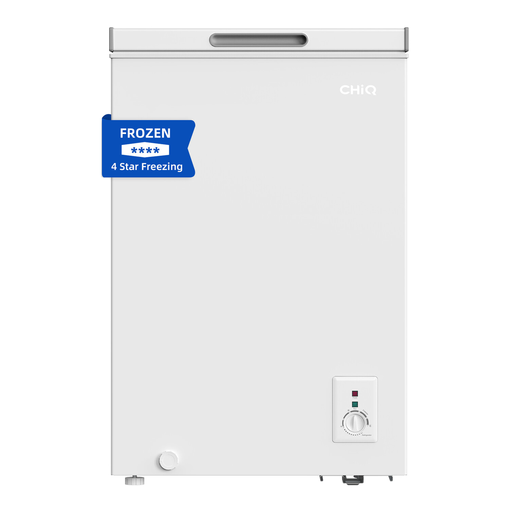
Consider this compact-capacity model for occasional cake slices if its dimensions and lid clearance suit your space.
Its title specifies switchable fridge and freezer operation, energy class E, a seven-level thermostat, a removable basket and a defrost drain. Check the selected model’s ambient-temperature range before considering garage placement.
 No image available
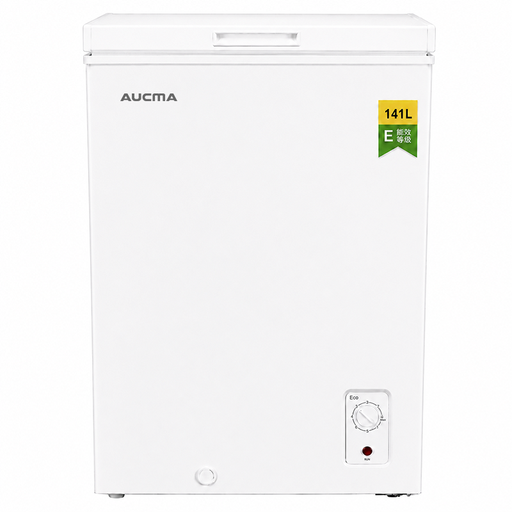
The 99L capacity makes this a compact-storage option to assess for individual cake slices. Measure the appliance and its lid-opening space against your planned location.
The product title states energy class E. Check the exact model’s energy information and ambient-temperature range if either affects your choice.
 No image available
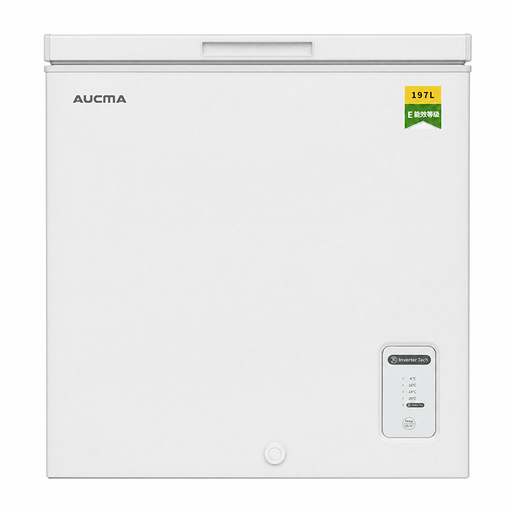
Consider the larger capacity if cake slices will share freezer space with more prepared food; check that the appliance and open lid fit before choosing it for occasional portions alone.
Its title specifies switchable fridge and freezer operation, energy class E, a seven-level thermostat, a removable basket and a defrost drain. Confirm the ambient-temperature range for the intended location.
 No image available
This capacity is worth considering when substantial amounts of other frozen food will sit alongside cake slices, rather than for a few occasional portions. Check its footprint and lid clearance carefully.
Its title specifies switchable fridge and freezer operation, energy class E, five-level digital temperature control, a removable basket and a defrost drain. Confirm the model’s ambient-temperature range before planning garage use.
Food Standards Scotland says a domestic freezer should be around -18°C. Follow any instructions for the cake or filling, and defrost suitable slices in the fridge: freezing does not kill all harmful bacteria.
No—check the exact model’s declared ambient-temperature range. Beko says conventional freezers may require at least 10°C, whereas its specified Freezer Guard models are designed for operation down to -15°C; the appliance must also be protected from the weather.
Measure the available height, width and depth, plus the space needed to open the lid fully. Check the chosen model’s ventilation clearance as well; a freezer that fits on the floor may still be awkward to open beneath shelving.
Plan to connect it to a suitable nearby wall socket instead. Electrical Safety First advises against using an extension lead for a fridge or freezer and warns about overloading when large appliances share one.
Compare the energy label and product information sheet for each exact model that meets your space and storage needs. UK government guidance describes these documents for products within the energy-labelling rules; a retailer’s headline energy class alone gives less detail for a model-by-model comparison.