Regular family batch cooks
If you repeatedly make family-sized curries, allow space for labelled portions and the other food that will be stored at the same time. A mid-size model with a basket may make frequently used items easier to reach.


Choose capacity for the number of cooled curry portions you expect to store at once, alongside any other frozen food. A compact chest freezer of around 98–99 litres suits a smaller rotating stock, while a mid-size model around 142 litres offers more room for recurring family batches. Before choosing a larger unit, check its footprint, lid and ventilation clearances, suitability for the intended location and defrost requirements.
If you repeatedly make family-sized curries, allow space for labelled portions and the other food that will be stored at the same time. A mid-size model with a basket may make frequently used items easier to reach.
A compact secondary freezer can hold a smaller rotating stock of portions. Check its external dimensions against the access route and final position rather than relying on capacity alone.
The lowest ambient temperature expected at the installation site is a deciding factor. Check the exact model’s operating range and installation instructions before placing it in an unheated space.
Start with the portions and other food you need to store, then measure the space available for a top-opening appliance. Finally, check temperature control, siting instructions and the work involved in defrosting.
Consider it when: You keep a small rotating stock of curry portions and occasional overflow food.
Trade-off: Less floor space is needed, but a growing stock can become crowded; the cited IceKing CF100EW and Russell Hobbs RH99CF0E1W require manual defrosting.
Consider it when: Family batches recur and you want to keep portions alongside other frozen food. Fridgemaster lists the MCF142E with a basket.
Trade-off: The Fridgemaster MCF142E is 62.5 cm wide and needs manual defrosting, according to Fridgemaster.
Consider it when: You freeze substantial batches, bulk purchases or several types of meals at once.
Trade-off: Plan for a larger footprint and a way to keep older portions accessible; IceKing lists its 198-litre CF197EW at 91 cm wide.
| Concern | What to check | Who this matters to |
|---|---|---|
| Freezing cooked portions | Check the temperature control and plan how to cool, seal, label and rotate portions. The Food Standards Agency gives −18°C as the recommended domestic freezer temperature. | I want a dependable routine for storing cooled curry portions, not just room to put them. Around 42% of consumers put safe freezing and temperature control first. |
| Capacity and access | Count the containers you will store together and consider whether a basket keeps frequently used portions within reach. | When family batches build up, I need to find older portions without emptying the freezer. For around 33% of consumers, capacity and organisation take priority. |
| Fit and siting | Measure the access route and allow for lid opening and the model’s ventilation clearances; check its ambient-temperature range if the location is unheated. | A freezer has to fit my available space and operate in its intended location. Fit, siting and ongoing upkeep come first for around 25% of consumers. |
Capacity does not tell you whether the freezer can pass through the access route or whether its lid will open fully in the final position.
Measure the route, footprint and lid-opening space, then allow the ventilation gaps specified for the exact model.
Low-ambient operation is model-specific. IceKing states that the CF100EW can operate at ambient temperatures down to −15°C, whereas the Russell Hobbs RH99CF0E1W is listed with an SN–ST climate class of 10–38°C.
Compare the exact model’s stated range with the coldest conditions expected at your installation site.
A deep compartment provides storage volume, but older meals can be difficult to retrieve when new containers are stacked above them.
Use sealed, stackable containers or flat bags, label the dish, date and servings, and keep frequently used items in the basket.
The cited compact and mid-size examples require manual defrosting. If the purchase replaces an old freezer, its removal also needs planning.
Check the new model’s defrost method and arrange retailer take-back or a local recycling route before delivery.
The MCF142E is a mid-size example for recurring family batches.
The CF100EW and CF197EW illustrate compact and larger storage choices.
The CF4371 is a substantially larger option to assess for bulk frozen storage.
The RH99CF0E1W is a compact secondary-freezer example.
These chest freezers range from a compact 99-litre option for a smaller stock of portions to larger models for batches stored alongside other frozen food. Check each model’s dimensions and installation instructions against your own space before choosing.
 No image available
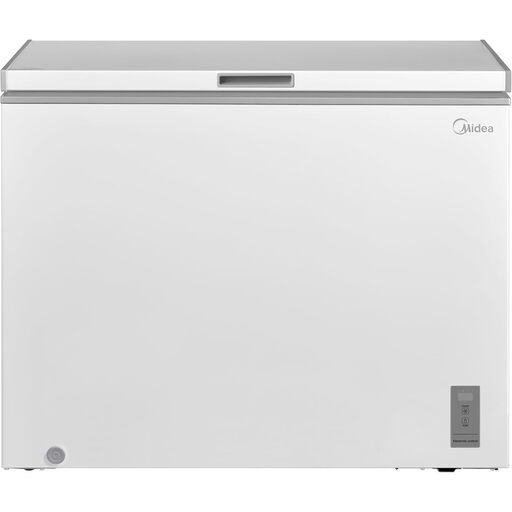
Consider this larger-capacity model if you need to store substantial curry batches alongside other frozen food.
Stated capacity: 297 litres. Measure the available floor space and check the model’s installation clearances and defrost requirements.
 No image available
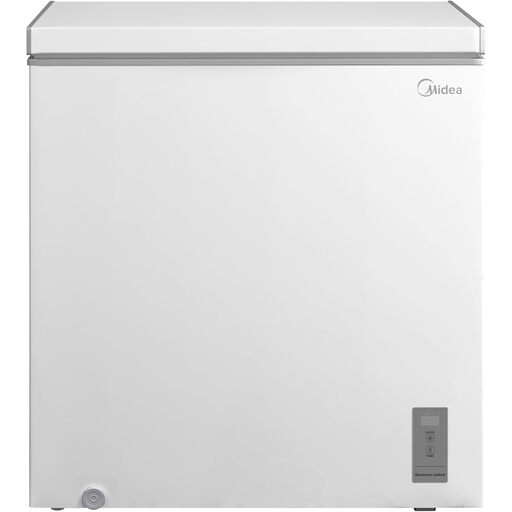
Consider its capacity if recurring family portions need to share the freezer with other frozen food.
Stated capacity: 249 litres; energy class: E. Confirm the external dimensions, defrost method and annual energy consumption for this model.
 No image available
This is a larger-storage option to assess when family portions must fit alongside other frozen items.
Stated capacity: 198 litres; energy class: E. Check the footprint, installation clearances and defrost method before ordering.
 No image available
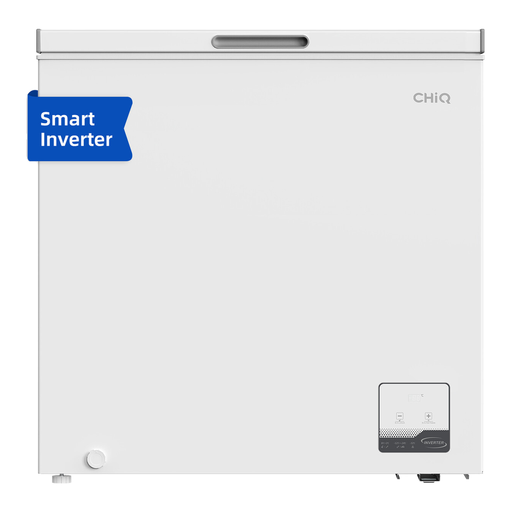
Consider this capacity for larger batches or several kinds of frozen food rather than a small rotating stock alone.
Stated capacity: 199 litres; energy class: E. If it will stand in an unheated space, confirm the model’s permitted ambient-temperature range.
 No image available
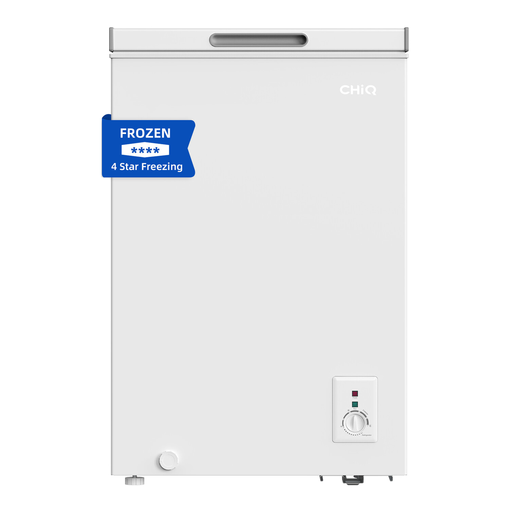
Consider this compact option for a smaller rotating stock of family curry portions.
Stated capacity: 99 litres; energy class: E. Check your container sizes and the required installation clearances, particularly if space is tight.
The Food Standards Agency gives −18°C as the recommended temperature for domestic freezers. Check the appliance setting and use a freezer thermometer where practical; freezing does not replace safe cooling and handling before the portions go in.
Yes, if the exact model’s stated operating range covers the temperatures expected there and its installation instructions permit the location. IceKing specifies operation down to −15°C for the cited CF100EW and CF197EW models, but that claim does not apply to every chest freezer.
Compare the exact models’ energy classes and annual energy-consumption figures alongside their capacities. UK government energy-labelling guidance requires an energy label and product information sheet for products within its scope; a litres figure alone does not describe annual consumption.
Arrange retailer take-back or a local-authority recycling route before the replacement arrives. If you need the old appliance collected from home, confirm the retailer’s collection arrangements when ordering.