Choose a chest freezer by the amount of grated cheese and other food you need to store, then consider how easily you can reach and organise small bags. If it will stand in a cold garage or shed, check the exact model’s stated ambient operating range; for food storage, follow the pack’s freezing instructions and the Food Standards Agency’s recommended domestic-freezer temperature of −18°C.
Who needs a chest freezer for grated cheese?
People freezing cheese in bulk
If you grate or buy larger quantities, you may need space for cheese alongside batch-cooked or bulk-bought food. An open chest-freezer layout can accommodate larger items, as Hotpoint describes for its range, but the capacity you need depends on how much you keep at once.
Garage or utility-room users
If the intended space gets cold, the exact freezer’s permitted ambient-temperature range matters as well as its capacity. Beko states that selected Freezer Guard models can operate in ambient temperatures down to −15°C; that does not establish suitability for every model.
Small-space overflow users
If a main freezer already holds most of your food, a smaller chest freezer may be enough for bagged grated cheese and limited overflow. Compare its footprint with the space available and consider how you will reach small bags.
What matters when choosing?
Start with the amount you will freeze and where the appliance will stand; then compare access to small bags, temperature controls and upkeep on the exact models that fit.
| Concern | What to check | Who this matters to |
|---|
| Capacity and organisation |
Compare internal storage, baskets, external dimensions and lid clearance. Allow room to keep dated cheese bags together. |
If I freeze cheese alongside other food, I want enough space without having to dig for a small bag. Around 29% of consumers put usable storage and access first. |
| Temperature control |
Check the controls and whether the exact model offers a high-temperature warning or a Fast Freeze function. The Food Standards Agency recommends −18°C for domestic freezers. |
When adding a batch of grated cheese, I want to monitor the freezer’s temperature rather than rely on its capacity alone. Temperature assurance comes first for around 29% of consumers. |
| Cold-garage suitability |
Match the manufacturer’s stated ambient operating range and installation clearances to the intended location. |
If my freezer will stand in a cold garage or shed, I need a model rated for those conditions. That placement requirement is the primary concern for around 21% of consumers. |
| Defrosting and energy information |
Confirm the defrosting method and compare the exact models’ energy labels, particularly their declared consumption at similar capacities. |
I would rather understand the defrosting work and declared energy use before choosing extra storage. Around 21% of consumers give those ongoing considerations priority. |
Buying pitfalls
-
Assuming any chest freezer can go in a cold garage
Low-ambient operation depends on the exact model. Beko’s claim of operation down to −15°C ambient applies to selected Freezer Guard models, not every chest freezer.
Check the manufacturer’s operating range and installation instructions against the conditions where yours will stand.
-
Choosing by litres alone
A larger freezer gives you more total volume, but small bags can be awkward to retrieve from deep storage. A compact model may leave too little room once other frozen food is added.
Measure the appliance’s footprint and access route, then check whether its basket layout will help you separate and date cheese bags.
-
Overlooking manual defrosting
Manual defrost means making time to manage ice buildup; the Beko CF41186W specification uses this method.
Check the defrosting method and the exact model’s instructions before deciding how much maintenance you are willing to do.
-
Freezing cheese without checking the pack
The Food Standards Agency says food should be labelled suitable for home freezing. Freezing more than you plan to use together can also make portioning inconvenient later.
Follow the pack’s freezing and defrosting instructions, and date smaller portions so you can take out what you need.
Brands to consider
Beko
Its chest-freezer range includes models to consider when cold-garage placement is part of the decision.
- Beko states that selected Freezer Guard models operate in ambient temperatures down to −15°C. Its CF374 specification lists manual defrost, one basket and a high-temperature indicator.
- Check the operating range and features of the exact model; neither applies automatically to the whole range.
Hotpoint
Hotpoint describes its chest-freezer range as open-layout storage for bulk and larger frozen items.
- The open layout is worth considering if grated cheese will share space with bulkier food.
- Check the chosen model’s capacity, dimensions and storage layout to see how easily you could reach smaller bags.
CHiQ
Joybuy listings include CHiQ chest freezers in 99-litre and 299-litre formats, giving shoppers different capacities to assess against their available space.
- The listed capacities provide a starting point for comparing limited overflow storage with larger-volume storage.
- Check the exact model’s dimensions, installation instructions, ambient operating range and energy label before choosing a location.
Chest freezers on Joybuy
These models span compact overflow storage and larger capacities for grated cheese alongside other frozen food. Compare the space each needs, and confirm any cold-outbuilding suitability for the exact model before buying.
 No image available
HISENSE FC386D4AWLE 297L Wide Chest Freezer, White
Consider this 297-litre model if you freeze larger batches of cheese alongside other food and have room for a wide appliance.
Before placing it in a cold outbuilding, check the manufacturer’s instructions for the exact model’s ambient operating range and installation clearances.
Joybuy
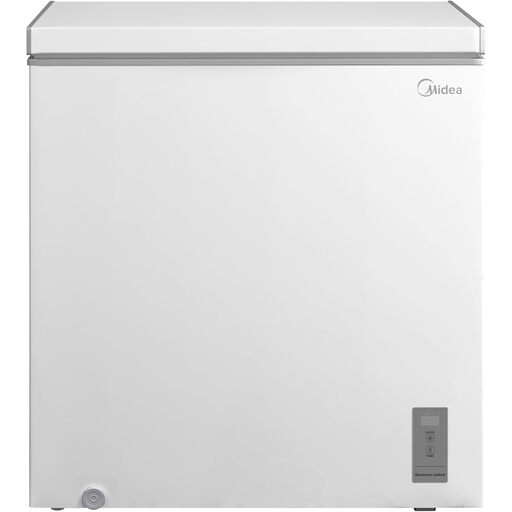 No image available
Midea MDRC284FZE01 198L Chest Freezer, White, E Rated
This 198-litre model is an option when cheese bags need to share a freezer with other household food.
Check its external dimensions, internal organisation and exact-model energy label against the space and storage routine you have in mind.
Joybuy
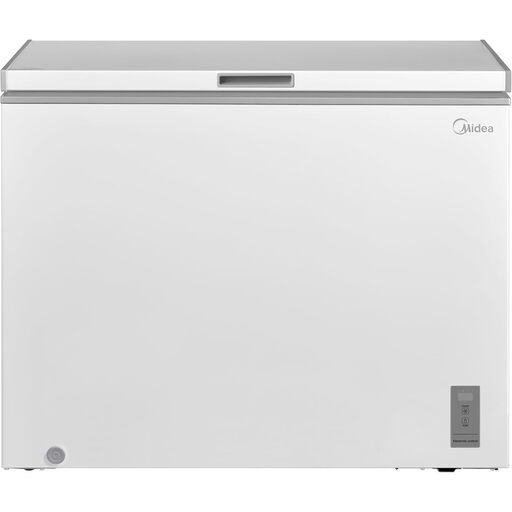 No image available
Midea MDRC345FZE01 249L Chest Freezer, White, E Rated
The 249-litre capacity may suit regular cheese batches stored alongside other frozen food, provided the appliance fits your available space.
Compare its dimensions and basket arrangement with your plans for keeping smaller bags accessible; check the exact-model energy label for declared consumption.
Joybuy
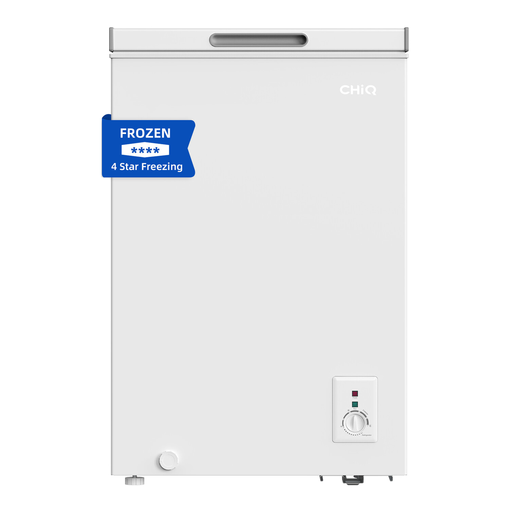 No image available
CHiQ JKR99DWE 99L Chest Freezer, E Rated
This 99-litre model is worth considering if grated cheese is modest overflow stock rather than part of a large frozen-food supply.
Measure its footprint and check the manufacturer’s ambient operating range before choosing a garage or shed as its location.
Joybuy
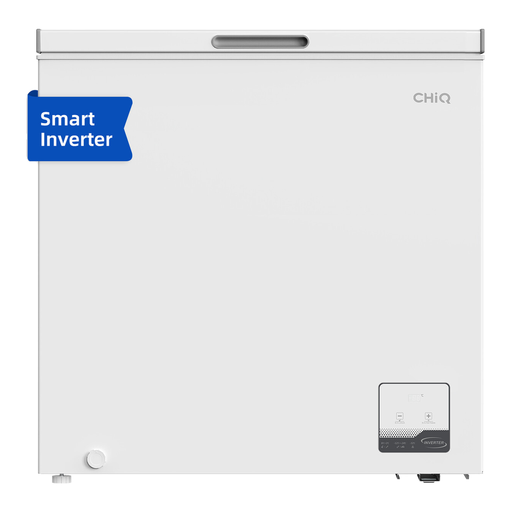 No image available
CHiQ JKR199DWE 199L Digital Inverter Chest Freezer, White, E Rated
A 199-litre capacity gives you room to consider storing a larger cheese batch with other frozen food.
Check the exact model’s dimensions, internal arrangement and energy label, as well as its permitted ambient range if it will stand in an outbuilding.
Joybuy
Questions about freezing grated cheese
Can I freeze grated cheese at home?
Yes, if the food is labelled suitable for home freezing. Love Food Hate Waste suggests grating cheese before freezing it so it is ready to use as a topping; follow the pack’s instructions for the cheese you have.
What temperature should I aim for in the freezer?
The Food Standards Agency recommends −18°C for domestic freezers. Check the appliance instructions for setting and monitoring its temperature in the location where you plan to use it.
Can I put any chest freezer in a garage or shed?
No: check whether the exact model is specified for the ambient temperatures in that location. Beko says selected chest freezers with Freezer Guard can operate down to −15°C ambient, but that claim does not apply to every model or brand.
How can I avoid thawing more grated cheese than I need?
Freeze it in dated portions sized for how you expect to use it, and follow the cheese pack’s defrosting instructions. Keeping those portions together in an accessible part of the freezer also makes it easier to retrieve one bag at a time.


