Holiday-cottage batch cook
You prepare several portions of stew for a stay and need space for your containers without giving over more of the cottage than necessary.


Choose a chest freezer that fits the cottage and its delivery route, then match its capacity to your portioned stew and other frozen food. For an unheated location, check the exact model's stated ambient-temperature range rather than assuming any chest freezer will work there. Cool the stew before freezing it, and keep frozen food at around -18°C.
You prepare several portions of stew for a stay and need space for your containers without giving over more of the cottage than necessary.
You intend to put the freezer in a garage, shed or cold utility space. The exact model's permitted ambient temperature is a deciding factor, alongside its installation requirements.
You need to find older portions without emptying the chest and want a defrosting routine that works around cottage stays.
Establish where the freezer can operate before settling on a size. Then consider how you will cool, store and retrieve the stew, particularly if the appliance stays on between visits.
| Concern | What to check | Who this matters to |
|---|---|---|
| Installation conditions | Compare the exact model's permitted ambient-temperature range with the coldest likely location; check ventilation and placement instructions. | If I use an unheated outbuilding, I need the freezer to operate within its stated conditions throughout a stay. Around 33% of consumers put location suitability first. |
| Capacity and access | Measure the delivery route, floor space and clearance for the open lid; assess capacity against your containers and other food. | When I store several stew batches alongside groceries, I need room for the containers without blocking a doorway or work area. For around 27% of consumers, space and capacity are the main concern. |
| Food handling and temperature | Plan how to cool and portion stew before freezing; check how you will monitor storage at around -18°C. | I want to cool each batch promptly and know it stays at a suitable freezer temperature, rather than rely on a freezing feature to make up for earlier handling. Around 27% of consumers prioritise this food-handling need. |
| Energy and upkeep | Compare exact-model energy information and check the defrosting instructions and basket arrangement. | If the freezer runs between cottage visits, I need to assess its energy use and whether I can manage defrosting and older portions. Upkeep is the primary concern for around 13% of consumers. |
Freezing does not make food safe if cooked stew has been left out too long. The Food Standards Agency advises cooling warm dishes before freezing them, while Food Standards Scotland advises against leaving food at room temperature for longer than one to two hours.
Divide stew into smaller portions to help it cool, refrigerate it promptly and freeze the cooled portions as soon as possible. Label the containers and keep the freezer around -18°C.
A cold garage or shed may fall outside a freezer's stated operating conditions. Beko and Hotpoint publish low-ambient claims for particular models, not for every freezer they make.
Check the exact model's ambient-temperature range against the cottage's coldest likely conditions, then follow its placement, ventilation and electrical instructions.
Capacity does not tell you whether the appliance will pass through the doors or whether its lid can open fully once installed.
Measure doorways, turns, the intended floor area and overhead clearance. Compare those measurements with the exact model's external dimensions and required installation space.
Hotpoint describes Low Frost as reducing ice build-up; it does not mean defrosting can be ignored. Portions can also become difficult to find at the bottom of a chest freezer.
Use labelled containers and baskets to keep frequently used food accessible, and check the model's defrosting and drainage instructions.
Its CF4098 and CF4198 chest freezers provide compact and mid-size reference points for checking space and cold-location requirements.
The HPCF 3714 UK is a large-capacity reference for cottages with substantial food storage and enough floor space.
Cookology publishes chest-freezer sizing information that can help narrow a choice by available space.
The TCL CF126EWE0 is a compact, 98-litre chest-freezer reference for a smaller storage requirement.
These chest freezers span smaller portion storage through to larger batches and other frozen provisions. Match the capacity to your containers and available space, and check the exact model's installation conditions if it will stand in an unheated area.
 No image available
Consider its 297-litre capacity if you need to store repeated stew batches alongside other frozen provisions.
Measure the installation space and lid clearance. For an unheated location, check the model's permitted ambient range; separately confirm how you will monitor food-storage temperature around -18°C.
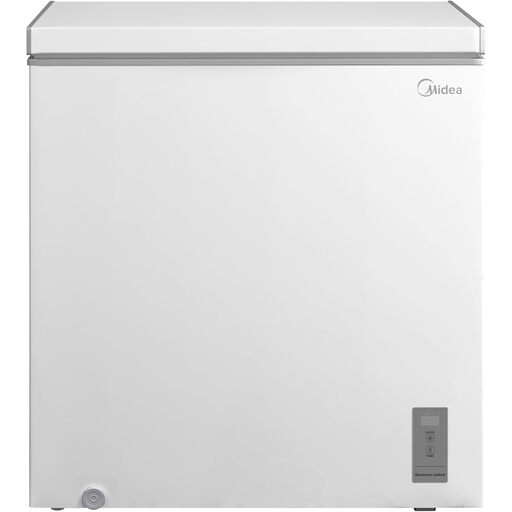 No image available
The 198-litre capacity is worth assessing if you regularly freeze portions but need to reserve cottage space for other uses.
This variant is listed as E-rated. Check its exact energy information, installation conditions and food-storage temperature controls before choosing it for the intended location.
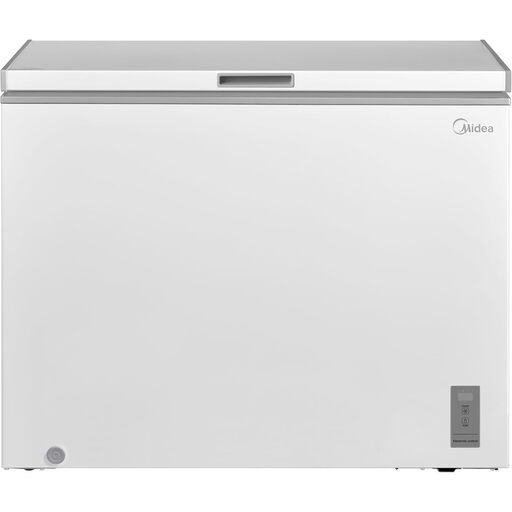 No image available
Its 249-litre capacity may suit a larger quantity of portioned stew alongside other frozen food, provided the appliance fits the cottage and delivery route.
This is an E-rated variant. Compare the exact model's energy information, and confirm its ambient operating range and how to monitor storage around -18°C.
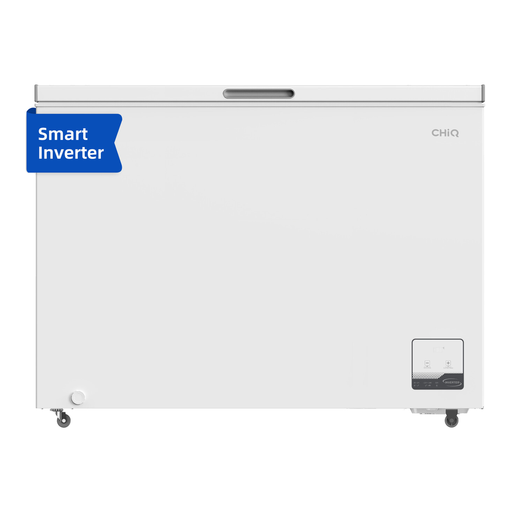 No image available
Consider the 299-litre capacity if the cottage needs substantial batch storage and has room for a larger chest freezer.
Check the delivery route and lid clearance. Before using it in an unheated outbuilding, confirm its stated ambient range and how its ordinary food-storage temperature is set and monitored.
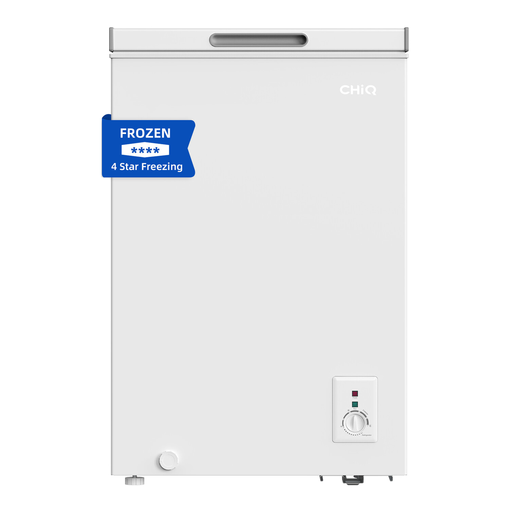 No image available
The 99-litre capacity is a smaller option for portioned stew; compare your container sizes with the space needed for other frozen food.
This variant is listed as E-rated. If the intended room is unheated, confirm the exact model's ambient range, and check how you will monitor storage around -18°C.
Keep the freezer around -18°C and monitor its food-storage temperature. The Food Standards Agency and Food Standards Scotland give around -18°C as the freezer target; a model's minimum ambient operating temperature describes the surrounding room, not the temperature of the food inside.
Cool the stew before freezing it. Food Standards Agency guidance advises cooling warm dishes first; dividing a batch into smaller portions helps it cool more quickly. Food Standards Scotland advises against leaving food at room temperature for longer than one to two hours.
Defrost it in the fridge and follow the food's freezing and defrosting instructions. Food Standards Scotland advises using food within one to two days after defrosting and reheating frozen food only once.
No: suitability depends on the exact model and the conditions in that location. Beko states operation down to -15°C ambient for its CF4098 and CF4198 models, and Hotpoint makes the same low-ambient claim for its HPCF 3714 UK; check the chosen model's instructions and the cottage's coldest likely temperature.
Compare the energy label and product information sheet for each exact model rather than judging by capacity or brand alone. UK government energy-information guidance sets labelling requirements for products within its scope; also consider whether the cottage freezer will remain switched on between stays.