Occasional cottage batch cook
If you freeze a modest number of meal-sized mashed-potato portions for family stays or occasional guests, a compact model may fit the space and workload better than a large bulk-storage freezer.


Choose a chest freezer that fits the space and holds the labelled mashed-potato portions you expect to freeze between cottage stays, rather than choosing by litres alone. If it will stand in an unheated room or outbuilding, its stated ambient operating range must suit that location; also check access to small portions and the model’s energy information. GOV.UK advises cooling warm dishes and dividing them into smaller portions before freezing, while Food Standards Scotland advises keeping a freezer around −18°C.
If you freeze a modest number of meal-sized mashed-potato portions for family stays or occasional guests, a compact model may fit the space and workload better than a large bulk-storage freezer.
If the freezer will be outside the heated kitchen, check the exact model’s stated ambient operating range against the coldest likely temperature at its planned location.
Repeated batches between guest changeovers make labelled portions, accessible storage, temperature checks and a manageable defrosting routine particularly useful.
Start with how you will cool and portion the food, then match storage space and the freezer’s operating conditions to the cottage; compare maintenance and energy information for the models that fit.
| Concern | Buying checks | Who this matters to |
|---|---|---|
| Cooling and freezing portions | Check that there is accessible space for smaller containers or freezer bags and, for large additions, check the model’s stated freezing capacity. A warning indicator may help you notice a temperature problem. | If I prepare a batch of mash, I need to cool it promptly and freeze labelled portions without relying on the freezer to cool a warm dish. Around 31% of consumers would put safe cooling and frozen storage first. |
| Capacity and access | Measure the installation space and lid-opening clearance. Compare usable capacity and basket layout with the portions you plan to store between stays. | When several small containers must be easy to find, I need enough room without burying them beneath other food; for around 25% of consumers, capacity and access are the primary concern. |
| Unheated-room suitability | Compare the coldest likely temperature at the planned location with the exact model’s stated ambient operating range. | If my cottage freezer will stand in an unheated garage or utility room, I need a model rated for that location. Low-temperature suitability comes first for around 25% of consumers. |
| Maintenance and energy use | Check the exact model’s defrost instructions and annual energy-use figure in the applicable product information. | Between guest stays, I want a defrosting routine I can manage and clear information about electricity use; around 19% of consumers would make those their main consideration. |
GOV.UK advises cooling warm dishes before freezing and dividing food into smaller portions to help it cool quickly. A large warm container is harder to cool promptly.
Split the mash into smaller suitable containers or freezer bags, cool it promptly, label the portions and freeze them once cooled.
Low-ambient operation is model-specific. Beko states an operating limit as low as −15°C for its CF4098, while Liebherr lists FrostProtect −15°C for the CFe 1870 Pure; neither figure applies to every model from those brands.
Check the coldest likely temperature where the freezer will stand against the exact model’s official operating range before choosing it.
A freezer can have enough storage volume for your portions but still be difficult to install or open fully in the available space.
Measure the access route and intended position, then check the model’s external dimensions, lid clearance and installation instructions.
Energy information and frost-reduction features vary by model. Low-frost wording should not be taken to mean that defrosting is never needed.
Compare annual energy-use figures alongside capacity, and read the exact model’s defrosting and cleaning instructions.
Relevant when considering a compact chest freezer for a cottage utility room or another potentially cold location.
Relevant when open storage for larger batches and reduced-frost options matter more than a compact footprint.
Relevant when the cottage has room for a larger freezer and reduced ice build-up is a priority.
These chest freezers offer capacities from 198 L to 299 L for portioned batch storage. Decide how much room you need first, then check each model’s installation and ambient-temperature requirements for the cottage location.
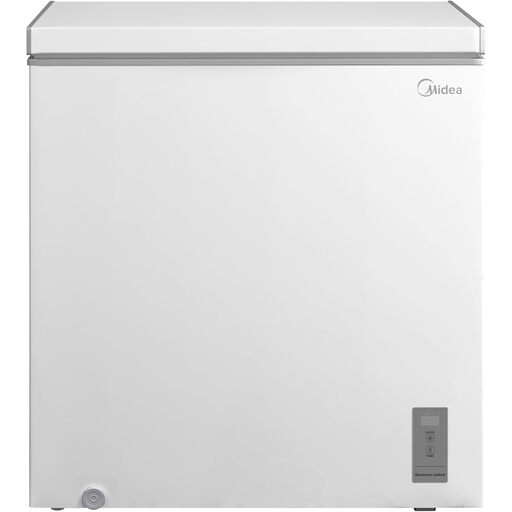 No image available
Consider this model if your portioned batches call for roughly 198 L of chest-freezer space.
The product name specifies a 198 L capacity and an E energy rating. Before placing it in an unheated area, check the exact model’s ambient operating range; also compare its freezing capacity, annual energy use and required lid clearance with your plans.
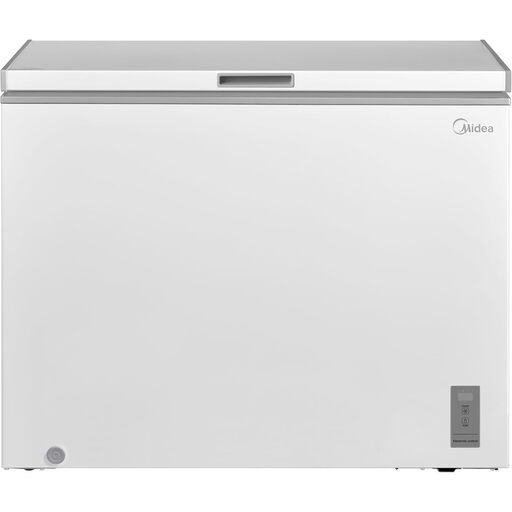 No image available
Consider the 249 L size if repeated cottage stays leave you with more labelled portions to store between changeovers.
The product name specifies a 249 L capacity and an E energy rating. Check that the footprint and lid clearance work in the intended space, and confirm the model’s ambient operating range, freezing capacity and annual energy use before buying.
 No image available
This wider 297 L option is worth considering when the cottage needs space for larger batches and has room for the appliance.
The product name identifies it as a freestanding chest freezer. Check the access route and lid clearance, confirm the exact model’s ambient operating range and freezing capacity, and allow for the manual defrosting stated in its product information.
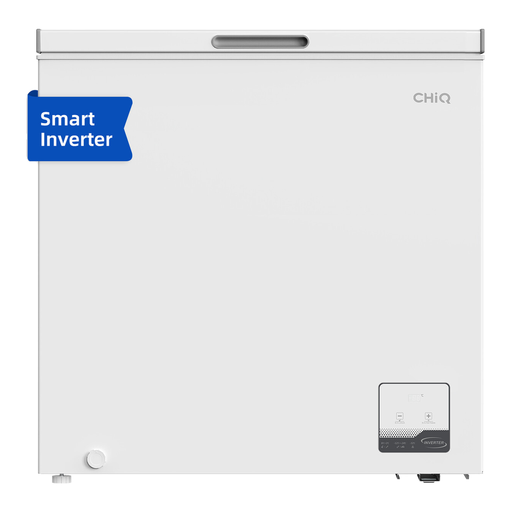 No image available
Consider this 199 L model if that capacity suits the number of portions you expect to keep between cottage visits.
The product name specifies Digital Inverter and an E energy rating. If the freezer will stand in an unheated space, confirm its ambient operating range; check annual energy use, freezing capacity and installation clearance as well.
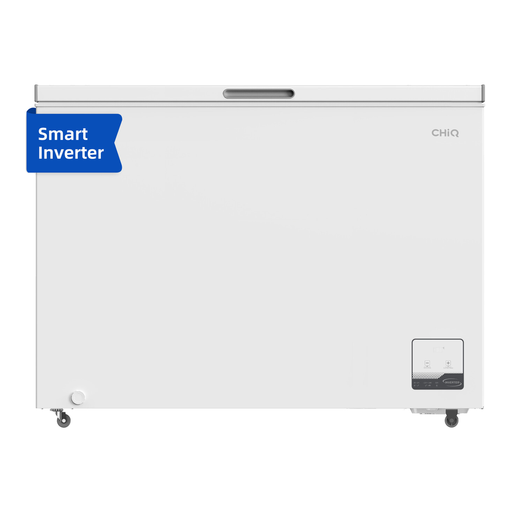 No image available
The 299 L capacity is relevant if you plan to keep larger batches of labelled portions alongside other frozen cottage food.
The product name specifies Digital Inverter. Measure the available space and lid clearance, and check the exact model’s ambient operating range, annual energy use and freezing capacity before deciding whether it suits the location.
Smaller, labelled portions are the more practical choice for this use. GOV.UK advises cooling warm dishes before freezing and dividing food into smaller portions to help them cool quickly; portioning also lets you defrost only what you need.
Food Standards Scotland advises keeping a freezer around −18°C. Follow the appliance instructions when setting it up and check its temperature rather than relying only on the dial position.
No: choose a model whose stated ambient operating range covers the temperatures expected at that location. Beko states operation as low as −15°C for the CF4098, and Liebherr lists FrostProtect −15°C for the CFe 1870 Pure, but neither specification applies to chest freezers generally.
Compare the exact models’ annual energy-use figures alongside their capacities, rather than judging by energy class alone. For a freezer supplied in Great Britain, check the applicable energy label and product information; energy-labelling arrangements differ in Northern Ireland, so confirm the applicable documentation with the retailer there.