A chest freezer can be worthwhile if you regularly run out of space for cooled tomato sauce and other frozen food, and have room for a top-opening appliance and its required ventilation clearance. If you freeze only a few portions at a time, start by checking whether your existing freezer will do; if you need more space, size the new freezer around the portions you will actually store, not capacity alone.
Who might need a chest freezer?
Solo batch cook with limited floor space
If several batches of sauce leave your existing freezer full, a compact chest freezer may provide overflow storage. Measure the appliance, ventilation space and room for its lid to open before deciding whether it fits.
Portion-freezing organiser
If you freeze labelled, single-meal portions, access matters as much as volume. A basket and a routine for using older containers first can make deep storage easier to manage.
Garage or outbuilding user
If an unheated space is your only possible location, check the exact model’s permitted ambient-temperature range. Approval for garage use varies by model, even among chest freezers.
What matters when choosing?
For one person freezing cooled tomato sauce, establish how much space your portions and other frozen food need, then check whether the appliance will fit and work in its intended location.
| Concern |
What to check |
Who this matters to |
| Fit and storage size |
Estimate the space needed for your portions and other food; measure the freezer, ventilation gaps and lid-opening area. |
If sauce is taking over my existing freezer, I want extra storage without giving up more floor space than necessary. Around 42% of consumers put fit and right-sized storage first. |
| Portion access and upkeep |
Look for a basket or other way to separate portions, and check how the exact model is defrosted. |
I want to find an older, labelled portion without emptying a deep freezer, and I need upkeep I can manage. For around 33% of consumers, access and maintenance are the primary concern. |
| Placement and food protection |
Check the approved ambient-temperature range for the intended location and any temperature-warning feature on the exact model. |
If my freezer has to go in an unheated space, I need to know it is suitable for the temperatures there. Suitable placement and food protection come first for around 25% of consumers. |
Common buying mistakes
-
Choosing by litres without measuring the space
A compact-capacity freezer still takes up floor space, needs ventilation clearance and must have room for its lid to open.
Measure the available width, depth and height, then compare them with the exact model’s dimensions and installation instructions.
-
Assuming every chest freezer can go in a garage
Indoor-oriented compact models and models approved for colder surroundings have different placement conditions. A brand name or chest-freezer shape does not establish garage suitability.
Check the exact model’s approved ambient-temperature range against the conditions expected where you will install it.
-
Confusing Low Frost with frost-free
Manual-defrost freezers need planned upkeep. Low Frost describes reduced ice build-up, not necessarily an end to defrosting.
Check the model’s defrosting method and decide whether its maintenance routine suits you.
-
Putting a large batch away without portioning it
A deep freezer makes unlabelled containers harder to rotate, while cooked food needs to be cooled promptly before freezing.
Divide sauce into sealed, labelled portions. NHS guidance for batch-cooked food advises cooling it, ideally within 1 to 2 hours, before freezing or refrigerating it.
Chest-freezer brands to consider
These model-specific examples show why capacity, maintenance and placement need checking separately; a feature on one model does not apply to every freezer from the same brand.
Russell Hobbs
Its compact RH99CF0E1W is a reference point for indoor overflow storage.
- Russell Hobbs lists 99 litres, one basket and a counterbalance lid for the RH99CF0E1W.
- The separate RH99CF0E1B listing says that model is not designed for an unheated outbuilding; check the placement conditions for the precise variant you choose.
Indesit
The compact OS 2A 100 2 UK 2 is relevant if defrosting arrangements and portion access are priorities.
- Low Frost and fast freeze are listed for this model.
- The same listing says it is not suitable for outbuildings. Low Frost should not be treated as frost-free operation.
Beko
The CF4198 is a larger-capacity example to assess when an outbuilding is the intended location.
- Beko states that the CF4198 has 198 litres of freezer volume, a high-temperature warning light and FreezerGuard operation down to -15°C.
- At a stated 91 cm wide, it needs substantially more space than a compact chest freezer and may offer more storage than sauce portions alone require.
Hotpoint
Its chest-freezer range is more relevant if your storage plans extend to larger batches or bulky food.
- Hotpoint lists Low Frost and Fast Freeze features on selected models and describes an open layout for bulky items.
- Check the size and features of the particular model rather than assuming a larger chest freezer suits a one-person sauce routine.
Compact chest freezers on Joybuy
These 99-litre chest freezers are options to consider if your sauce portions and other frozen food call for overflow storage. Check each model’s installation and maintenance requirements before choosing a location.
 No image available
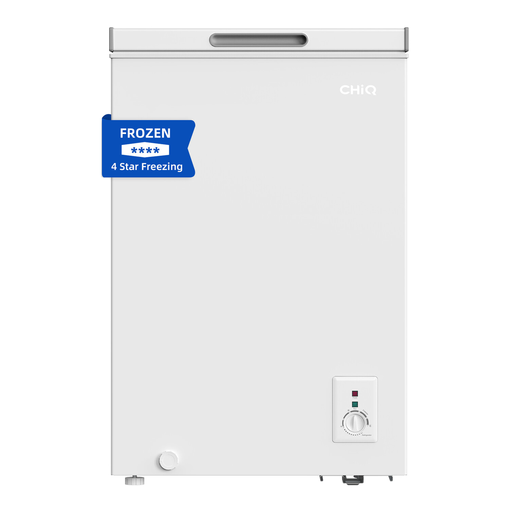
CHiQ JKR99DWE 99L chest freezer, E rated
Consider this 99L chest freezer if you need space beyond your existing freezer for sauce portions and other food.
Its title states an E energy rating. Check the exact model’s dimensions, ventilation clearance, defrosting method and approved ambient-temperature range for your planned location.
View on Joybuy
 No image available
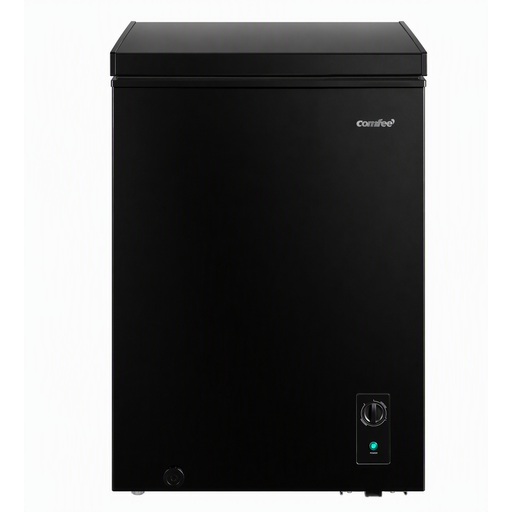
Comfee' RCC143BL2UK(E) 99L 4-star chest freezer, black
Consider this 99L chest freezer if you need additional storage for portions as well as other frozen food.
The title specifies a 4-star freezer rating. Before choosing it for a particular space, confirm its dimensions, portion-access features, defrosting method and approved ambient-temperature range.
View on Joybuy
Questions about freezing sauce
How soon should I freeze cooked tomato sauce?
Cool it promptly, then freeze or refrigerate it: NHS guidance for batch-cooked food advises cooling it ideally within 1 to 2 hours. Dividing sauce into sealed, labelled portions also makes it easier to take out only what you need.
How should I defrost and reheat a sauce portion?
Defrost a portion thoroughly in the fridge or with a microwave defrost setting rather than leaving it at room temperature, then reheat it until steaming hot throughout. Follow any more specific storage instructions that apply to the ingredients in your sauce.
Can a chest freezer go in an unheated garage or shed?
Only choose a model approved for the ambient temperatures expected there. The Russell Hobbs RH99CF0E1B and Indesit OS 2A 100 2 UK 2 are listed as not suitable for unheated outbuildings, while Beko states that its CF4198 FreezerGuard feature operates down to -15°C.
What energy information should I check before buying?
Compare the energy label for the exact freezer model rather than relying on a brand-wide description. GOV.UK guidance says products within the scope of UK energy-labelling rules must display an energy label at the point of sale.


