Regular sauce batch-cookers
If you freeze several portions after cooking, look for room to arrange labelled containers and retrieve older batches without unpacking the whole freezer.


Choose a chest freezer whose capacity and footprint suit the sauce portions you normally freeze, rather than judging by litres alone. If you add several cooled portions at once, check the exact model’s fast-freeze and temperature-warning features; for an outbuilding, check its stated ambient-temperature range. A deep cavity also calls for a way to find and rotate older portions.
If you freeze several portions after cooking, look for room to arrange labelled containers and retrieve older batches without unpacking the whole freezer.
If kitchen or utility-room floor space is tight, compare external dimensions as well as capacity, and allow room to open the lid and reach the contents.
If the freezer will sit outside a heated room, check that the manufacturer’s operating range covers the temperatures expected at that location.
Start with the portions and other food you need to store, then check where the freezer will fit and which features matter for your batch-cooking routine.
| Concern | What to check | Who this matters to |
|---|---|---|
| Usable capacity | Compare net capacity, external dimensions and whether your usual containers fit flat. | If I freeze several sauce portions alongside everyday food, I need to fit them in without losing track of older batches. Around 33% of consumers put usable capacity first. |
| Freezing control | Check the exact model for a fast-freeze setting and a high-temperature warning; cool sauce before freezing. | Adding several cooled portions together makes it important for me to manage the freezer’s temperature. For around 27% of consumers, that is the primary concern. |
| Outbuilding placement | Compare the manufacturer’s stated ambient operating range with the lowest temperature expected where the freezer will stand. | If my only practical space is an unheated garage or outbuilding, I need a model rated for that location. Around 20% of consumers place this installation need first. |
| Maintenance and energy information | Compare energy labels for similarly sized models, and check each model’s defrost method. | I want to understand the ongoing upkeep before choosing a freezer that runs continuously. That is the main priority for around 20% of consumers. |
A deep cavity can be awkward for tall tubs or containers buried beneath newer portions.
Measure your usual containers and installation space, then check the model’s dimensions, capacity and basket arrangement. Label portions so older sauce is easier to find.
A fast-freeze setting is not a substitute for cooling batch-cooked food before it goes into the freezer.
The NHS advises cooling batch-cooked food ideally within 1 to 2 hours before freezing or refrigerating it. If you regularly add several cooled portions together, check whether the freezer has a fast-freeze setting.
Low-ambient operation is model-specific; the chest-freezer format alone does not establish suitability for an unheated space.
Compare the exact model’s manufacturer-stated operating range with the lowest temperature expected at the installation site.
Defrost requirements differ between models, while an energy class alone does not account for differences in capacity.
Check the defrost method and compare energy labels and product information sheets for freezers of a size you would actually use.
These model and range examples show which details are worth checking; a feature on one freezer does not establish that it appears across a brand’s range.
The CF4371 is a 371-litre chest freezer to consider when batch storage and outbuilding placement are both relevant.
The HPCF 3714 illustrates a larger chest model with features aimed at batch additions and frost management.
Haier’s chest-freezer range includes larger-capacity choices for households storing sauce batches alongside other frozen food.
These chest freezers offer different stated capacities for storing cooled sauce portions. Compare each model’s dimensions, container access and installation requirements against your own space before choosing.
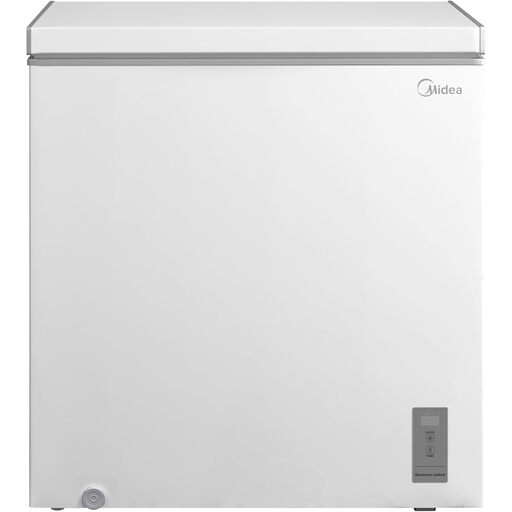 No image available
Consider this model if a 198-litre chest fits the space you have set aside for sauce portions.
The product name states a 198-litre capacity and an E energy rating. Check the external dimensions and whether your containers will fit comfortably.
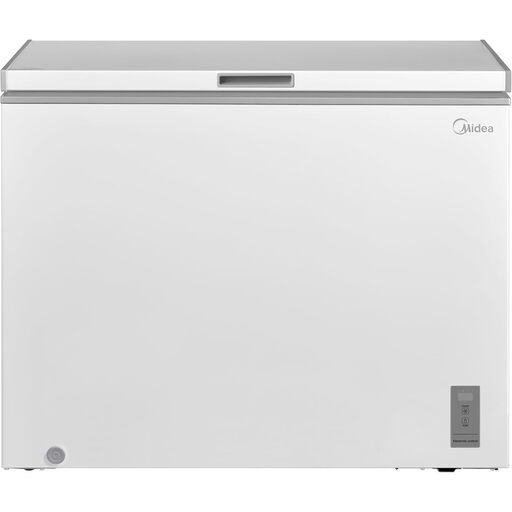 No image available
Consider the 249-litre capacity if your sauce batches share freezer space with other food.
The product name states an E energy rating. Check the freezer’s width, lid clearance and exact-model features before deciding whether it suits your kitchen, utility room or outbuilding.
 No image available
This wider, 297-litre model is worth measuring for if you regularly need room for sauce portions and other frozen food.
Its product name identifies it as freestanding. Check the access route and installation space; if it will stand in an outbuilding, confirm the exact model’s ambient operating range.
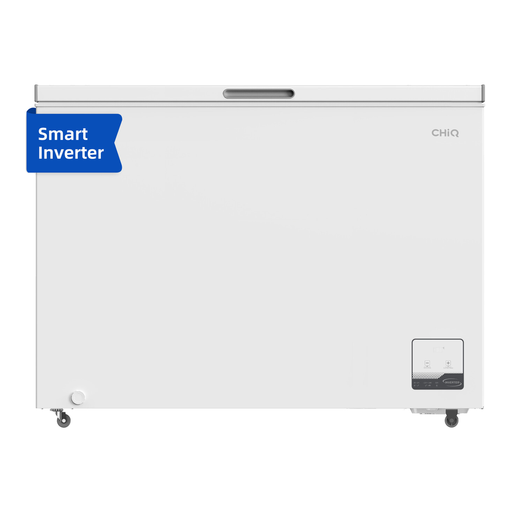 No image available
Consider the 299-litre capacity if you need to arrange larger sauce batches alongside other frozen stock.
Digital Inverter is part of this model’s product name. Check its external dimensions, defrost method and installation requirements for your intended location.
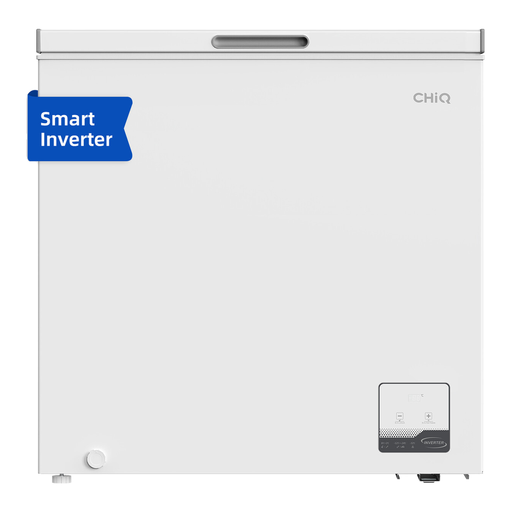 No image available
Consider this 199-litre variant if that capacity is enough for your cooled sauce portions and other frozen food.
The product name states an E energy rating. Measure your available space and check the defrost method and ambient operating range if those affect where you can use it.
Cool batch-cooked sauce before freezing it. NHS guidance on batch-cooked food advises cooling it ideally within 1 to 2 hours before freezing or refrigerating; a fast-freeze setting does not replace that step. The NHS guidance is published in the context of baby food.
The Food Standards Agency gives -18°C as the recommended temperature for a domestic freezer. Follow the appliance instructions for setting and checking its temperature.
No: check the exact model’s stated ambient operating range against the lowest temperature expected in your garage. Beko states a -15°C limit for its CF4371 FreezerGuard feature, and Hotpoint states a -15°C limit for the HPCF 3714’s FreezerProtect feature; neither figure applies automatically to another model.
Compare the energy labels and product information sheets for models with capacities that suit your storage needs. Check the defrost method too: an energy class on its own does not tell you how your containers will fit or what upkeep the freezer requires.