Small-batch home bakers with limited space
If you freeze portions regularly but have little floor space, compare external dimensions and the room needed to open the lid, not just capacity. A basket can keep frequently used portions near the top.


Choose capacity to match your pastry batches and the space available: a 99-litre chest freezer can suit small, regular batches, while a larger model gives you more room to separate portions by type and date. Check that the cabinet fits with its lid open, follow GOV.UK guidance to keep frozen food at around -18°C, and confirm the exact model’s ambient-temperature suitability before placing it in a garage or outbuilding.
If you freeze portions regularly but have little floor space, compare external dimensions and the room needed to open the lid, not just capacity. A basket can keep frequently used portions near the top.
If you prepare several pastry types or larger runs, allow room for labelled batches to remain separate and accessible. Russell Hobbs and IceKing each publish a 198-litre model among the examples considered here; that capacity needs more installation space than a compact 99-litre model.
If storage must sit away from the kitchen, check the exact model’s stated ambient-temperature conditions against the location. Allow for ventilation and follow Electrical Safety First’s advice to use a direct wall socket rather than an extension lead.
Start with the number of portions you need to organise and the space the freezer can occupy. Then check temperature control and whether the intended location meets the exact model’s installation conditions.
| Concern | What to check | Who this matters to |
|---|---|---|
| Batch space and access | Compare capacity, external dimensions, lid-opening space and any basket arrangement. | I freeze different pastry types in batches and need labelled portions to stay easy to find; roughly 42% of consumers put batch organisation first. |
| Freezing temperature | Check the recommended freezer setting and how you will monitor the temperature. GOV.UK advises keeping a freezer around -18°C; cool warm food before loading it. | When I add freshly prepared portions, I need to know they are being stored at the intended freezer temperature. Temperature management comes first for around 33% of consumers. |
| Location and installation | Check the model’s ambient-temperature conditions, ventilation clearance and access to a wall socket; compare published annual energy use where available. | My available space is in a garage, so I need an appliance suited to that location and room to install it safely; about 25% of consumers make location and running considerations their primary concern. |
A freezer may hold enough pastry yet leave too little room to open its lid or ventilate the cabinet. The manufacturer lists the 198-litre Russell Hobbs RH198CF0E1W at 77 cm wide, while IceKing lists its 198-litre CF197EW at 91 cm wide.
Measure the intended position, lid-opening space and required ventilation clearance before choosing how much batch storage to buy.
Ambient-temperature suitability belongs to the exact model, not the chest-freezer category. IceKing states that its CF197EW can operate at ambient temperatures down to -15°C; that limit says nothing about another model.
Compare the model’s declared conditions with the temperatures in your intended location, and keep the appliance protected from the weather.
A fast-freeze setting does not replace cooling cooked food and dividing it into manageable portions. GOV.UK advises cooling cooked dishes before freezing and labelling frozen food.
Prepare, package and label portions before loading them, following the relevant instructions for the ingredients or finished pastry.
Electrical Safety First advises placing fridges and freezers close to a wall socket rather than using an extension lead, and leaving room for air circulation.
Plan for a direct wall-socket connection and the ventilation clearance required by the appliance instructions.
The compact MDRC154FZE01 is a 99-litre option for smaller pastry batches. Its dimensions are listed as 85 × 54.7 × 44.6 cm, ordered height, width and depth.
The RH198CF0E1W is a 198-litre option for larger batches. Russell Hobbs lists a removable wire rack, counterbalance lid and adjustable thermostat.
The CF197EW is a 198-litre option with a basket and interior light. IceKing states that it can operate at ambient temperatures down to -15°C.
The IG100 is a 99-litre compact-storage option that Igenix presents for kitchens and outbuildings.
These choices range from compact 99-litre storage to 198-, 249- and 297-litre capacity for larger pastry batches. Choose by the portions you need to keep organised, then check the exact model’s dimensions, freezer setting and suitability for its intended location.
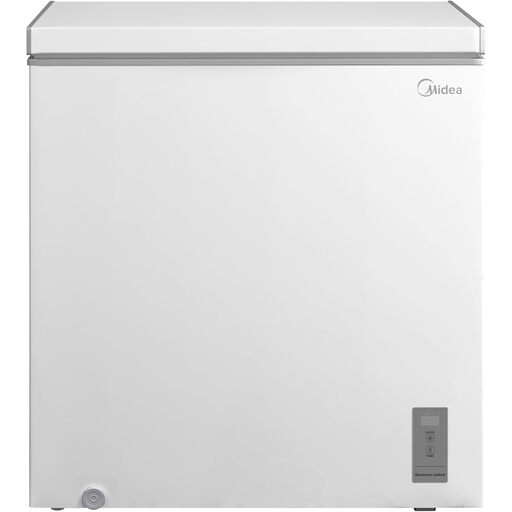 No image available
Consider the 198L capacity when you need room to separate larger, labelled pastry batches.
The product name specifies an E energy rating. Before use, check the recommended freezer setting and measure the intended space, including lid and ventilation clearance.
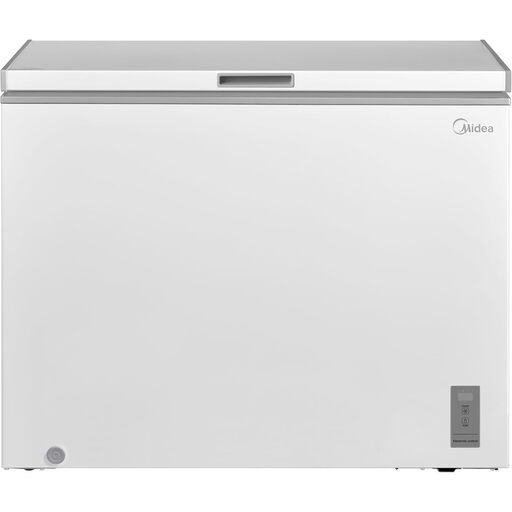 No image available
The 249L capacity is an option when regular pastry runs call for more batch-storage room.
The product name specifies an E energy rating. Allow for the cabinet, its open lid and ventilation space, and check the recommended freezer setting before storing portions.
 No image available
Consider the 297L capacity if you routinely need to keep a greater number of pastry batches separated.
Its product name identifies it as a wide freestanding model. Measure the available space and lid clearance, and confirm the recommended freezer setting and any outbuilding conditions that apply to your location.
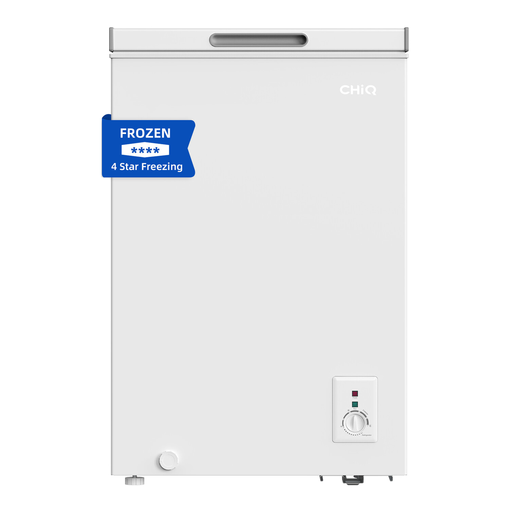 No image available
The 99L capacity is worth considering for smaller recurring pastry batches when floor space is limited.
The product name specifies an E energy rating. Check that its capacity accommodates your labelled portions, and confirm the freezer setting and ambient-temperature conditions for the planned location.
Aim to keep the freezer around -18°C, in line with GOV.UK guidance. Cool warm food before freezing it, divide it into manageable portions where appropriate, and follow any storage instructions for the pastry or its ingredients.
No: check the exact model’s declared ambient-temperature conditions before choosing that location. IceKing states that its CF197EW can operate down to -15°C, while Russell Hobbs describes its RH198CF0E1W as suitable for garages and outbuildings; neither statement applies to every chest freezer. Protect the appliance from the weather and allow ventilation space.
Electrical Safety First advises connecting fridges and freezers directly to a nearby wall socket, rather than using an extension lead. Plan the installation around that connection and the appliance’s ventilation requirements.
If you operate a food business in England, Wales or Northern Ireland, GOV.UK says you must register with your local authority at least 28 days before trading. Its business guidance also advises cooling cooked dishes before freezing, dividing food into smaller portions and labelling what you freeze. Check the requirements with your local authority, particularly if you operate in Scotland.
Compare published annual consumption in kWh on the applicable energy label or product information sheet, alongside capacity. An energy-rating letter alone does not give your running cost, which also depends on your electricity tariff and how the freezer is used.