Shared-kitchen batch cook
You freeze modest amounts of cooled sauce regularly, but floor space is limited. Check the freezer’s external dimensions and the room needed to open its lid before choosing a capacity.


Choose a chest freezer by the maximum number of labelled, cooled tomato-sauce portions you need to store, then check its footprint and lid clearance. A compact model suits modest batches in a tight shared kitchen; a larger one offers more storage but needs more space and a stock-rotation routine. If the kitchen operates as a food business, temperature monitoring and documented food-safety controls need attention alongside capacity.
You freeze modest amounts of cooled sauce regularly, but floor space is limited. Check the freezer’s external dimensions and the room needed to open its lid before choosing a capacity.
You store repeated or larger batches and need a way for everyone to label, find and rotate portions. Compare the space your containers will occupy, not just the stated litre capacity.
If sauce is prepared for sale or service, appliance capacity is only part of the decision. Food Standards Agency guidance also addresses suitable cooling and freezing facilities, temperature monitoring and food-safety controls for the operation.
Plan how sauce will be cooled and portioned before comparing freezer sizes. Then check how many portions must fit at once, where the appliance can stand and how everyone will identify older stock.
| Concern | What to check | Who this matters to |
|---|---|---|
| Cooling and temperature control | Plan prompt cooling before freezing; check the exact model’s temperature warning and how freezer temperatures will be monitored. | If I prepare sauce for others, I need a cooling routine and a way to notice temperature problems. Around 31% of consumers would put cooling and monitoring first. |
| Shared access and rotation | Check basket placement and agree on dated labels, storage zones and a first-in-first-out routine. | When several people add containers, I need to find older portions before they become buried. Around 25% of consumers would make organisation their primary concern. |
| Fit and installation | Measure the floor space, delivery route and lid clearance; check the permitted ambient-temperature range if placing the freezer outside the heated kitchen. | My shared kitchen has little spare room, so the freezer must fit without blocking access. For around 25% of consumers, installation space would come first. |
| Capacity and defrosting | Count the portions stored at peak times and compare their containers with the usable layout; check the model’s defrost requirements. | I make recurring batches and need enough accessible storage between stock rotations. Capacity and upkeep would lead the choice for around 19% of consumers. |
The Food Standards Agency’s caterer guidance warns that harmful bacteria can grow when food is not chilled down as quickly as possible. A fast-freeze setting does not replace the cooling step.
Arrange prompt cooling, then divide the cooled sauce into small sealed portions before freezing. Beko’s chest-freezer instructions advise small portions to help food freeze rapidly.
Beko states that its CF4098 is 54.5 cm wide and deep; Hotpoint states that its HPCF 3084 UK is 112 cm wide and 70 cm deep. Neither capacity is useful if the appliance cannot be delivered, installed or opened where planned.
Measure the access route, floor area and lid-opening space, then compare those measurements with the exact model’s installation instructions.
Low-ambient operating claims apply to particular models, not every chest freezer. Beko and Hotpoint state operation down to −15°C for the cited CF4098 and HPCF 3084 UK models respectively.
If the planned location can get cold, check the exact model’s permitted ambient range and installation instructions.
Deep, open storage makes it easy for several users to cover older containers with new batches.
Give containers dated labels, assign baskets or zones and agree who will check that older portions are used first.
Beko’s UK chest-freezer range includes the compact CF4098 and larger models.
Hotpoint’s HPCF 3084 UK is a larger domestic chest-freezer option for substantial batch storage.
Cookology lists chest freezers across a range of sizes for comparing planned batch volume with available space.
These chest freezers span compact storage and larger recurring-batch needs. Match each stated capacity to the number of cooled, labelled sauce portions you will store at once, then check installation space and your temperature-monitoring plan.
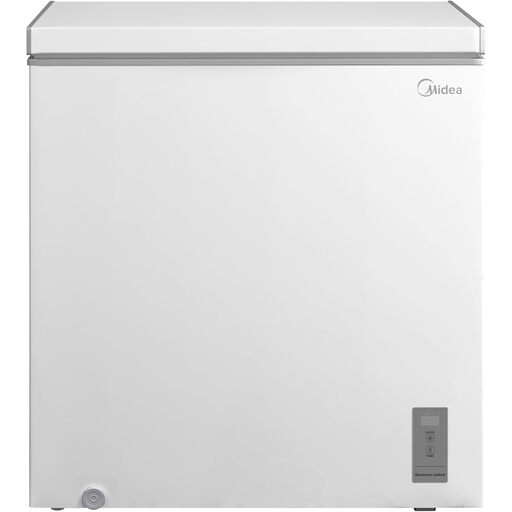 No image available
Consider this size for recurring cooled-sauce batches when your planned containers fit within a 198-litre freezer. Check the footprint, lid clearance and temperature-warning provision for the exact model.
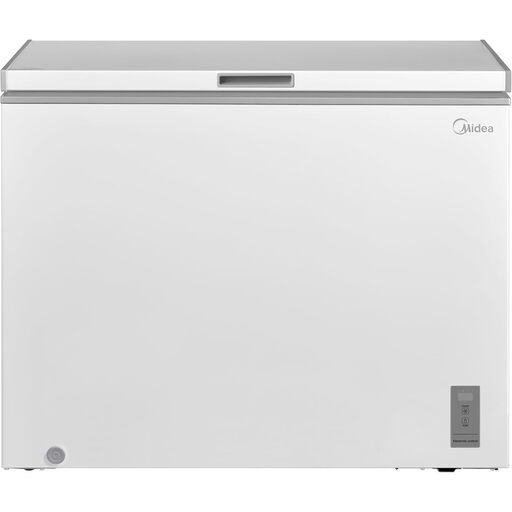 No image available
The 249-litre capacity is worth comparing when more cooled portions must be stored between stock rotations. Measure the proposed location and confirm how temperature problems will be noticed.
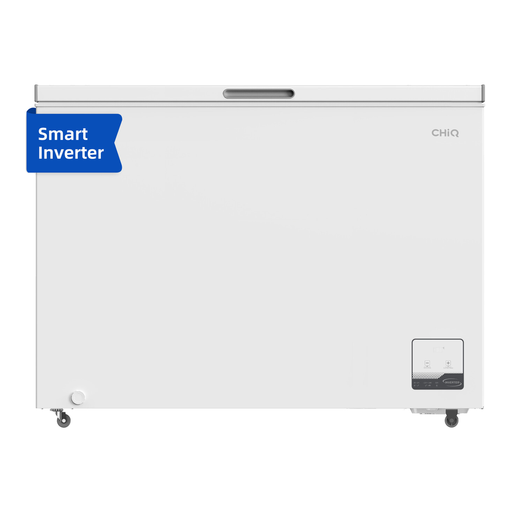 No image available
For larger recurring batches, compare its stated 299-litre capacity with the space your labelled containers will occupy. Check floor and lid clearance, plus the monitoring and installation details needed for your location.
 No image available
This wide, 297-litre model is a size to consider when substantial batches need shared storage. Allow room for delivery and the open lid, and plan how older sauce portions will remain accessible.
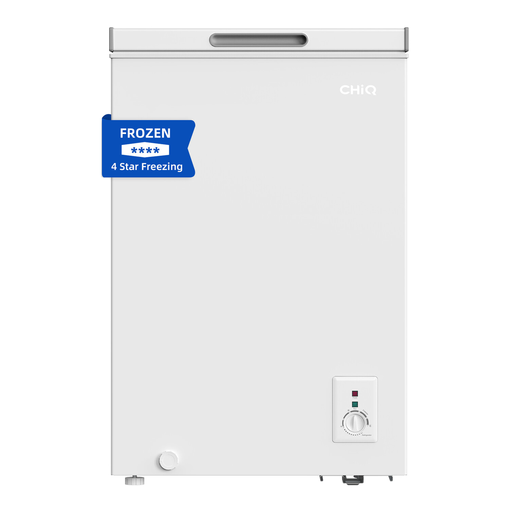 No image available
Consider the 99-litre capacity for modest, clearly labelled batches where floor space is tight. Compare your peak number of containers with that capacity, and check lid clearance and temperature-monitoring arrangements.
Cool it promptly before freezing it in small, sealed portions; do not use the freezer as the cooling step for a large hot batch. The Food Standards Agency’s caterer guidance warns that harmful bacteria can grow when food is not chilled down as quickly as possible, while Beko’s instructions advise small portions so food can freeze rapidly.
Agree on a temperature-check routine, particularly when several people use the appliance. For a food business, Food Standards Agency MyHACCP guidance calls for suitable facilities to monitor food temperatures according to the operation; a freezer warning feature does not replace the business’s temperature-control procedures.
Use a consistent shared label showing the contents and date frozen, with portion size, intended use, owner or batch identifier where useful. That helps users find and rotate portions; Beko’s instructions also advise preparing food in small portions so only the required amount needs to be thawed.
If the kitchen operates as a food business, the Food Standards Agency says a new business must register with its local authority at least 28 days before trading or food operations start. Sharing a domestic kitchen does not by itself establish that it is a food business; check the operation’s status with the relevant local authority.