Seasonal rhubarb preservers with limited floor space
If you mainly want to store portions of chopped rhubarb and a little other frozen food, measure the available width and depth as well as checking capacity. Leave room to open the lid.


Choose capacity for everything you plan to freeze alongside the chopped rhubarb: a compact chest freezer can suit occasional portions where space is tight, while a roughly 300L model gives more room for regular family meal preparation and larger shops. Check the full footprint and lid clearance, compare annual energy use, and confirm the exact model’s permitted ambient temperature if it will stand in a garage.
If you mainly want to store portions of chopped rhubarb and a little other frozen food, measure the available width and depth as well as checking capacity. Leave room to open the lid.
If rhubarb will share the freezer with prepared meals, vegetables and larger grocery shops, consider how much organised storage you need before choosing a compact model.
If the intended location gets cold, check the exact freezer’s permitted ambient-temperature range. Plan its electrical connection and look at temperature-warning features on the models you shortlist.
Start with the space needed for rhubarb and regular family food, then check whether the freezer suits its intended location and how its energy label and defrosting routine compare.
| Concern | What to check | Who this matters to |
|---|---|---|
| Capacity and footprint | Compare freezer volume with external dimensions, the delivery route and space to lift the lid. | I want room for seasonal portions without giving up more floor space than my household can spare; around 37% of consumers would put that balance first. |
| Cold-location suitability | Check the exact model’s ambient-temperature range for a garage or outbuilding, and whether it has a temperature warning. | If my freezer will stand in a cold outbuilding, I need to know it is specified for that location; for around 36% of consumers, location suitability would be the primary concern. |
| Energy use and upkeep | Read the A–G energy class alongside annual kWh use, and check the model’s defrosting instructions. | I expect to use the freezer regularly and want to weigh electricity use against the work of defrosting it; around 27% of consumers would make those ongoing demands their first priority. |
A larger chest freezer may hold the food you want but still be too wide for the delivery route or leave too little room to open its lid.
Measure the route in, the intended footprint and the overhead clearance before ordering.
Low-ambient operation is a specification for particular models, not a feature of every chest freezer. Beko and Hotpoint describe it for specified ranges or models.
Compare the exact model’s stated operating range with the temperatures expected at its intended location, and follow its installation instructions.
Energy Saving Trust advises considering a model that meets your storage needs while checking its efficiency information. The letter alone does not show how much electricity differently sized freezers are stated to use annually.
Compare capacity and the label’s annual kWh figure across models that fit your household’s needs.
A larger-than-needed appliance can mean more electricity use over time.
Large portions can be awkward to fit around other meal ingredients and harder to identify later. GOV.UK guidance for food businesses recommends smaller portions and labels when freezing food.
Divide chopped rhubarb into useful portions and label them with the contents and freezing date; cool cooked dishes before putting them in the freezer.
Beko lists compact and larger chest freezers, including specified FreezerGuard models intended for cold outbuildings.
Hotpoint’s HPCF 3084 is a larger chest-freezer option for households planning substantial frozen-food storage.
Haier’s HCE321DK provides a 300L-plus model to compare with other family-storage freezers.
These choices range from a compact freezer for occasional rhubarb portions to larger cabinets for storing rhubarb alongside family meals. Compare each model’s dimensions and energy information, and confirm its permitted ambient temperature before planning garage use.
 Image unavailable
Consider this 297L model if rhubarb portions will share space with other family food. Check its full footprint, lid clearance and stated ambient-temperature range against the planned location.
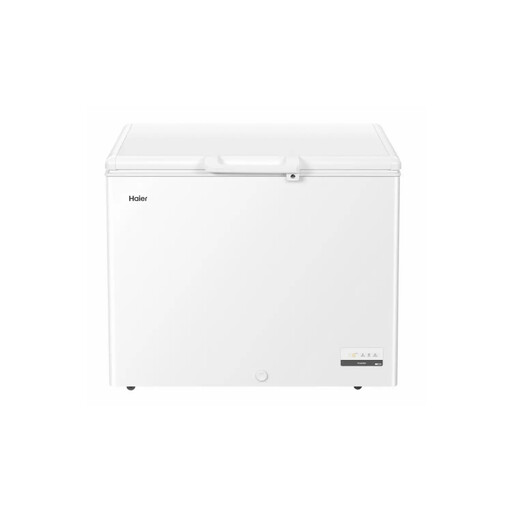 Image unavailable
The 300L capacity is relevant if you plan to store rhubarb alongside batch-cooked family meals. This is an E-rated static model; check its defrosting instructions, annual kWh figure and permitted location before deciding.
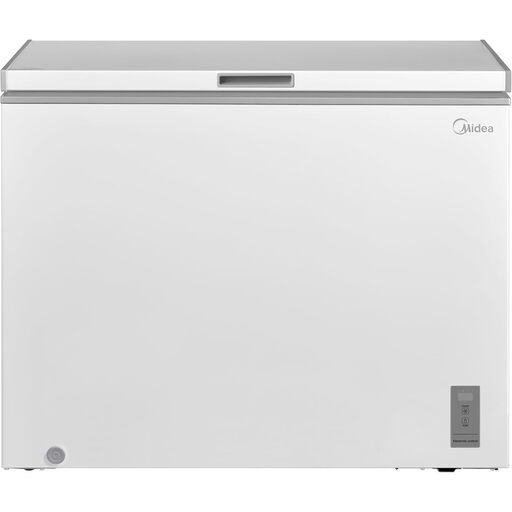 Image unavailable
Consider the 249L capacity if you need more room than a compact seasonal freezer for rhubarb and family ingredients. Check the exact model’s ambient-temperature specification for an outbuilding and compare its annual kWh figure with other suitable options.
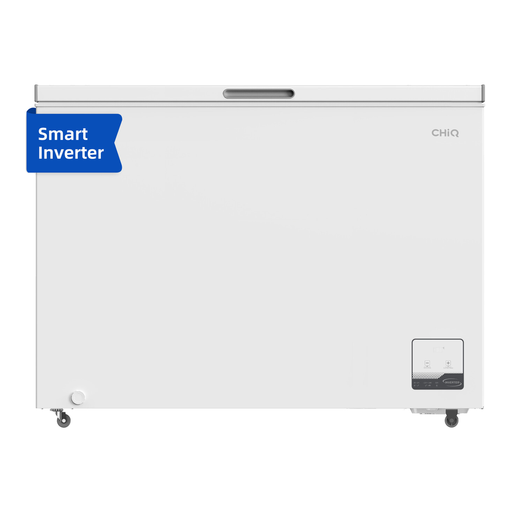 Image unavailable
The 299L capacity may suit households freezing several rhubarb portions alongside family meals. Measure the available space and check annual kWh use and the permitted ambient-temperature range if running costs or garage placement matter.
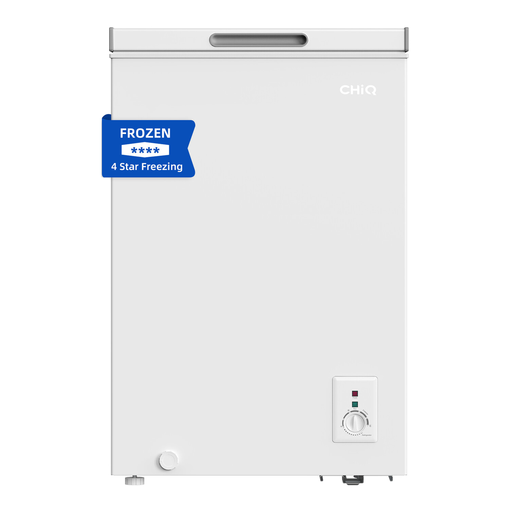 Image unavailable
This 99L option may suit occasional rhubarb portions where space is limited, but offers less room for wider family-meal storage than the larger models shown here. Check its full dimensions, annual kWh figure and permitted ambient temperature for your intended location.
Freeze it in smaller, labelled portions that suit the meals you expect to make. GOV.UK guidance for food businesses recommends portioning and labelling frozen food, and cooling cooked dishes before freezing them; the cited guidance applies to England, Wales and Northern Ireland, so check local guidance in Scotland.
Yes, if the exact model is specified for the temperatures expected in that garage and installed according to its instructions. Beko states that specified FreezerGuard chest freezers operate down to -15°C, and Hotpoint makes a model-specific low-temperature claim for the HPCF 3084; neither claim applies to every freezer.
Do not assume an extension lead is suitable for the freezer’s installation. Electrical Safety First warns that fridges and freezers can overload an extension lead when it is used with other large appliances; follow the freezer’s instructions and arrange a suitable fixed socket if needed.
Check your retailer’s take-back arrangements and your local council’s recycling or collection options before delivery of the replacement. Collection arrangements can differ by retailer and area, so confirm how the old appliance must be prepared and handed over.