Small-kitchen batch preservers
You blanch carrots or other vegetables in batches and need dedicated storage, but must allow both floor space and room to lift a chest freezer’s lid.


Choose a compact chest freezer for batches of blanched carrots only if its external dimensions, rear clearance and open-lid space fit your kitchen. The 95- and 99-litre models illustrate compact options; if there is no workable position for a top-opening appliance, measure an under-counter upright instead. For larger batches, weigh extra capacity against the floor space it takes and compare annual electricity use.
You blanch carrots or other vegetables in batches and need dedicated storage, but must allow both floor space and room to lift a chest freezer’s lid.
You prepare larger batches at certain times of year and need to judge whether a compact freezer has enough room for portioned food, or whether a larger appliance would justify its footprint.
Your kitchen may be too tight for a chest freezer. An unheated location is an option only if the exact model’s stated ambient-temperature conditions permit it.
Consider it when: You have a measured position with room above the lid and need space for occasional or moderate carrot batches.
Trade-off: A smaller cavity limits batch size, and portions need organising so they remain easy to retrieve.
Consider it when: You regularly freeze substantial quantities beyond carrots and have a suitable floor position.
Trade-off: The extra storage takes more floor space; Beko lists its CF4371 at 130 cm wide and 70.5 cm deep.
Consider it when: A chest freezer’s upward-opening lid cannot clear your kitchen layout, but an appropriately sized upright can fit beneath a worktop.
Trade-off: Check whether its divided storage will accommodate the containers you use for larger batches.
| Concern | What to check | Who this matters to |
|---|---|---|
| Footprint and lid access | Measure the position and access route against the model’s width, depth and height; allow rear and open-lid clearance. A general guide suggests around 5 cm at the back for pipework or sockets. | I need the freezer to fit without obstructing the kitchen or striking cupboards when I lift the lid. Around 44% of consumers put physical fit first. |
| Batch capacity and organisation | Compare capacity with the portions you intend to store, then check the basket arrangement and whether the exact model offers fast freeze. | If I prepare carrots in sizeable batches, I need enough room for portioned containers that I can find again. Roughly 33% of consumers prioritise batch capacity and handling. |
| Electricity use and placement | Compare annual kWh as well as the energy class. For an unheated location, check the exact model’s permitted ambient conditions. | I want to understand the freezer’s ongoing electricity use, or whether it can go somewhere outside my kitchen. About 23% of consumers make energy use or placement their primary concern. |
A compact capacity does not guarantee that the appliance can pass through the access route, fit its intended position or open beneath nearby cupboards.
Make a measured floor plan. Compare the model’s external dimensions and check its rear clearance and full lid-opening path; General guidance suggests allowing around 5 cm at the back for pipework or sockets.
UK government buyer guidance notes that differently sized appliances with the same energy rating can use different amounts of electricity.
Read the annual kWh figure alongside capacity and energy class when comparing freezers.
Suitability for low ambient temperatures depends on the exact model, not its chest-freezer shape.
Check the model’s installation instructions before choosing a garage or shed. Beko’s claim of operation down to −15°C applies to its FreezerGuard-equipped models, not every chest freezer.
Small, unlabelled portions can be difficult to find beneath later batches.
Check whether the basket arrangement suits your containers, label portions and keep older batches easy to reach.
Midea’s MDRC154FZE01 is a compact example: it is listed at 99 litres and H85 × W54.7 × D44.6 cm.
the MCF95E1 is listed at 95 litres and H85.8 × W52.7 × D44.4 cm, making its published dimensions relevant to a tightly measured position.
Beko offers chest freezers in different sizes and describes FreezerGuard on applicable models for lower-ambient-temperature placement.
These chest freezers cover a 99-litre option for smaller batches and two higher-capacity options to consider only where the measured floor space and lid path allow them.
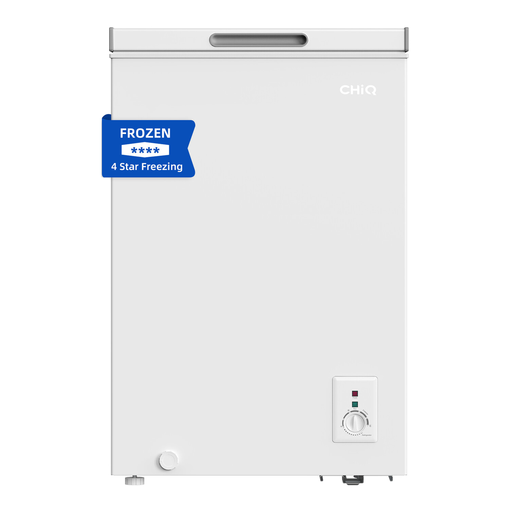 No image available
Consider this for occasional carrot batches if its measured footprint and upward lid path fit your kitchen. The named variant has a 99-litre capacity and E energy rating; check its annual kWh figure and whether its storage arrangement suits your portions.
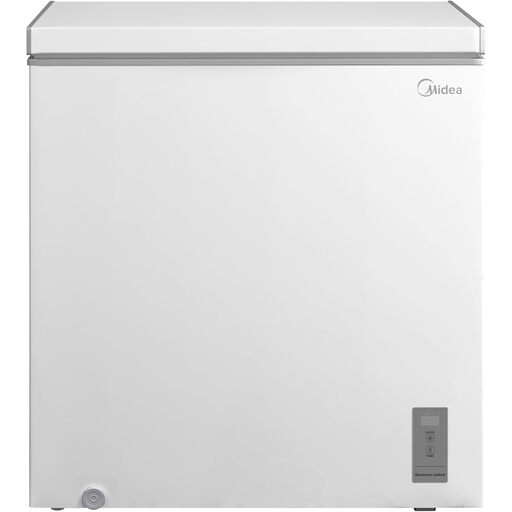 No image available
Consider its larger batch capacity only if the appliance and open lid fit the available position. This variant is named as a 198-litre, E-rated chest freezer; compare its annual kWh figure and check the installation instructions before considering an unheated outbuilding.
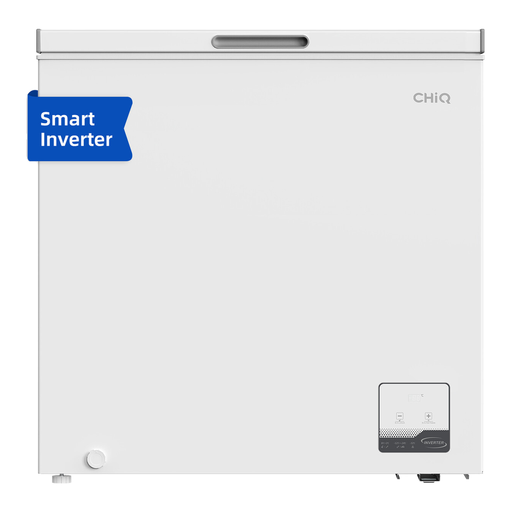 No image available
Consider this capacity if you freeze substantial batches and can accommodate a larger chest freezer. The named variant is 199 litres and E rated; verify the external dimensions, open-lid clearance and annual kWh before deciding whether it fits your kitchen.
Measure the intended position’s width, depth and height, the route into it, and the space needed to open the lid. General freezer measurement guidance suggests allowing around 5 cm at the back for pipework or sockets; check the exact model’s installation instructions as well.
Fast freeze is worth considering if you regularly add a substantial prepared batch, but it need not decide the purchase for every small batch. Check the exact model’s features: Super Freeze is listed on the Midea MDRC154FZE01, while Beko describes fast freeze on selected models.
Use a garage only if the exact freezer’s documentation permits the ambient conditions there. Beko says its FreezerGuard-equipped models can operate at ambient temperatures as low as −15°C, but that claim does not apply to every chest freezer.
Compare their annual kWh figures alongside capacity and energy class. UK government buyer guidance notes that differently sized appliances with the same energy rating can use different amounts of electricity.