Small-kitchen batch cook
If the freezer must sit near a crowded worktop, measure its floor position and check that the lid can open without hitting cabinetry. Leave the clearance required by the model’s installation instructions.


Measure the available floor space, lid-opening path and installation clearance before choosing a capacity: a compact chest freezer in the 95–104L range may suit cooled soup portions if your containers fit. For frequent batch loading, consider a model with Fast Freeze; for an unheated location, check the exact model’s stated operating conditions. Both choices still need to fit the space you have.
If the freezer must sit near a crowded worktop, measure its floor position and check that the lid can open without hitting cabinetry. Leave the clearance required by the model’s installation instructions.
If you freeze several cooled portions after each cooking session, consider how their containers will stack and whether a basket will keep frequently used portions within reach. Check for Fast Freeze if you want that function for repeated loading.
If the freezer will stand outside a heated kitchen, choose a model whose stated operating conditions cover that location. Outbuilding suitability varies by model, even among compact chest freezers.
Start with the space the freezer will occupy, including access to its top-opening lid. Then match capacity and model-specific functions to the way you portion and store cooled soup.
| Concern | What to check | Who this matters to |
|---|---|---|
| Footprint and lid access | Measure width and depth in centimetres, then check the model’s ventilation requirements and unobstructed lid-opening path. | If kitchen floor space beside the worktop is tight, I need a freezer I can position and open without blocking nearby surfaces. Around 36% of consumers put physical fit and access first. |
| Usable soup storage | Compare net capacity with the number and shape of your freezer-safe containers; check basket provision. | When I cook enough soup for several meals, I want the portions to fit and remain easy to retrieve. For around 29% of consumers, portion storage is the primary concern. |
| Batch loading and location | Check for a documented Fast Freeze function if loading several portions together; for an unheated site, check the exact model’s ambient-temperature conditions. | If I load cooled portions regularly or place the freezer in an outbuilding, I need its functions and operating conditions to match that routine. Around 21% of consumers prioritise loading or placement needs. |
| Energy use and defrosting | Compare annual kWh and noise for similarly sized freezers, alongside the energy label and stated defrost method. | Once the freezer fits and holds my portions, I want to understand its ongoing electricity use and ice-management routine. Those ownership considerations come first for around 14% of consumers. |
A freezer can hold enough soup yet still obstruct a worktop or lack room for its lid to open.
Measure the proposed position in centimetres, including height and the lid path, and follow the exact model’s installation-clearance instructions. The freezer measurement guide also advises allowing room behind the appliance for sockets or pipework.
Cold-location claims are model-specific. The Indesit OS 2A 100 2 UK 2 should not be used in an unheated area.
For a garage or shed, check that the chosen model’s stated ambient operating range covers the expected conditions and follow its installation instructions.
Cooling the food is part of the batch-freezing routine, regardless of which freezer you choose.
The NHS advises cooling batch-cooked food, ideally within 1–2 hours, before freezing or refrigerating it. Portion the soup so you can store and later defrost the amount you need.
The Energy Saving Trust notes that a larger appliance can use more electricity than a smaller one even when both have the same energy rating.
Compare annual kWh alongside capacity and the current A–G rating for freezers of a suitable size; check the defrost method separately if maintenance matters to you.
These model examples illustrate different checks for a space-limited soup-freezing setup; their listed features do not apply to every freezer from the same brand.
The MCF95E1 is listed at 95L with a 52.7 × 44.4 cm width-by-depth footprint, making its dimensions useful to check where depth is tight.
The CF4098W is listed at 104L and 54.5 × 54.5 cm, a deeper footprint to assess if you regularly load portions.
The 97L OS 2A 100 2 UK 2 is listed with Low Frost and Fast Freeze.
The 99L CHF100 is listed as suitable for outbuildings, with a visual temperature warning.
These choices include a 99L chest freezer for a smaller-space search and two larger-capacity models to consider only if their floor space and lid clearance work in your kitchen or utility area. Check the installation requirements of the exact model before ordering.
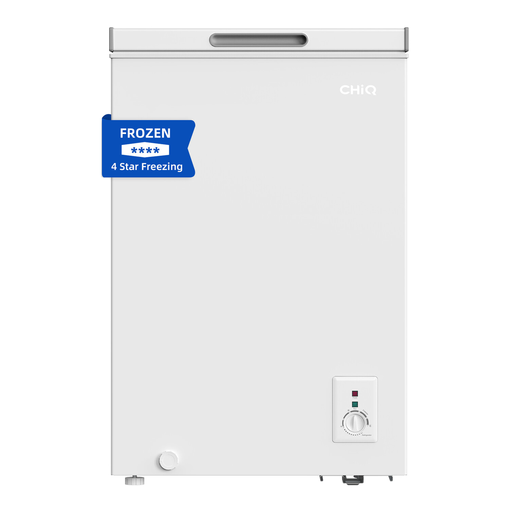 No image available
Consider this 99L model if a smaller freezer could hold your cooled soup portions. Its title specifies an E energy rating; before choosing a position, check the required rear clearance and space for the lid to open.
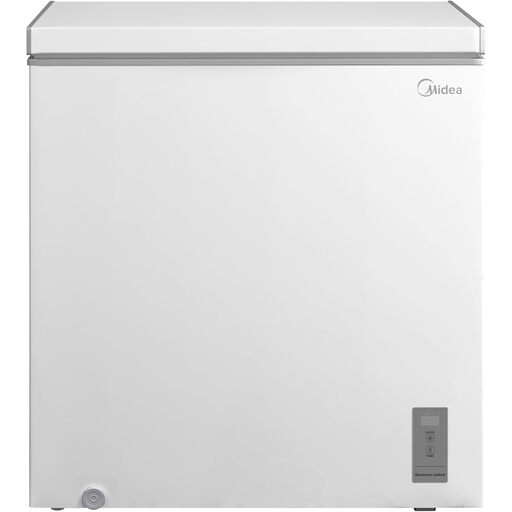 No image available
Consider its 198L capacity if you need to store more cooled soup portions and have room for a larger appliance. Its title specifies an E energy rating. Check the floor area, installation clearance and lid path; if an outbuilding is the intended location, confirm that its stated operating conditions cover it.
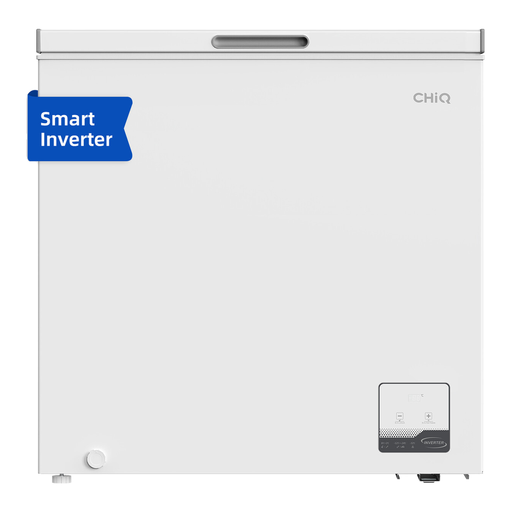 No image available
The 199L capacity may suit larger batches if you can accommodate the appliance’s wider footprint. The title specifies Digital Inverter and an E energy rating. Measure the intended position and check lid clearance before buying; confirm any freezing function you particularly need against the exact model.
Cool the batch-cooked soup before freezing or refrigerating it, ideally within 1–2 hours, in line with NHS guidance. Divide it into manageable portions so you can store and later defrost only what you need.
Fast Freeze is worth considering if you regularly load several cooled portions together, but it need not take priority over a freezer that fits your space and containers. The Beko CF4098W is listed with the function, while it is listed on the Indesit OS 2A 100 2 UK 2; check the exact model you plan to buy.
Only choose one whose stated operating conditions cover the intended garage. The Beko CF4098W is listed for ambient temperatures down to -15°C, whereas the Indesit OS 2A 100 2 UK 2 should not be used in an unheated area.
Compare annual energy use and capacity as well as the current A–G rating, preferably between freezers of a size you can use. The Energy Saving Trust notes that a larger appliance can consume more electricity even when it shares a smaller model’s rating.