Batch-cooking cottage hosts
People freezing several labelled vegetable-soup portions for cottage stays, changeovers or family meals need room for their containers and a way to retrieve older portions.


Choose capacity and basket layout around the cooled soup portions you need to freeze at once, then check delivery access, floor space and lid clearance. If the freezer will stand in a cold garage or outbuilding, choose an exact model whose stated operating range suits that location; an indoor cottage location need not drive the same choice.
People freezing several labelled vegetable-soup portions for cottage stays, changeovers or family meals need room for their containers and a way to retrieve older portions.
Owners planning to use a cold garage, cellar or outbuilding need to check the operating temperature range of the exact freezer model before choosing that location.
People who will freeze soup regularly may give more weight to accessible baskets, temperature warnings and the amount of defrosting the appliance requires.
Plan one full batch of soup containers before choosing a capacity, then check where the freezer can operate and whether you can reach its contents easily.
| Concern | What to check when buying | Who this matters to |
|---|---|---|
| Capacity and retrieval | Count the containers in a full batch and check their fit, the usable space and the number of baskets. | I want to freeze several labelled portions without losing older ones at the bottom of the freezer; around 27% of consumers put accessible batch capacity first. |
| Cold-location suitability | Match the exact model’s stated ambient operating range and installation instructions to the planned room. | If my cottage only has space in an unheated outbuilding, I need a freezer rated for the temperatures it may reach; around 33% of consumers make cold-location suitability their primary concern. |
| Controls and upkeep | Check the exact model’s temperature warning, fast-freeze function and defrost system. | When I freeze soup regularly, I want to notice temperature problems and keep defrosting manageable; for around 20% of consumers, controls and upkeep take priority. |
| Energy use and space | Compare annual kWh figures and energy labels for suitable models, then measure the access route, footprint and lid clearance. | I have limited cottage space and do not want more freezer capacity than my planned stock needs; around 20% of consumers put proportionate size and energy use first. |
Low-ambient claims apply to particular models. Beko UK describes the CF4308 and Haier UK describes the HCE520EK as suitable down to −15°C; that does not establish the operating range of other models.
Check the installation instructions against the temperatures at the cottage’s planned freezer location.
Capacity alone will not tell you whether a freezer can pass through the cottage entrance or open fully once installed.
Measure the delivery route, final footprint and lid-opening clearance, then check how your soup containers will fit.
GOV.UK buying guidance advises considering appliance size alongside its energy rating. A letter grade by itself does not compare the total electricity use of freezers with different capacities.
Compare annual kWh figures on the exact models’ labels alongside the storage capacity you need.
A fast-freeze function or temperature warning does not replace appropriate cooling before freezing or a stock-rotation routine. For food businesses, Food Standards Agency MyHACCP guidance calls for adequate cooling and freezing facilities and temperature monitoring where necessary.
Freeze appropriately cooled, portioned soup, label the portions and rotate stock; if you supply food as a food business, use a temperature-control process suited to that operation.
The CF4308 is a larger-capacity option to examine if a cold cottage location and a temperature warning matter.
The HCE520EK is worth examining when the storage plan calls for a particularly large freezer in a cold location.
The CS1A300HFA1 provides a large conventional chest-freezer example for organised batch storage.
The MDACF194W offers a smaller-capacity reference point when cottage floor space and soup-batch size are modest.
The HONCHQ6T200ESK is a model to compare if reducing defrosting work or switching storage modes matters.
These chest freezers offer different stated capacities for portioned soup and other planned frozen stock. Before choosing one for an unheated cottage location, check its exact-model installation instructions against that room’s temperatures.
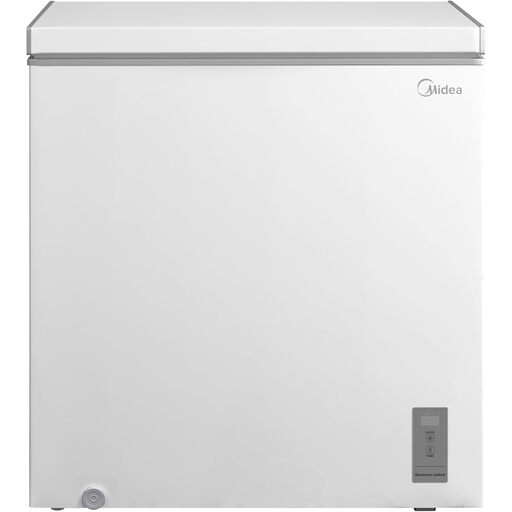 No image available
Consider this 198 L model if a planned batch of soup containers fits while leaving room for your other frozen stock.
For an unheated location, check the manufacturer’s operating-temperature instructions; also check basket fit and annual energy use when comparing models.
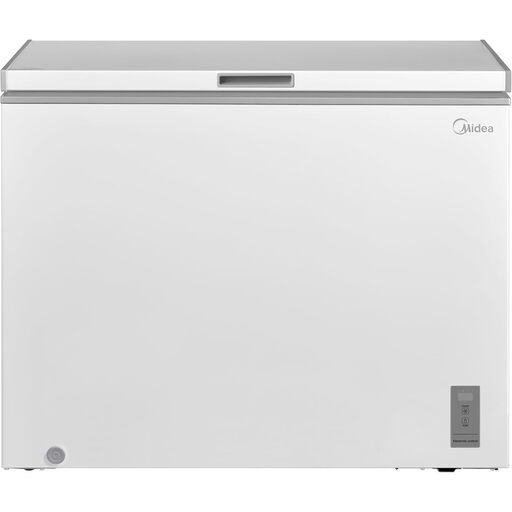 No image available
The 249 L capacity may suit a larger soup batch or additional frozen food, provided the containers and appliance fit the cottage.
Check the exact model’s ambient operating range before outbuilding installation, and compare basket space and annual energy use.
 No image available
Consider the 297 L capacity when several soup batches and other frozen supplies need space at the same time.
Measure the delivery route and lid clearance for this wide model. Check its installation instructions for a cold location and plan for the defrosting required by the exact appliance.
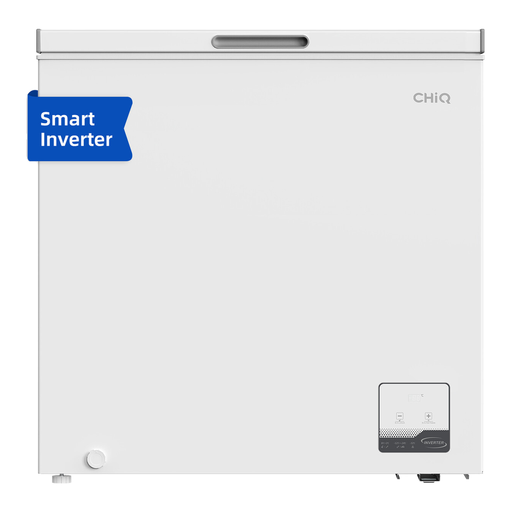 No image available
This 199 L model is a capacity to consider for modest soup batches where an indoor cottage location has limited space.
Check container and basket fit before ordering. If installation in a cold outbuilding is planned, confirm the exact model’s minimum operating ambient temperature.
No image available
The 299 L capacity is worth considering if regular soup batches share the freezer with other cottage supplies.
Check the access route, floor space and basket layout for portion retrieval. Confirm the exact model’s ambient operating range before choosing an unheated location.
It does if the planned location can become colder than an indoor-only model’s stated operating range. Beko UK and Haier UK describe the CF4308 and HCE520EK respectively as suitable down to −15°C; check the exact model’s instructions and the conditions at your cottage.
Cool the soup appropriately before freezing rather than relying on freezer features to handle the cooling step. If you supply food as a food business, Food Standards Agency MyHACCP guidance calls for adequate cooling and freezing facilities and temperature monitoring where necessary for safety.
If the operation is a food business preparing, storing, distributing or selling food to the public, GOV.UK says it must register with the local authority at least 28 days before trading. Whether your cottage arrangement falls within that scope depends on what you do; check with the relevant local authority.
No conclusion follows from the letter grades alone when the freezers differ in size. Compare each suitable model’s annual kWh figure and capacity; GOV.UK buying guidance advises considering appliance size alongside its energy rating.
Label portions with their contents and freezing date, arrange them so older portions can be retrieved, and check how your containers fit the supplied baskets. Basket layouts vary: Montpellier Appliances specifies one for the MDACF194W, while Euronics lists two for the Hotpoint CS1A300HFA1.