Small-kitchen batch cook
If you freeze cooled tomato sauce in portions but have little floor space, check width, depth and room to open the lid before choosing a capacity.


Choose a chest freezer by checking its external dimensions, lid-opening space and usable capacity against the place where it will stand. For batches of cooled tomato sauce, portion access and freezer-safe containers matter; features for frequent batch freezing and suitability for an unheated outbuilding depend on the exact model.
If you freeze cooled tomato sauce in portions but have little floor space, check width, depth and room to open the lid before choosing a capacity.
If you add batches regularly, a basket may make portions easier to retrieve. Check the exact model for Fast Freeze and its defrost requirements if those features matter to your routine.
If the freezer will stand outside a heated kitchen, choose by the exact model’s stated operating conditions rather than assuming any chest freezer suits an outbuilding.
A chest freezer leaves worktop space free but needs floor space and access to its top-opening lid. Establish where it can stand before weighing capacity and convenience features.
| Concern | What to check | Who this matters to |
|---|---|---|
| Footprint and access | Compare external width and depth with the floor space and access route; allow for the lid and the model’s required installation clearances. | I need the freezer to fit without blocking movement or making the lid awkward to open. Around 50% of consumers put physical fit first. |
| Repeated sauce batches | Check basket provision, defrost type and whether the exact model has Fast Freeze; use freezer-safe containers or wrapping for portions. | When I make sauce often, I want to find small portions without rearranging everything. For around 30% of consumers, managing frequent batches is the primary concern. |
| Outbuilding placement | Compare the exact model’s stated operating-temperature range and installation instructions with the intended location. | I would rather keep the freezer in an unheated garage or shed, but it must be suitable for that location. This is the first priority for around 20% of consumers. |
Freezers with similar stated capacities can have different footprints. A model may offer enough storage yet obstruct access or leave too little room to open its lid.
Measure the floor position and access route in centimetres, then check appliance dimensions and installation requirements before comparing litres.
Operating conditions vary by model. An indoor-only freezer may not be suitable for the temperature at an unheated location.
Check the exact model’s outbuilding statement, operating-temperature range and installation instructions before deciding where it will stand.
Low-frost and manual-defrost models still need maintenance; neither description means the appliance is frost free.
Read the defrost specification for the exact model and choose according to the maintenance you are willing to do.
Beko’s freezer manual advises using freezer-suitable containers or wrapping for acidic foods, including tomatoes.
Cool and portion the sauce, pack it in freezer-safe containers or bags, follow the container’s headspace instructions where applicable, and label the portions.
The OS 2A 100 2 UK 2 is a compact option to assess for an appropriate indoor location.
The CF4098 is worth checking when an unheated location is part of the plan.
The CHF100 combines compact stated capacity with outbuilding suitability in its product listing.
The L95CFW23 is a compact model to measure against a particularly shallow floor position.
These chest freezers offer different stated capacities for storing cooled, portioned sauce. Compare each one’s footprint and installation requirements with your available floor space before choosing.
 No image available
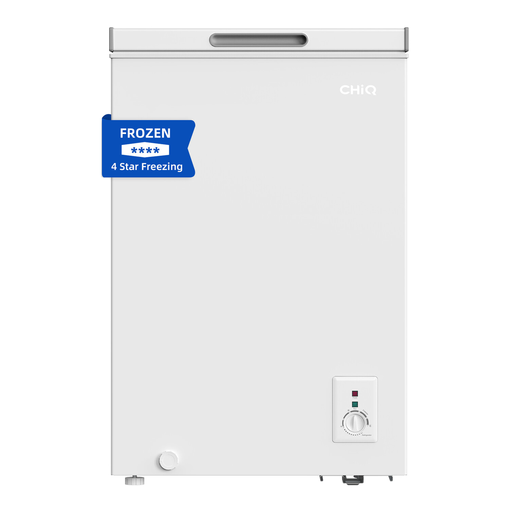
Consider this 99-litre model if a compact chest freezer could fit your sauce-storage space. Confirm its external dimensions, lid clearance and defrost arrangement for your intended position and routine.
 No image available
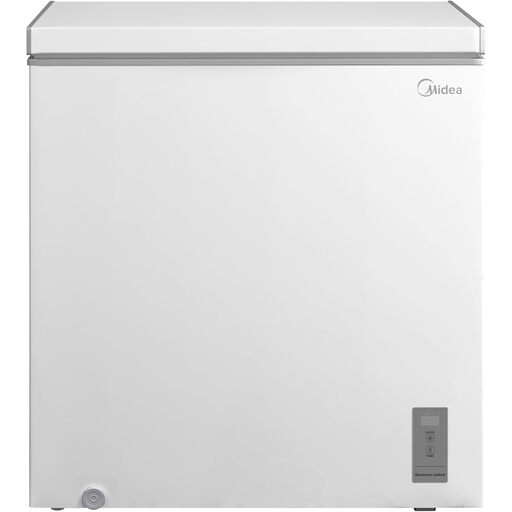
Consider this 198-litre model if you need more storage alongside sauce portions and have room for a larger appliance. Measure the intended position and lid-opening space, and check its defrost and installation requirements.
Start with the number and size of portions you freeze at once, plus any other food you need to store. The compact Indesit, Statesman and Logik models described above are listed at 96–99 litres, but their external dimensions differ, so check physical fit before choosing by capacity.
Fast Freeze is a feature to consider if you regularly add several cooled portions at once, rather than a requirement for every small batch. Check the exact model’s specification and instructions instead of assuming the feature is standard.
Put cooled sauce into freezer-safe containers or suitable wrapping before freezing it. Beko’s freezer manual specifically advises freezer-suitable packaging for acidic foods, including tomatoes; labelling portions can also make them easier to find.
No: suitability depends on the exact model and the location’s ambient temperature. Beko UK states operation down to -15°C for its CF4098, while Indesit UK says its OS 2A 100 2 UK 2 is not suitable for outbuildings; check the model’s installation instructions before buying.