
24/7 Customer Support

Free returns

Same-day & Next-day Delivery

Quality Guaranteed

Unlock Your Welcome Offers: FREE Delivery | Up to 80% OFF | Free 30-day JoyPlus trial
Download the APP
A chest freezer can be a game-changer for any UK household. Whether you are a fan of batch cooking, love a good deal on bulk buys or simply need to overflow storage for the weekly shop, having that extra frozen space is invaluable. However, the market is filled with models that look similar but hide crucial differences. Choosing incorrectly can lead to a freezer that fails in winter, sends your electricity bill soaring or simply doesn't fit your lifestyle.
As the Joybuy Product Recommendation Officer, my role is to help you see past the marketing jargon. This guide focuses on the common pitfalls many buyers fall into and highlights the key features that truly matter for long-term satisfaction and value.
Before looking at any models, be aware of these frequent missteps that can cost you money and cause significant frustration down the line.
deep freezer is great for one purpose, but what about the rest of the year? You might need extra fridge space for drinks and salads during a summer barbecue or for the Christmas turkey. Buying a single-function unit can mean missing out on the versatility that a convertible chest freezer offers.To make a smart purchase, focus on these non-negotiable specifications. They determine whether a freezer is a useful household tool or a bulky inconvenience.
The internal capacity of a chest freezer is measured in litres. It can be difficult to visualise, so a helpful rule of thumb is that 100 litres holds approximately 5-6 bags of food shopping.
Always measure your available space (width, depth and height) before buying, remembering to leave a 5-10cm gap around the sides and back for ventilation.
If you plan to keep your freezer anywhere unheated, you must choose a model specifically designed for it. Look for terms like 'Garage Safe', 'Outbuilding Suitable' or 'Winter Security/Guard'. These models are engineered to function correctly in low ambient temperatures, often down to -15°C or -18°C. This ensures your garage chest freezer or outbuilding freezer runs reliably all year round.
energy efficient freezer in today's market. Always check the annual energy consumption (kWh/annum) figure on the label to get a clearer idea of running costs.quiet chest freezer is essential. Look for models rated at 40dB or below—this is comparable to a quiet library and will not be intrusive.Here are a few models that align with different household needs, specifically chosen for how they address the common pitfalls.
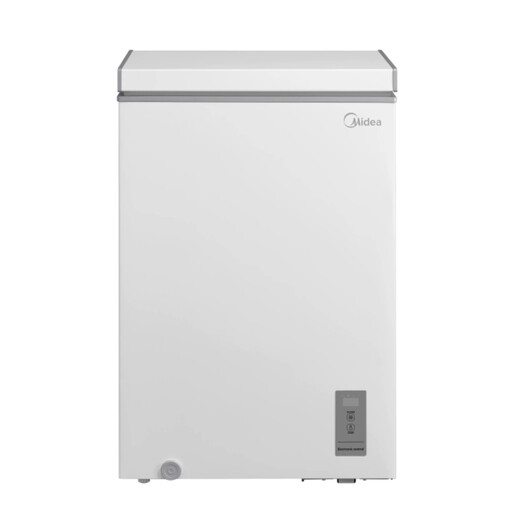
Why This Fits Their Persona: Perfect for flats, smaller kitchens or as a secondary unit. Its compact 55cm width provides 99L of storage without a large footprint, while the convertible function offers superb flexibility for changing needs.
It is explicitly garage and outbuilding suitable, avoiding the placement fallacy. The Switch Mode feature directly counters the inflexibility trap by allowing it to function as a fridge.
Its key advantage is the electronic control panel with LED display, which provides precise temperature control not always found on smaller models. It also operates at a quiet 38dB.
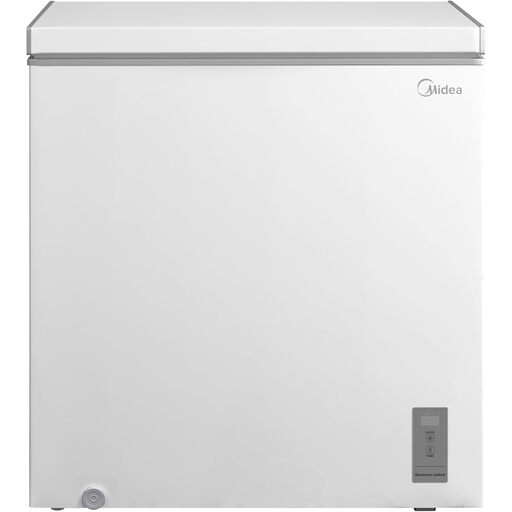
Why This Fits Their Persona: With a 198L capacity, this is an excellent mid-size option for families who bulk buy or meal prep. It provides ample space without the footprint of a much larger unit, fitting well in a utility room or garage.
It features Winter Security for reliable garage use down to -18°C and a Convertible Design for fridge/freezer flexibility. Its E rating and ultra-quiet operation also address the running cost and noise concerns.
The standout feature is its exceptionally quiet operation at just 37dB, making it one of the quietest in its class. It also includes a Fast Freeze function to quickly chill new groceries.

Why This Fits Their Persona: For those who need maximum storage in an outbuilding, this 297L unit is a workhorse. It can hold around 16 bags of shopping, making it perfect for large families, gardeners or anyone who buys meat in bulk.
It features Winter Guard Technology, guaranteeing flawless operation in temperatures down to -15°C, making it a purpose-built outbuilding freezer. This directly solves the most common and costly pitfall.
Its key advantages are the huge capacity combined with practical features for a large freezer: two storage baskets for organisation, an LED control panel and a lockable lid for security.
We have compiled a complete, real-time list of products that fully satisfy these strict selection criteria and UK safety regulations.
No, this is a common mistake. You must choose a model that is specifically rated for outbuilding or garage use. These freezers are designed with technology (often called 'Winter Guard' or similar) that allows them to function correctly in low ambient temperatures (e.g., down to -15°C). A standard freezer may shut down in a cold garage, causing the contents to spoil and potentially damaging the appliance.
The running cost depends on the freezer's energy consumption and your electricity tariff. To estimate, find the annual energy consumption in kWh on the energy label. Multiply this number by the price you pay per kWh (found on your electricity bill). For example, a freezer using 179 kWh per year on a tariff of 25p per kWh would cost approximately ?44.75 per year to run (179 x 0.25).
Most chest freezers require manual defrosting. You should do this when the ice build-up on the interior walls reaches about 5-7mm (1/4 inch) thick, which is typically once or twice a year. Letting the ice get too thick makes the freezer less efficient, as the motor has to work harder to maintain the temperature, increasing your energy consumption. Many modern models include a front-mounted drain plug to make the process cleaner and easier.