Choose a chest freezer for the cottage’s intended location before choosing its capacity: if it will stand in a cold garage or outbuilding, check that the exact model is rated for the ambient temperatures expected there. A compact freezer may be enough for occasional bags of grated cheese, while larger capacities make more sense when it must also hold holiday groceries; allow for lid clearance, access to small portions and defrosting between visits.
Who needs which type of freezer?
Owners using a cold outbuilding
If the freezer will stand in an unheated garage, shed or utility space, its stated ambient-temperature range must cover the conditions expected there. Beko UK and Hotpoint UK each specify operation down to −15°C for the particular large models discussed below; that rating should not be assumed for other models.
Occasional cottage cooks short on space
For portions of grated cheese and a modest amount of other food, measure the floor space and the room needed to open the lid before choosing extra capacity. A basket can help keep small bags within reach.
Hosts storing larger food shops
When cheese shares the freezer with groceries for several cottage users, more capacity may be useful. Consider how you will organise food and notice a temperature problem while the cottage is unoccupied; warning features differ by model.
What matters when choosing?
Start with the installation location, then size the freezer for food you expect to store rather than spare capacity you may never use.
| Concern |
What to check |
Who this matters to |
| Cold-location suitability |
Compare the exact model’s ambient-temperature rating and installation conditions with the coldest expected sheltered location. |
If my cottage garage gets cold, I need a freezer specified to work there. Around 31% of consumers put cold-location suitability first. |
| Capacity and fit |
Measure the delivery route, cabinet space, ventilation gaps and lid-opening clearance; decide what will be stored besides cheese. |
With little room in the cottage, I want enough storage without blocking access or lid opening. For around 31% of consumers, fit and useful capacity come first. |
| Access to cheese portions |
Check for a basket and use labelled, portion-sized containers or bags so small amounts remain easy to find. |
If I take out grated cheese a portion at a time, I do not want small bags buried beneath larger food. Ease of access is the main concern for around 23% of consumers. |
| Upkeep between visits |
Check the defrost method, any temperature warning and the electrical installation instructions. The Food Standards Agency recommends −18°C for domestic freezers. |
When the cottage is empty, I need a manageable way to maintain the freezer and check on stored food. Around 15% of consumers make upkeep and monitoring their primary concern. |
Common buying mistakes
-
Assuming a chest freezer will work in any garage
Ambient-temperature limits are model-specific. The compact Russell Hobbs example has a stated 10–38°C climate range, whereas Beko UK and Hotpoint UK specify operation down to −15°C for their cited models.
Check the exact freezer’s manual and installation conditions against the coldest temperature expected at the cottage.
-
Measuring the cabinet but not the space around it
A freezer that fits on the floor may still lack ventilation room or space to open its lid. Joybuy’s TCL CF182EWE0 product information specifies 10cm at the rear and sides and 70cm above for that model.
Measure the delivery route and full installation space using the clearances specified for the freezer you choose.
-
Reading Low Frost as frost-free
Hotpoint describes Low Frost on the HPCF 3084 UK as reducing ice build-up, not eliminating defrosting.
Check the exact model’s defrost instructions and plan how you will deal with food and meltwater during maintenance.
-
Relying on an extension lead to reach a socket
Electrical Safety First advises placing freezers close to a wall socket rather than using an extension lead.
Choose a position with a suitable wall socket and follow the manufacturer’s electrical and ventilation instructions.
Relevant brands to consider
Beko
Beko UK lists its CF4308 as a 308L chest freezer specified for operation down to −15°C ambient temperature.
- The CF4308 listing includes a high-temperature warning light and fast-freeze function.
- At 112cm wide and 71.5cm deep, this particular model needs substantially more space than a compact freezer; its features do not apply to every Beko model.
Hotpoint
Hotpoint UK specifies 308L capacity and operation down to −15°C for the HPCF 3084 UK.
- Hotpoint lists Fast Freeze and says this model’s Low Frost feature reduces ice build-up.
- Low Frost does not mean frost-free, and the model’s 112cm width needs measuring against the cottage’s available space.
Statesman
The Statesman CHF100 is a 99L chest freezer listed as suitable for outbuildings.
- The CHF100 listing includes a temperature warning and a basket for smaller items.
- It requires manual defrosting; check its exact installation conditions before choosing a cold cottage location.
Joybuy chest freezer choices
These chest freezers span compact storage for cheese portions through larger capacities for cheese alongside holiday groceries. Check the exact model’s ambient-temperature rating before choosing any of them for a cold outbuilding.
 No image available
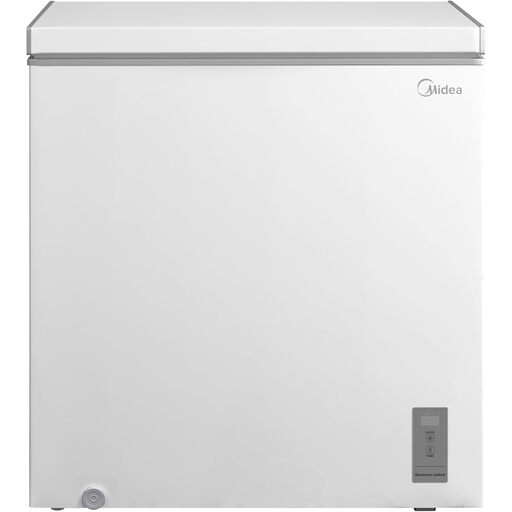
Midea MDRC284FZE01 198L Chest Freezer
Consider this 198L model if cheese will share the freezer with other cottage groceries; it may be more capacity than cheese portions alone require. Check its installation conditions, defrost method and temperature-warning features for your intended location.
View on Joybuy
 No image available
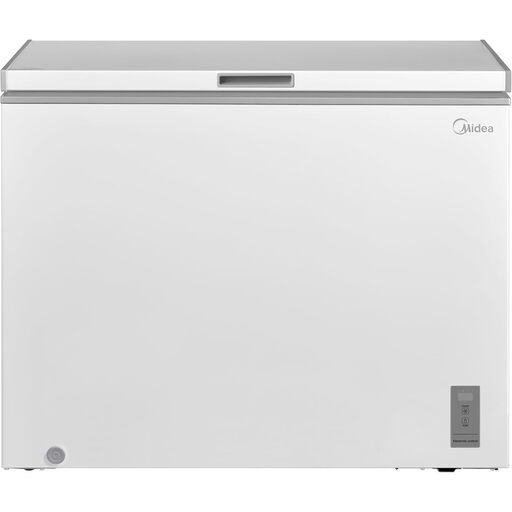
Midea MDRC345FZE01 249L Chest Freezer
The 249L capacity is worth considering when the cottage also needs substantial grocery storage, rather than space for a few cheese bags. Measure the installation area and check the exact model’s ambient-temperature and defrost instructions.
View on Joybuy
 No image available
AUCMA 95L Convertible Chest Freezer
For modest amounts of grated cheese, the 95L capacity avoids choosing bulk-storage volume by default. Its stated features include freezer-to-refrigerator conversion, a seven-level thermostat, a removable basket and a defrost drain; confirm its ambient-temperature rating before placing it in an unheated space.
View on Joybuy
 No image available
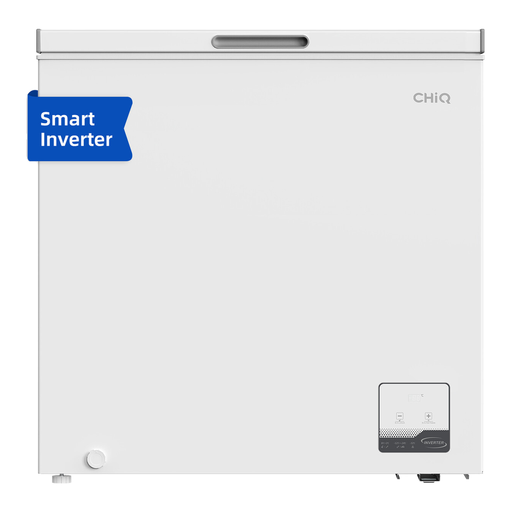
CHiQ JKR199DWE 199L Chest Freezer
This 199L model is a choice to examine when cheese is only part of the cottage’s frozen food. Before settling on its location, confirm the required clearances and ambient-temperature range; also check how it is defrosted and whether it has a temperature warning.
View on Joybuy
 No image available
Hisense FC386D4AWLE 297L Chest Freezer
Consider the 297L capacity only if the cottage regularly needs storage well beyond grated cheese. This wide model calls for careful measurement of the delivery route and lid space; confirm its low-ambient installation conditions and plan for defrosting before purchase.
View on Joybuy
Frequently asked questions
Can I freeze grated cheese?
Yes. Love Food Hate Waste recommends grating cheese before freezing it; portion it into sealed, labelled bags or containers so you can take out what you need.
What temperature should a domestic freezer maintain?
The Food Standards Agency recommends −18°C for domestic freezers. Follow the appliance instructions and use a suitable freezer thermometer if you need to check the temperature rather than relying on the control setting alone.
Can any chest freezer go in a cottage garage or shed?
No: check the exact model’s permitted ambient-temperature range against the coldest conditions expected in that sheltered location. Beko UK and Hotpoint UK specify operation down to −15°C for the CF4308 and HPCF 3084 UK respectively, but that does not establish the rating of other freezers.
Can I run the freezer from an extension lead?
Electrical Safety First advises positioning a freezer near a wall socket instead of using an extension lead. Leave the ventilation space required by the manufacturer as well.
Should I check the energy label when buying a UK freezer?
Yes. UK guidance from the Department for Energy Security and Net Zero and the Office for Product Safety and Standards says products within the energy-labelling rules must display a label at the point of sale, including online. Check the label and product information for the exact model you are considering.


