Families who cook in batches
If sauce and other prepared meals are taking up space in the fridge-freezer, an additional freezer makes capacity and access to labelled portions the main questions.


Choose a chest freezer for all the food you expect to store, not one batch of pasta sauce: a model around 198 litres may suit extra family-meal storage, while a 300-litre model offers more room for regular batch cooking and bulk groceries. Cool and portion the sauce before freezing, measure the space and access route, and check the exact model’s installation instructions before using an unheated outbuilding.
If sauce and other prepared meals are taking up space in the fridge-freezer, an additional freezer makes capacity and access to labelled portions the main questions.
When sauce must share space with larger grocery loads or other prepared meals, compare the stated volume with both the planned contents and the floor space the appliance needs.
For a garage or other unheated location, check the exact model’s stated ambient-temperature conditions and installation instructions before treating it as a suitable place for the freezer.
Start with the space needed for sauce portions and other frozen food, then check that the freezer will fit its intended location. Food-handling habits and ongoing upkeep matter alongside capacity.
| Concern | What to check | Who this matters to |
|---|---|---|
| Storage capacity | Count the sauce portions and other food you plan to store; compare exact-model capacity and how you will organise smaller items. | If I freeze several family-meal portions alongside everyday groceries, I need room to keep both accessible; around 33% of consumers put storage capacity first. |
| Location and access | Measure the final position and route into it; for an unheated location, check the model’s ambient-temperature and installation requirements. | A freezer that cannot reach or work in my intended space will not solve my storage problem. Around 25% of consumers make location suitability their primary concern. |
| Freezing routine | Plan how to cool, portion, seal and label the sauce; GOV.UK says a domestic freezer should be around −18°C. | When I prepare sauce for later meals, I want manageable portions and a repeatable way to freeze them promptly after cooling; around 25% of consumers prioritise this routine. |
| Energy and upkeep | Compare exact-model energy labels and product information, then check the defrost method. | If the freezer will run regularly, I want to understand its energy information and the work involved in maintaining it; around 17% of consumers put these considerations first. |
Capacity does not tell you whether a freezer will fit through a doorway or into its final position. Beko specifies the CF4198 at 85 cm high, 91 cm wide and 54.5 cm deep; Haier specifies the HCE301E UK at 1110 × 620 × 845 mm (W × D × H).
Measure the access route and final position, then check the chosen model’s dimensions and required installation clearances.
Low-ambient operation is model-specific. Beko states that the CF4198’s FreezerGuard feature operates at ambient temperatures as low as −15°C; that statement does not apply to other models.
For an unheated garage or outbuilding, compare the location’s expected conditions with the exact freezer’s documentation and installation requirements.
Freezer capacity does not replace cooling food before freezing it. GOV.UK advises cooling warm dishes and dividing food into smaller portions to help it cool more quickly.
Cool the sauce, divide it into meal-size portions, seal and label them, and freeze them promptly after cooling.
The class does not describe the defrosting work involved. For example, Haier lists both energy class E and manual defrosting for the HCE301E UK.
Compare the energy label and product information for exact models of a suitable capacity, then check annual energy consumption and the defrost method.
The CF4198 is a 198-litre model to examine when a household needs additional frozen-food space and is considering an outbuilding location.
The 300-litre HCE301E UK offers a capacity reference for households regularly storing batch-cooked meals alongside bulk groceries.
Hotpoint describes its chest-freezer range as offering open interior space that can accommodate bulky frozen items.
These chest freezers span roughly 198–299 litres for households considering extra space for portioned pasta sauce and other frozen food. Compare each model’s capacity with your planned load, then check its dimensions and installation conditions for the intended location.
 No image available
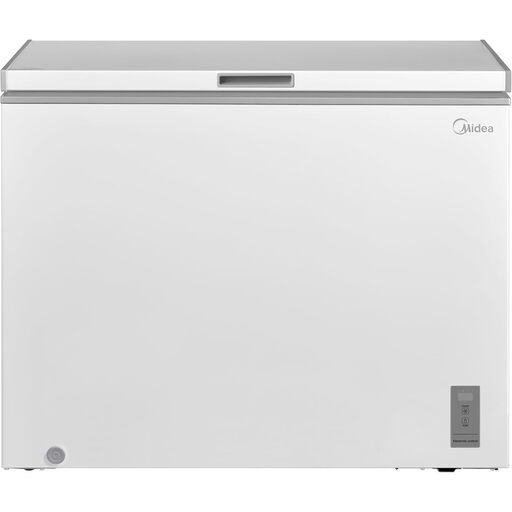
Consider this 297L model if sauce portions will share space with frequent larger frozen-food loads. Check the required installation conditions if you plan to use an unheated location, and allow for the manual-defrost routine described in the listing.
 No image available
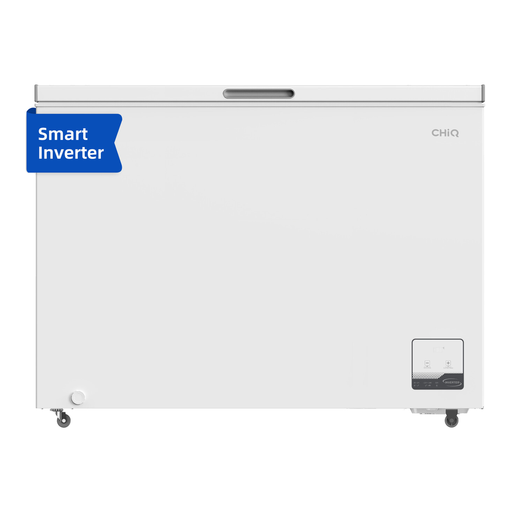
The stated 249L capacity is worth comparing if you need room for batch-cooked meals as well as other groceries. Its title identifies an E energy class; check the exact model’s energy information, defrost method and installation instructions before deciding.
 No image available
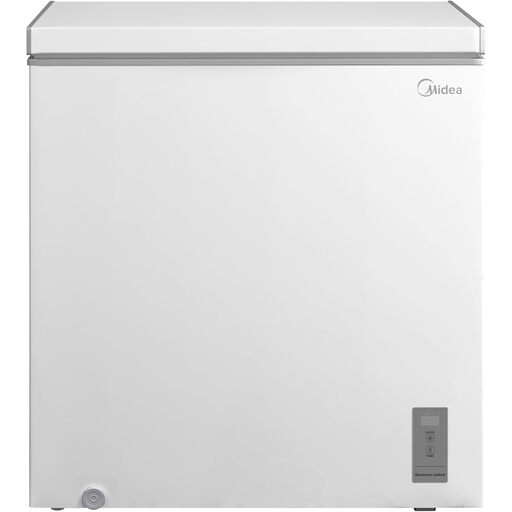
This 299L model is a capacity option for regular batch cooking and larger frozen-food loads. Measure the intended position and access route, and check the exact model’s defrost and ambient-temperature requirements if they affect your choice.
 No image available
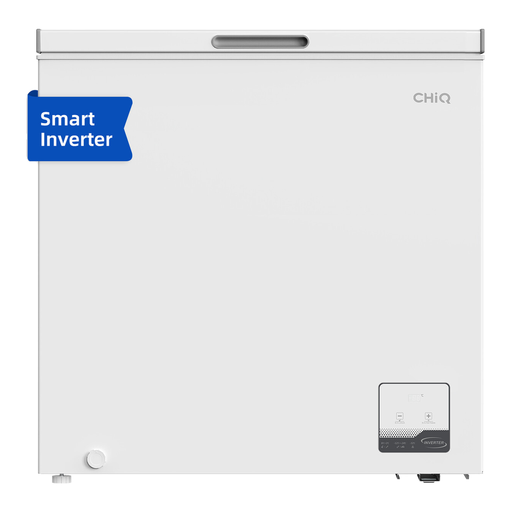
The stated 198L capacity makes this a model to compare when sauce portions mainly need space beyond an existing fridge-freezer. Its title identifies an E energy class; check annual energy information, the defrost method and the exact installation conditions before buying.
 No image available
Consider the stated 199L capacity if the freezer will supplement, rather than replace, your usual frozen-food space. Check its fit, annual energy information and defrost method; consult the exact installation instructions before placing it in a cold outbuilding.
Yes, once it has been cooled and handled safely. GOV.UK advises cooling warm dishes before freezing, using smaller portions to help food cool more quickly and keeping a domestic freezer around −18°C.
Seal and label meal-size portions so you can find and defrost the amount you need. When judging capacity, include your other frozen food as well as the space those portions will occupy.
Do not assume that a chest freezer is suitable for an unheated garage: check the exact model’s ambient-temperature limits and installation instructions. Beko states that the CF4198’s FreezerGuard feature operates down to −15°C, but that model-specific claim does not establish suitability for another freezer.
Compare the dimensions, energy information, defrost method and installation requirements of models with enough capacity for your food. Features such as temperature warnings or stated power-failure storage periods should also be checked on the exact model rather than assumed from its size.