
24/7 Customer Support

Free returns

Same-day & Next-day Delivery

Quality Guaranteed

Unlock Your Welcome Offers: FREE Delivery | Up to 80% OFF | Free 30-day JoyPlus trial
Download the APP
A chest freezer can make bulk buying, batch cooking and seasonal food storage much easier. However, choosing by litre capacity alone can lead to an appliance that does not fit your room, costs more to run than expected or becomes difficult to organise.
This guide explains the specifications that matter when comparing chest freezers, including compact 99L models, mid-sized 198L options and a large chest freezer around 300L. It also highlights suitable choices for flats, families, meal preppers, garages and small food businesses.
A freezer’s stated capacity describes its usable internal volume, but it does not tell you whether it will fit through a doorway or into the intended space. Measure the available width, depth and height, then allow room for:
For example, a 300L model may be over 110cm wide, while a 99L chest freezer can be approximately 55cm wide. A smaller capacity may be more practical in a kitchen or flat, even if a larger unit appears more economical per litre.
UK appliances use the A to G energy label. An E-rated freezer may be suitable for many households, but the rating alone does not provide a precise annual cost. Compare the stated annual energy consumption in kWh, then multiply it by your electricity tariff.
Running cost estimate:
Annual kWh × your electricity price per kWh = estimated annual electricity cost
Actual costs can vary according to room temperature, loading, thermostat setting, maintenance and how often the lid is opened.
A freezer placed in an unheated garage, shed or outbuilding can be exposed to low temperatures, condensation and limited ventilation. Not every freestanding chest freezer is designed for these conditions.
Look for clearly stated ambient-temperature or winter-operation information. Also follow the installation instructions, maintain the recommended clearance and position the appliance on a firm, level and dry surface. A product described as suitable for outbuildings should still be checked against the manufacturer’s specified temperature range.
A small chest freezer between roughly 95L and 99L may suit one or two people, a flat, a utility room or occasional overflow storage. A 198L chest freezer is a flexible middle ground for families and meal preppers. Models close to 291L, 297L or 300L are more appropriate for large households, bulk-buyers and independent caterers with sufficient floor space.
Capacity is only useful if you can retrieve food efficiently. Removable wire baskets keep frequently used items near the top, while interior lighting helps in garages and darker utility rooms. Large, uninterrupted cavities can hold bulky meat joints and batch-cooked meals, but they may need labelled boxes or freezer bags to prevent food being forgotten at the bottom.
Mechanical thermostats are straightforward and generally easy to use. Digital controls and LED displays can make temperature adjustment more precise. A fast freeze or super-freeze function can be useful after adding a large quantity of fresh food, although it should be used according to the instruction manual.
A convertible chest freezer can switch between freezer and refrigerator modes. This may be useful when you need frozen storage in winter but additional chilled space for drinks or fresh food during gatherings. Check the temperature range and switching instructions before relying on this feature for a particular type of food.
Noise figures are measured in decibels, with lower numbers generally indicating quieter operation. Models listed at 37–42dB may be worth considering when the freezer is near living areas.
Most chest freezers in this selection use manual defrosting. Ice build-up reduces usable space and may affect efficiency, so defrost when instructed by the manufacturer. A drainage port can make this process easier.
Also check the stated power-failure safe time, particularly if you live in an area with occasional outages. Keep the lid closed during a power cut and follow food-safety guidance before consuming or refreezing food.

Why This Fits Their Persona: Its compact 95L footprint suits smaller UK homes, flats and utility rooms where floor space is limited. It can operate as a refrigerator or freezer and has a 38dB operating noise figure.
The listed 550mm width and 475mm depth make space planning clearer than choosing by capacity alone. It also includes a defrost drain for easier maintenance.
95L capacity; E energy class; seven-level thermostat; removable basket.
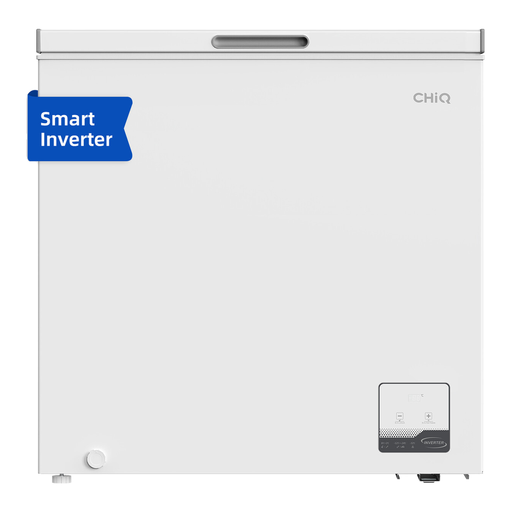
Why This Fits Their Persona: This 199L white model combines digital controls, inverter compressor technology and freezer-to-fridge conversion for households wanting greater control over storage.
The product specification gives a 37°C? No—the listed temperature feature is -32°C ultra-low freezing, while the dimensions are 82.5 × 83.5 × 56cm. Check these details against your space before ordering.
E energy class; digital control; interior LED light; counterbalanced lid.
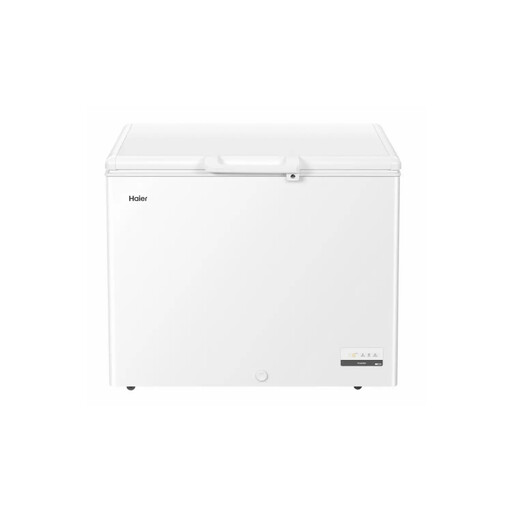
Why This Fits Their Persona: A 300L net capacity suits large families, serious bulk-buyers, meal preppers and small catering operations with room for a wide appliance.
Its dimensions are clearly listed as 90 × 85 × 65cm, with three removable baskets and an interior light to reduce the inconvenience of a deep cavity.
300L capacity; 18kg/24h freezing capacity; 24-hour stated power-failure safe time; E energy class.
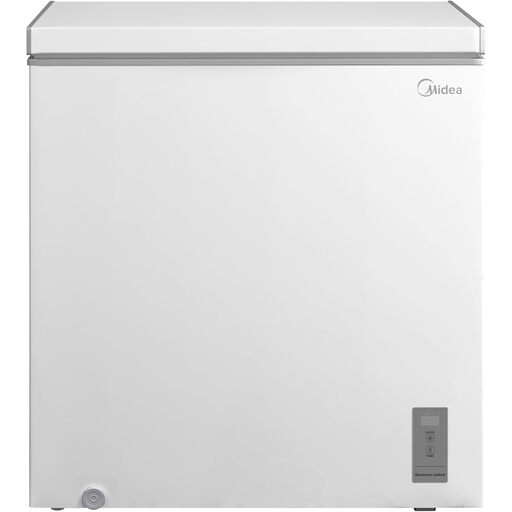
Why This Fits Their Persona: This white 198L convertible model is designed for flexible use in homes, garages and outbuildings, with a listed operating range down to -18°C.
It provides a specific low-ambient operating figure instead of relying only on a general garage-suitable description. Confirm ventilation and installation requirements before use.
198L capacity; fridge-freezer conversion; 37dB noise level; fast-freeze function.
We have compiled a complete, real-time list of products that fully satisfy these strict selection criteria and UK safety regulations.
The cost depends on the appliance’s annual kWh figure and your electricity tariff. Use the energy label’s annual consumption to make a personal estimate rather than relying on the E rating alone. Keeping the freezer well ventilated, defrosted and away from heat sources can also support efficient operation.
Only if the product’s instructions allow it and the ambient-temperature range suits the location. Check for stated garage or outbuilding suitability, leave the required clearance and protect the appliance from damp conditions. A level, dry surface and a correctly earthed power supply are also important.
Lifespan varies according to construction, usage, installation and maintenance. Regularly removing excess ice, keeping ventilation clear and avoiding unnecessary lid opening can help maintain performance. Follow the manufacturer’s instructions for defrosting, loading and electrical safety throughout the appliance’s service life.