Families who batch-cook regularly
If vegetable stock shares freezer space with other meals and groceries, consider the volume you need alongside the room required for labelled containers and a workable floor footprint.


Choose a chest freezer by checking how much cooled, portioned stock and other food you need to store, then whether the appliance fits its intended location. A compact model can suit occasional batches; more frequent family batch cooking may call for greater capacity, while an unheated garage requires an operating rating for the exact model. Compare defrosting requirements as well as size.
If vegetable stock shares freezer space with other meals and groceries, consider the volume you need alongside the room required for labelled containers and a workable floor footprint.
If you freeze only a few portions at a time, compare compact capacities and external dimensions before giving up more floor space than you need.
If the freezer will stand outside a heated room, its exact model must be specified for the lowest ambient temperature expected there.
Start with the space needed for stock portions and other food, then check the installation location. Defrosting work and model-specific energy information help distinguish appliances that otherwise appear similar.
| Concern | What to check | Who this matters to |
|---|---|---|
| Capacity and fit | Compare freezer volume with the space your portions and other food need; measure the cabinet, delivery route and required ventilation space. | When stock shares space with family meals, I need to find older labelled portions without moving everything else. Around 33% of consumers put capacity and organisation first. |
| Installation location | For an unheated garage or outbuilding, compare the lowest expected room temperature with the exact model’s stated operating range. | If my freezer will stand in an unheated space, I need to know it is suitable there before considering its other features. Location is the primary concern for around 27% of consumers. |
| Defrosting and access | Confirm whether the exact model needs manual defrosting or has a frost-reducing or frost-free system; consider how you will label and retrieve portions. | With several batches in a deep freezer, I want to retrieve older stock without letting upkeep become a chore. Around 20% of consumers prioritise maintenance and access. |
| Energy information | Compare the exact models’ energy labels and product information sheets, including annual energy consumption, alongside their capacities. | Because the freezer runs continuously, I want model-specific energy figures rather than choosing by energy class alone. For around 20% of consumers, that information comes first. |
GOV.UK guidance for in-scope UK products describes the energy label and product information sheet. Compare those documents for the particular freezers you are considering rather than assuming that equal energy classes mean equal annual electricity use.
A useful storage volume does not ensure that the freezer will pass through the delivery route or fit with its required ventilation clearance.
Measure doorways, turning points and the intended position, then compare them with the exact model’s dimensions and installation instructions.
Low-ambient operation is model-specific. Beko UK, Hotpoint UK, Liebherr and Haier UK each describe selected models rated down to −15°C, but that rating does not extend across their ranges.
Check the exact model’s published operating range against the lowest temperature expected in your installation space.
A fast-freeze feature does not replace cooling cooked food before freezing. NHS advice on batch-cooked baby food recommends cooling it ideally within 1 to 2 hours before refrigerating or freezing.
Divide the vegetable stock into portions and cool it promptly before freezing; do not rely on the freezer to cool a hot stockpot.
Defrost systems differ by model, while a deep cavity can make unlabelled portions difficult to find.
Check the model’s defrost system before purchase. If you choose manual defrost, plan for the upkeep and date your stock portions so older ones are easy to identify.
These manufacturer examples can help you identify features to check on an exact model; they are not brand-wide specifications.
One reference point for a chest freezer intended for a cold outbuilding is Beko’s CF4198.
The HPCF 3714 UK is a larger-capacity example for households comparing storage, frost management and outbuilding placement.
The CFe 1870 Pure illustrates a frost-reducing chest freezer with a stated low-ambient operating range.
The HCE300NFEK is an example to examine if frost-free operation and an unheated indoor location are both priorities.
These chest freezers offer different stated capacities for occasional portions or larger family batches. If you plan to use one in a garage or outbuilding, confirm the exact model’s low-ambient rating before choosing it.
 No image available
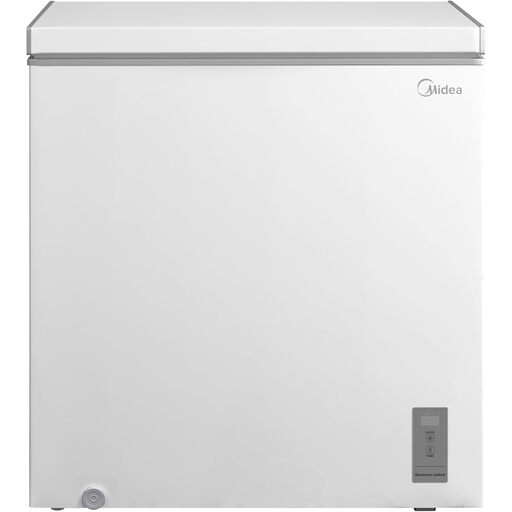
Consider this 297L model if stock will share freezer space with other family food.
Measure the delivery route and installation space. For an unheated location, confirm the exact model’s operating range; check its defrosting requirements as part of your upkeep decision.
 No image available
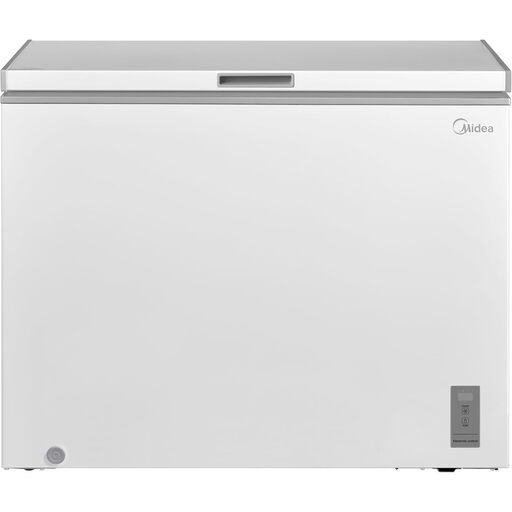
The stated 198L capacity is worth considering for family stock portions alongside other frozen food.
Check the model’s defrost system and annual energy consumption in its documentation. If it will stand in an unheated space, confirm its operating range and required ventilation clearance.
 No image available
This 249L option is relevant if regular stock batches must fit alongside a wider range of frozen food.
Check that its dimensions and ventilation requirements suit the space. Confirm the exact model’s defrost system, annual energy consumption and low-ambient rating where relevant.
 No image available
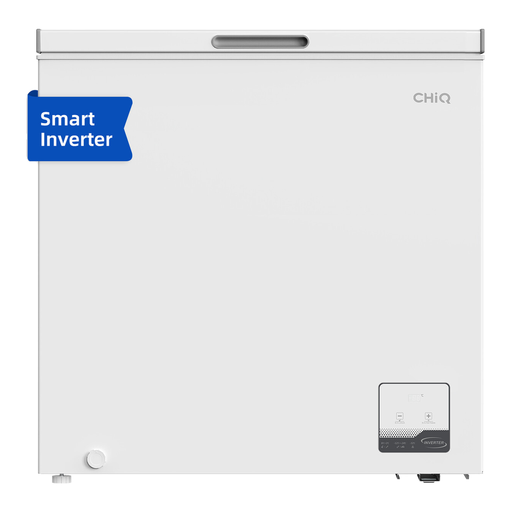
The stated 199L capacity may suit stock portions sharing space with other family food.
Compare its external dimensions with your delivery route, and check the exact model’s defrost system and energy information. Confirm low-ambient suitability if the intended location is unheated.
 No image available
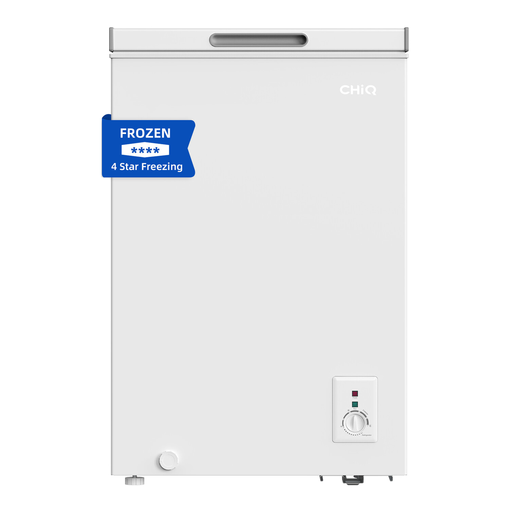
Consider this 99L model for occasional stock portions if you do not also need substantial space for other frozen family food.
Check how your planned containers will fit, along with the installation dimensions, defrost system and energy information. Confirm its operating range before placing it in an unheated space.
Cool and portion the stock before freezing it; a fast-freeze setting is not a way to cool a hot stockpot. NHS guidance on batch-cooked baby food recommends cooling it ideally within 1 to 2 hours before refrigerating or freezing.
No: check that the exact model is rated for the lowest ambient temperature expected in that space. Beko UK, Hotpoint UK, Liebherr and Haier UK describe selected models that operate down to −15°C, but that does not establish suitability for other models.
Yes. GOV.UK guidance describes energy labels and product information sheets for in-scope UK products; compare the exact models’ annual energy consumption alongside their capacities rather than relying on energy class alone.
Not necessarily. Frost-free operation can reduce defrosting work if you use the freezer frequently, while a manual-defrost model may suit occasional batches if its capacity and upkeep meet your needs. Check the defrost system of the exact model before deciding.