Bulk harvest preservers
If vegetables, fruit or prepared food arrive in large seasonal batches, you may value open space for bags and bulky containers more than drawer-by-drawer access.


Choose a chest freezer if bulky seasonal batches and open storage space matter most; choose an upright freezer if you will label, separate and retrieve portions frequently. For an unheated garage or shed, check that the exact model is specified to operate at the lowest temperature the space reaches. Whichever format you choose, measure the installation space and compare its energy use, defrosting system and stated power-failure storage period.
If vegetables, fruit or prepared food arrive in large seasonal batches, you may value open space for bags and bulky containers more than drawer-by-drawer access.
If the freezer will sit outside the kitchen, check whether the exact model can operate at the lowest ambient temperature in that unheated space.
If you regularly label, rotate and retrieve smaller portions, drawers and clear separation may matter more to you than open bulk space.
Choose it when: You need open space for bulky harvest batches and have room for its footprint and lid.
Trade-off: Food at the bottom can take more effort to find, so baskets, labels and stock rotation matter.
Choose it when: You expect to separate labelled portions and retrieve them often.
Trade-off: Drawers divide the storage space; check whether bulky produce and containers will fit.
| Concern | What to check | Who this matters to |
|---|---|---|
| Capacity and fit | Compare freezer volume with your largest expected batch. Measure the access route, footprint, lid or door clearance and required ventilation space. | If I freeze a large harvest at once, I need room for its bags and containers without choosing an appliance that will not fit. Around 39% of consumers put capacity and fit first. |
| Unheated locations | Check the exact model's stated ambient operating range against the location's winter minimum, as well as its installation requirements. | For a freezer in my garage or shed, I need its operating range to cover the coldest conditions there. Roughly 23% of consumers prioritise outbuilding operation. |
| Access and defrosting | Choose between open chest space and separated drawers; check baskets, the defrost system and any temperature warning. | When I take out labelled portions regularly, I want to find older food without emptying a deep freezer. About 23% of consumers place organisation and maintenance first. |
| Energy and food protection | Compare annual kWh and capacity for the exact models. Check their stated power-failure storage periods and plan to keep the freezer at around −18°C. | Because my freezer runs continuously and holds a seasonal harvest, I care about electricity use and what happens during an outage. Around 15% of consumers make energy and food protection their primary concern. |
Low-temperature operation is model-specific. Beko states that its CF4308 operates down to −15°C, and Hotpoint makes the same ambient-temperature claim for its HPCF 3714 UK; neither claim applies to every model from those brands.
Check the coldest likely temperature at your intended location against the exact model's product information and installation instructions.
Capacity does not tell you whether a freezer will pass through the access route or leave room to open its lid or door.
Measure the route and installation space, then allow for the manufacturer's ventilation and opening clearances before ordering.
Energy Saving Trust explains that appliance labels include energy-use information. Freezers with the same class letter can still have different stated annual electricity use and capacities.
Compare annual kWh alongside usable volume and noise for the exact models you are considering.
Warm dishes need cooling before freezing, while unlabelled packages make it harder to find and rotate older food.
Cool prepared food, divide it into smaller portions, and label containers with their contents and date. Use baskets or drawers to keep batches accessible.
These model examples illustrate features to check; a feature or operating claim for one freezer does not apply to a brand's entire range.
Its CF4308 illustrates a chest-freezer option for bulk storage in a location where low ambient temperatures matter.
The HCE301E UK is a 300 L chest-freezer example for buyers considering substantial open storage.
The 225 L GSN33VWEPG illustrates an upright route for separating and retrieving portions.
The 371 L HPCF 3714 UK illustrates a larger chest-freezer option with a model-specific outbuilding claim.
These chest-freezer choices offer different stated capacities for seasonal batches. Compare their space requirements and check the exact model's installation conditions before choosing one for an unheated location.
 No image available
A chest option for storing seasonal batches where open storage space is the priority.
Stated capacity: 297 L. For an unheated location, check the model's installation instructions against the conditions there; allow for manual defrosting.
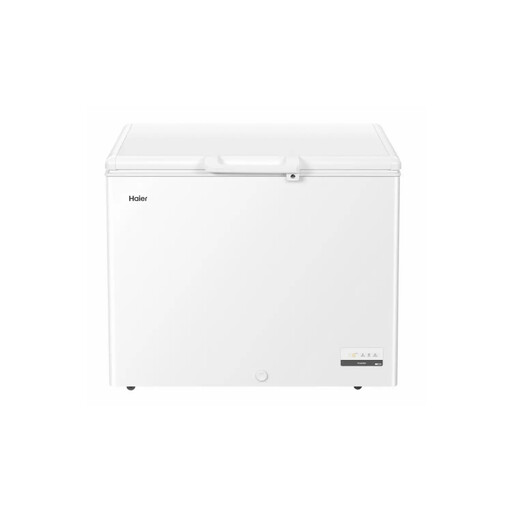 No image available
Consider this chest format if a substantial harvest batch needs open storage space.
Stated capacity: 300 L; energy class E. Allow for manual defrosting, and check this variant's power-failure storage period before relying on it.
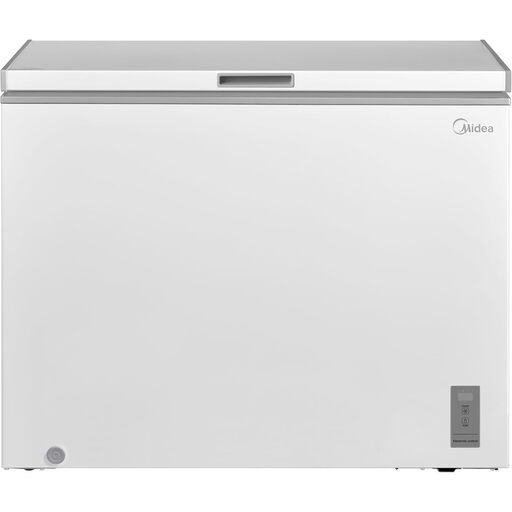 No image available
A chest-storage choice for seasonal produce when you want to compare a 249 L capacity with the space available.
Stated capacity: 249 L; energy class E. If it will be installed in an outbuilding, check the exact operating conditions in its instructions.
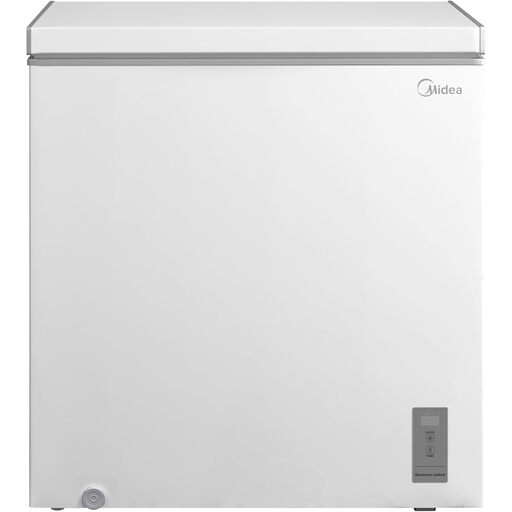 No image available
Consider this chest format if you expect smaller seasonal batches and need to assess a 198 L option against your available space.
Stated capacity: 198 L; energy class E. Measure the installation area and confirm the model's ambient operating range if it will sit in an unheated space.
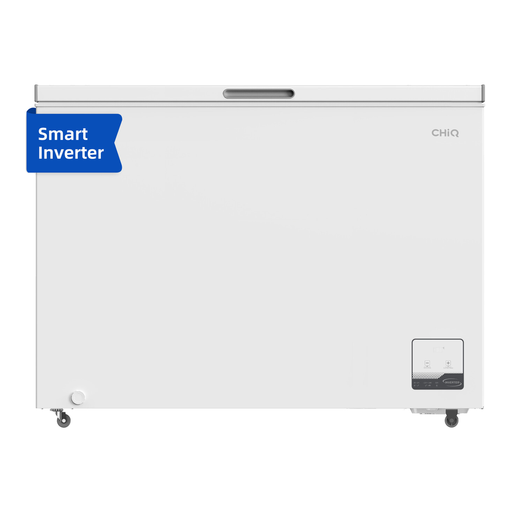 No image available
A 299 L chest option for keeping larger seasonal batches together.
Check annual kWh for this exact model rather than assuming an energy-use advantage from its Digital Inverter description. Confirm its installation conditions before considering an unheated location.
No. Check the exact model's low-ambient operating specification against the coldest conditions in that space. Beko states that the CF4308 operates down to −15°C, but that does not establish the same capability for other chest freezers.
Keep the freezer at around −18°C, according to Food Standards Agency household guidance for England, Northern Ireland and Wales. In Scotland, check Food Standards Scotland guidance for local advice.
Cool warm dishes first, then divide them into smaller portions in freezer-safe containers or bags. Food Standards Agency guidance advises freezing leftovers and homemade food as soon as possible after preparation.
Yes, if its packaging permits freezing: Food Standards Agency guidance says it can be frozen up to midnight on the use-by date. Follow the label's freezing and defrosting instructions.
Check your local authority's large-appliance recycling arrangements or ask the retailer about removal or take-back when ordering a replacement. The UK waste electrical and electronic equipment framework covers appliances such as freezers, while the available household services vary by area and retailer.