Frequent batch bakers
If you freeze several batches of biscuit dough regularly, you need room for new portions without burying older, labelled ones. Compare the model’s stated freezing capacity as well as its storage volume and basket layout.


Choose a chest freezer around the amount of fresh biscuit dough you add at once, the space available and how easily you can retrieve dated portions—not capacity alone. Frequent large batches make freezing capacity and a fast-freeze function worth checking; occasional batches may suit a smaller model, provided its defrosting and installation requirements work for you. If the dough is sold, plan temperature checks and separate storage for business food as part of your food-safety routine.
If you freeze several batches of biscuit dough regularly, you need room for new portions without burying older, labelled ones. Compare the model’s stated freezing capacity as well as its storage volume and basket layout.
For occasional dough freezing, measure the available floor space and lid clearance before settling on a capacity. Check the exact model’s installation conditions if it will stand in an outbuilding.
When dough is prepared for sale, storage must fit into a food-safety routine that includes labelling, temperature checks and clear separation of business food from personal food. Lichfield District Council’s home food-business guidance says frozen food should be kept at −18°C or colder.
Start with the size of a typical fresh batch and where the freezer will stand. Then decide how much access, temperature monitoring and defrosting work your routine can accommodate.
| Concern | What to check | Who this matters to |
|---|---|---|
| Batch capacity | Compare storage volume, basket layout and stated freezing capacity in kg/24 hours; check for a fast-freeze function if you add substantial fresh batches. | When I regularly freeze a large batch, I need space for the new dough without losing access to older portions. Around 34% of consumers would put batch capacity and freezing throughput first. |
| Temperature control | Check for a temperature display and relevant alarms. If the dough is sold, plan how you will check temperatures and keep business food separate. | If I sell frozen dough or cannot check the appliance frequently, I need a dependable way to notice and record temperature problems. For around 25% of consumers, temperature oversight is the primary concern. |
| Organisation and upkeep | Look at the number of baskets, access to lower portions and whether the model is manual-defrost, low-frost or frost-free. | I want to find the oldest labelled portions without repeatedly unpacking the freezer, and I need to allow for defrosting work. Organisation and upkeep come first for around 25% of consumers. |
| Fit and location | Measure the route into the room, floor space and lid clearance; confirm the exact model’s approved ambient conditions for an unheated location. | With a narrow space or an unheated outbuilding, I need to know the freezer can be installed where I intend to use it. Around 16% of consumers would make fit and location their first priority. |
A roomy chest freezer can still make small dough portions difficult to reach. The models cited illustrate the size difference: the Hotpoint CS2A 400 H FM FA UK 1 is 140.5 cm wide, while the Logik L198CFW23 is 77 cm wide.
Measure the delivery route, installation space and lid clearance, then plan how baskets or containers will keep dated portions accessible.
A fast-freeze function and the amount a freezer can freeze in 24 hours are different details to check when adding fresh dough. Fast freeze and a 20 kg/24-hour freezing capacity are listed for the Hotpoint CS2A 400 H FM FA UK 1; it lists no fast-freeze function and 9 kg/24 hours for the Logik L198CFW23.
For frequent large batches, compare the exact models’ stated freezing capacities rather than using storage volume as a substitute.
Installation conditions vary by model. The Kenwood K280NCFGD25 is listed as unsuitable for outbuildings, while its Hoover HHCH 200 ELK listing gives conflicting information about low ambient temperatures.
Check the current manual for the exact model and the temperatures expected at your intended location before installation.
Freezer capacity does not replace portioning, labelling and temperature management. Food Standards Agency guidance advises dividing food into smaller portions and using containers or freezer bags; Lichfield District Council says frozen food in a home food business should be at −18°C or colder.
Label and rotate dough portions, and establish temperature checks and separate business-food storage if you sell what you make.
These examples show features and limitations of specific models, not qualities shared by every freezer from each brand.
The CS2A 400 H FM FA UK 1 is a large-capacity example for comparing frequent batch storage.
The 196-litre HHCH 200 ELK is an example to consider when temperature visibility and warnings matter.
The 277-litre K280NCFGD25 illustrates a frost-free option for storing organised dough portions.
The 198-litre L198CFW23 offers a narrower model to assess for occasional dough storage.
These chest freezers offer different storage volumes for portioned biscuit dough. Compare their stated dimensions, freezing capacity and installation conditions against your batch size and intended location before choosing.
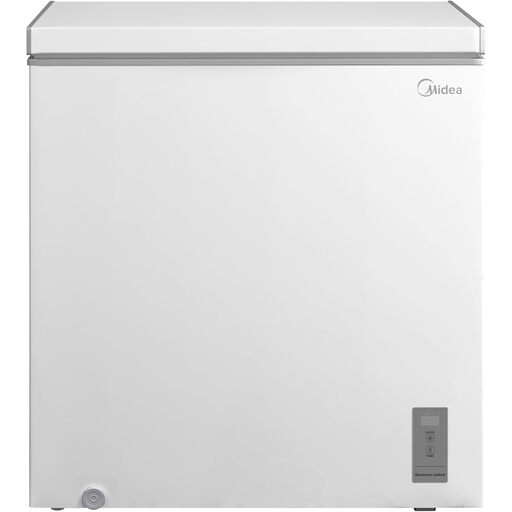 No image available
A 198-litre option to assess for portioned dough where floor space is limited.
White; E rated. If you regularly add large fresh batches, check the stated freezing capacity. Confirm the approved ambient range in the current manual before choosing an unheated location.
 No image available
The 297-litre format is worth considering if you need room for more stored dough portions.
White. Allow for the maintenance involved in manual defrosting, and check the stated freezing capacity if you frequently add fresh batches.
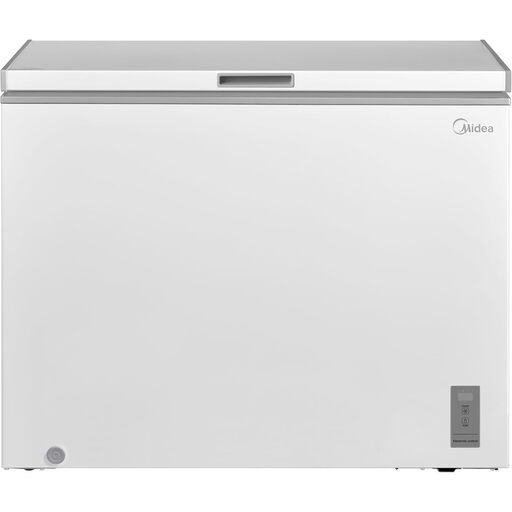 No image available
This 249-litre model offers another capacity to compare when a smaller freezer would leave too little room for labelled portions.
White; E rated. Check its freezing capacity for your usual fresh-batch size and consult the current manual if you intend to install it in an unheated space.
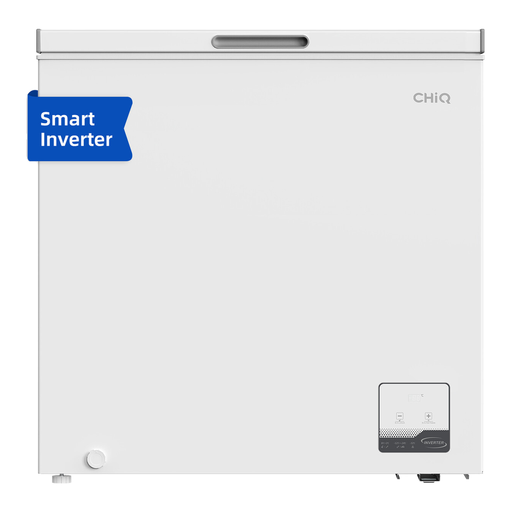 No image available
The 199-litre format is an option to compare for storing smaller, labelled dough portions.
White; E rated. Check the model’s freezing capacity if batch throughput matters, and confirm its defrosting and installation requirements before purchase.
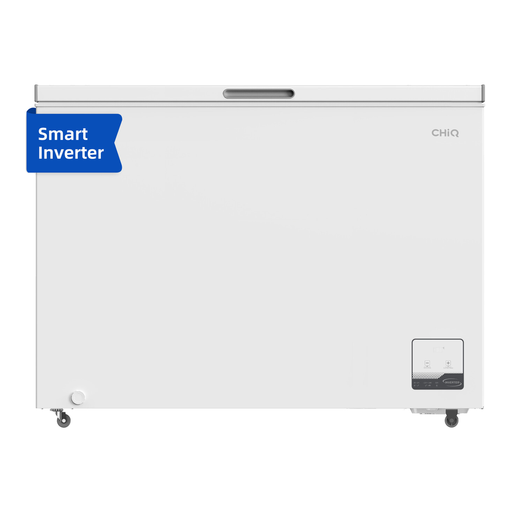 No image available
Consider the 299-litre format if your stored dough portions need more space, while checking that its footprint works in the intended room.
White. For frequent fresh-batch loading, compare the stated freezing capacity; check the current manual for defrosting and approved ambient conditions.
Smaller portions are generally easier to freeze, label and retrieve. Food Standards Agency catering guidance advises dividing food into smaller portions and placing it in containers or freezer bags before freezing.
Defrost it in the fridge unless the dough’s cooking instructions provide for cooking from frozen. Keep portions contained during defrosting and follow the Food Standards Agency’s guidance on safe freezing and defrosting.
Lichfield District Council’s home food-business guidance says frozen food should be kept at −18°C or colder. Build temperature checks and clear separation of business food into your food-safety routine; a display or alarm does not replace that routine.
If you are starting a food business in the UK, the Food Standards Agency’s registration service says to register with your local authority at least 28 days before trading or food operations start. Check the registration process for your location before you begin selling.
No—check the exact model’s approved installation and ambient-temperature conditions first. For example, the Kenwood K280NCFGD25 is listed as unsuitable for outbuildings, and its information for the Hoover HHCH 200 ELK gives conflicting low-temperature conditions that call for a check of the current manual.