Small-kitchen bread-roll freezers
You want extra space for rolls without obstructing the kitchen. Measure the appliance position, lid-opening space and required ventilation clearance before deciding how much capacity to buy.


A compact chest freezer of around 97–99L is a practical starting point for bread rolls in a small kitchen, provided its full footprint, lid-opening space and ventilation requirements fit. Choose a larger chest freezer for rolls alongside other frozen food only if you have room for it; a basket and an accessible lid can matter as much as headline capacity when you regularly retrieve small bags.
You want extra space for rolls without obstructing the kitchen. Measure the appliance position, lid-opening space and required ventilation clearance before deciding how much capacity to buy.
You freeze rolls alongside other food and need enough room to keep frequently used small bags accessible. Compare basket arrangements and chest depth as well as litres.
You have a larger bulk-storage need and another suitable place for the freezer. Check the exact model’s approved ambient-temperature range and installation instructions before choosing an outbuilding position.
Start with the space the freezer needs when installed, not just its stated capacity. Once a model fits, decide how much other food it must hold alongside the rolls and how easily you can reach them.
| Concern | What to check | Who this matters to |
|---|---|---|
| Kitchen footprint and access | Measure width, depth and height, then check the model’s lid-opening and ventilation clearances. | If kitchen space is tight, I need to open the lid and move around the freezer without blocking airflow. Around 50% of consumers put installed fit and access first. |
| Capacity and organisation | Compare stated freezer volume and whether a basket keeps small bags within reach. | When I freeze rolls alongside meals, I want to find a small bag without searching through bulkier food. Keeping that storage usable is the main concern for around 30% of consumers. |
| Placement and running information | Check the approved ambient-temperature range if using an outbuilding, and compare the exact models’ energy information. | If the freezer may sit outside my kitchen, I need to know that its operating range suits the position. Safe placement and ongoing energy information come first for around 20% of consumers. |
A larger freezer may offer useful storage yet leave too little room to open its lid or maintain airflow. Beko specifies its 98L CF4098 at 545mm wide and its 371L CF4371 at 1300mm wide; they are not interchangeable small-kitchen options.
Measure the intended position and check the exact model’s full dimensions, lid path and installation clearances before ordering.
Ambient-temperature suitability belongs to the exact model, not the chest-freezer category. Beko specifies FreezerGuard operation down to −15°C for its CF4098 and CF4371, but that claim does not extend to other models.
Check the approved operating range in the chosen freezer’s specification or manual before planning an outbuilding installation.
Electrical Safety First warns that an extension lead used with large appliances can be overloaded, creating a fire risk.
Choose a position near a suitable wall socket, avoid trapping the cable beneath the freezer and follow the manufacturer’s installation instructions.
Fridgemaster specifies both the MCF100E and MCF142EB as non-frost-free. That maintenance requirement matters when the chest holds food you use regularly.
Check the exact model’s defrost method and plan where to keep frozen food while defrosting. Electrical Safety First advises against using a heating appliance such as a hair dryer for the task.
Manual defrosting takes time and requires temporary arrangements for the food inside.
Beko’s CF4098 and CF4371 illustrate very different storage sizes rather than equivalent options for a small kitchen.
The MCF100E offers a shallow compact example, while the MCF142EB provides a capacity step-up for rolls and other food.
Hotpoint’s chest-freezer range is worth considering if bread rolls are part of a broader bulk-storage need.
These choices include compact freezers for a kitchen position and larger models to consider when rolls share space with other frozen food. Measure the intended location and check each model’s installation instructions before choosing.
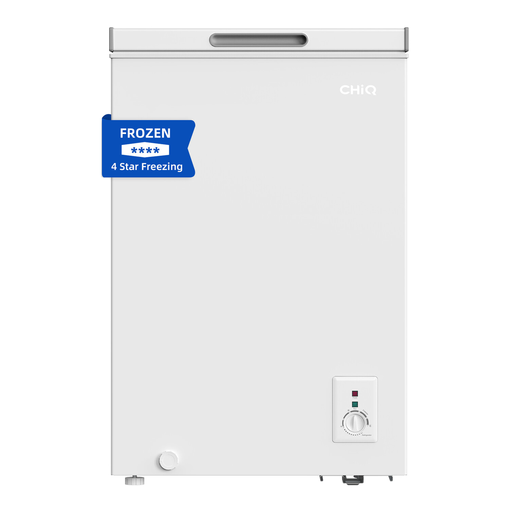 No image available
Consider this compact-capacity option if the freezer must stay in the kitchen and primarily holds bread rolls. Its listed capacity is 99L and its energy class is E; check the installation instructions for the space it needs around and above the appliance.
 No image available
For smaller bags of rolls, the removable basket offers a way to keep frequently used items near the top. The product name specifies 95L capacity, switchable refrigerator and freezer modes, a seven-level thermostat and energy class E; confirm the installation clearances for your kitchen.
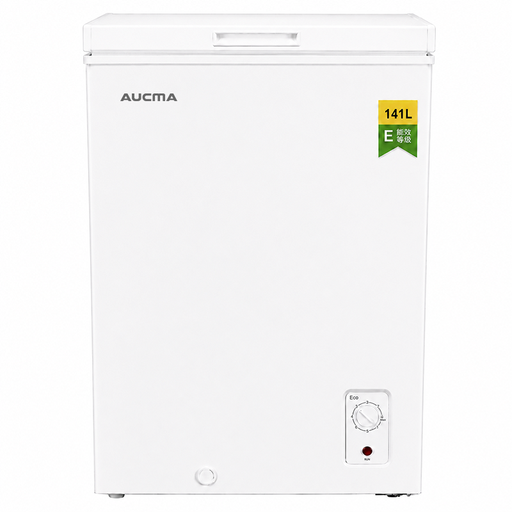 No image available
Consider the larger capacity if rolls will share the freezer with other food and the intended position has enough room. The product name specifies 141L capacity, a removable basket, switchable refrigerator and freezer modes, a seven-level thermostat and energy class E; check lid and ventilation clearances before ordering.
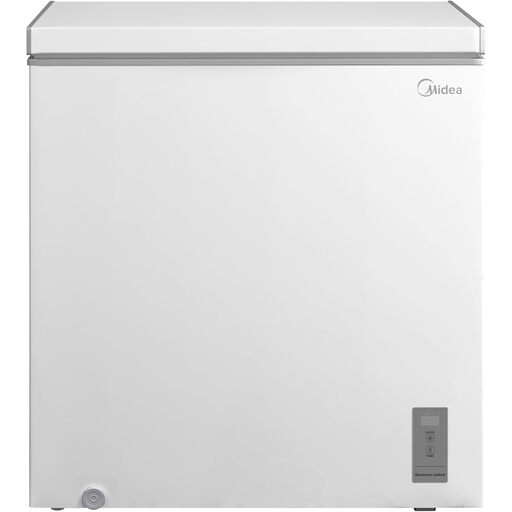 No image available
This 198L model is a choice for broader frozen-food storage if a larger position is available. The product name specifies energy class E. If you plan to place it in an outbuilding, check the approved ambient-temperature range in the exact model’s manual before buying.
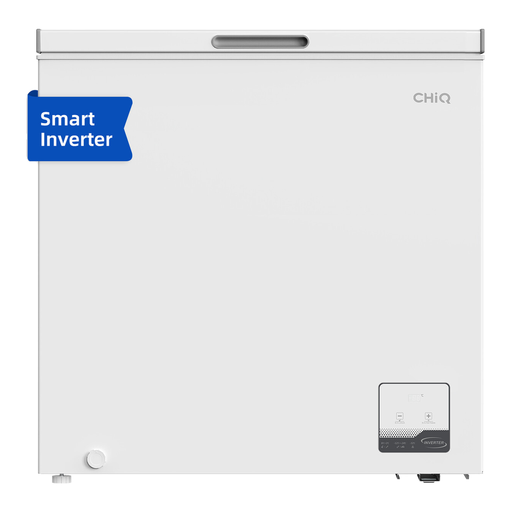 No image available
Consider this larger-capacity model when bread rolls are only part of what you freeze and you have space beyond a tight kitchen position. The product name specifies 199L capacity, digital-inverter design and energy class E; confirm the full installed footprint and lid-opening space for the exact model.
Aim to keep the freezer at around −18°C, as the Food Standards Agency advises for frozen food. Follow any freezing and defrosting instructions supplied with the rolls, and divide them into portions you are likely to use together.
Compare the exact model’s width, depth and height with the available position, then allow for its required ventilation and a fully opening lid. Width alone can mislead: Beko specifies its CF4098 at 545mm wide and 545mm deep, while Fridgemaster specifies its MCF100E at 578mm wide but 444mm deep. Electrical Safety First advises keeping ventilation openings clear.
Plan to use a suitable wall socket instead. Electrical Safety First advises positioning a fridge or freezer close to a wall socket and not using an extension lead, which can be overloaded when used with large appliances.
No: outbuilding suitability depends on the exact model’s approved ambient-temperature range. Beko states that its CF4098 and CF4371 FreezerGuard models can operate at ambient temperatures down to −15°C, but that does not establish the operating range of another freezer. Check the chosen model’s manual and installation requirements.