Shared-kitchen cake preppers
People storing individual portions for several kitchen users who need labels, clear ownership and easy retrieval more than bulk storage.


For a shared kitchen, choose a chest freezer by checking how your labelled cake-slice containers fit alongside baskets, then measure the space needed to install and open it. A compact 99-litre model may suit overflow storage, while frequent batches or whole cakes may call for more capacity; either way, check the exact model’s clearances, defrost routine and suitability for the room where it will stand.
People storing individual portions for several kitchen users who need labels, clear ownership and easy retrieval more than bulk storage.
People needing extra space for cake slices in a kitchen or utility room where cabinet dimensions, ventilation clearance and lid-opening space affect the choice.
People freezing frequent batches, whole cakes or ingredients alongside slices, for whom container organisation and the space taken by a larger freezer matter.
Start with the maximum number and size of containers you expect to store, then check whether the freezer and its required clearances fit without obstructing shared access.
| Concern | What to check | Who this matters to |
|---|---|---|
| Shared access and portion identification | Check lid access, basket options and space for labelled containers; if cakes are supplied through a food business, plan appropriate temperature controls. | When several people use the freezer, I need to find my labelled slices without moving everyone else’s food. Around 27% of consumers put shared access and portion identification first. |
| Footprint and clearance | Measure the cabinet’s width, depth and height against the site, access route, lid swing and the exact model’s installation instructions. | If kitchen floor space is tight, I need the freezer to fit without blocking movement or preventing the lid from opening. Around 33% of consumers make fit their primary concern. |
| Batch capacity and organisation | Allow for the shape and number of slice boxes, baskets and any whole cakes or ingredients; do not use nominal litres alone to judge fit. | With frequent batches, I need room for portions without crushing them or burying them beneath other food. Around 27% of consumers prioritise capacity and organisation. |
| Upkeep and energy information | Check the exact model’s defrost instructions and energy label, and agree who will handle shared maintenance. | I need a defrost routine we can manage together and clear energy information before choosing a continuously running appliance. Around 13% of consumers put upkeep and energy information first. |
A cabinet may fit by width yet leave too little room for ventilation or for the lid to open fully.
Measure the site and the route into it, then compare those measurements with the chosen model’s installation instructions.
Outbuilding suitability varies by model. Beko describes selected Freezer Guard models as operating in ambient temperatures down to −15°C, while the Indesit OS 2A 100 2 UK 2 listing says not to use that model in an unheated area.
If the freezer will stand in a garage or shed, match the exact model’s stated ambient-temperature range to that location.
Compact models listed with manual defrost need a workable plan for clearing ice and keeping track of everyone’s portions.
Check the defrost type and agree who will move food, clean the freezer and return labelled containers.
Defrosting can temporarily interrupt access while portions are moved.
For food-business activity, freezer space alone does not address the freezing, storage and temperature-monitoring arrangements covered by Food Standards Agency MyHACCP guidance. Ordinary private household sharing is a different situation.
If the cake activity is a food business, check the applicable registration requirements and include freezer use in its food-safety procedures.
Chest freezers for additional frozen storage, including selected models intended for lower-ambient-temperature locations.
A chest-freezer range that includes Low Frost models for additional storage.
Chest freezers with differing storage capacities and features across the range.
The JKR99DWE is a compact convertible chest-freezer option for a constrained space.
The MDRC154FZE01 is a compact convertible chest-freezer model with electronic controls.
These models span compact portion storage and larger capacities for more frequent batches. Compare their stated capacity with your containers and available floor space; the larger models are not automatically a better fit for a shared kitchen.
 No image available
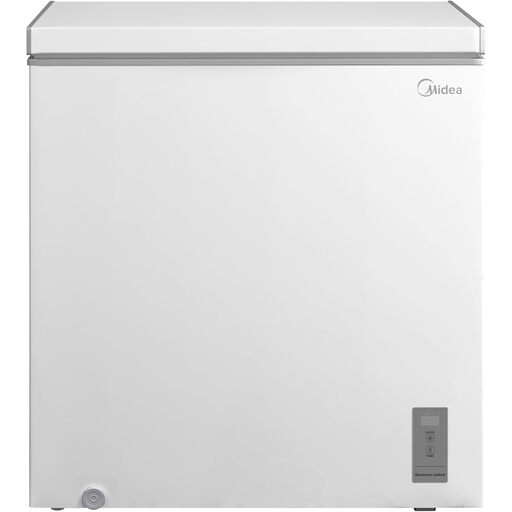
Consider this model when regular cake-slice batches require more storage than a compact freezer, provided its cabinet fits the shared space.
Stated capacity: 198 litres; energy class: E. Check the exact installation clearances, defrost instructions and energy information before choosing it.
 No image available
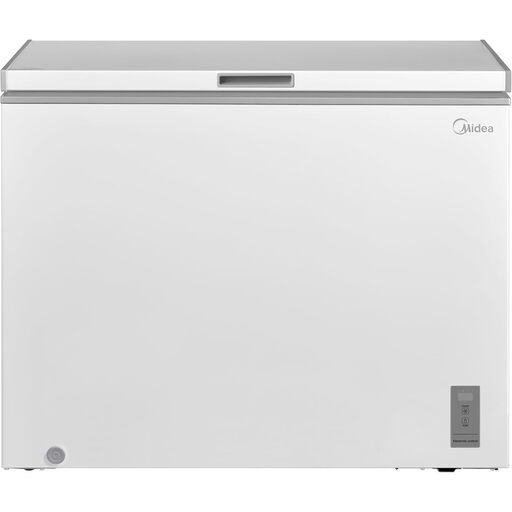
The larger capacity is worth assessing if several users freeze frequent batches or need space for whole cakes as well as slices.
Stated capacity: 249 litres; energy class: E. Check that its footprint and lid access work in the planned position, along with its defrost instructions and energy information.
 No image available
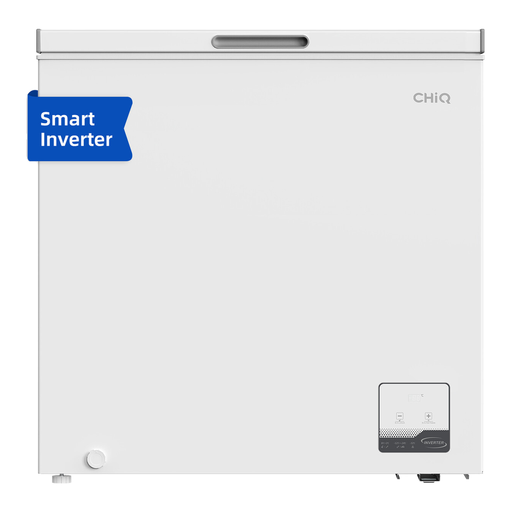
This capacity may suit a shared freezer that holds larger batches, if users can organise portions so they remain easy to retrieve.
Stated capacity: 199 litres; energy class: E. Digital inverter is part of the listed model name, not a basis for assuming lower energy use. Check the energy information, defrost instructions and installation clearances for this model.
 No image available
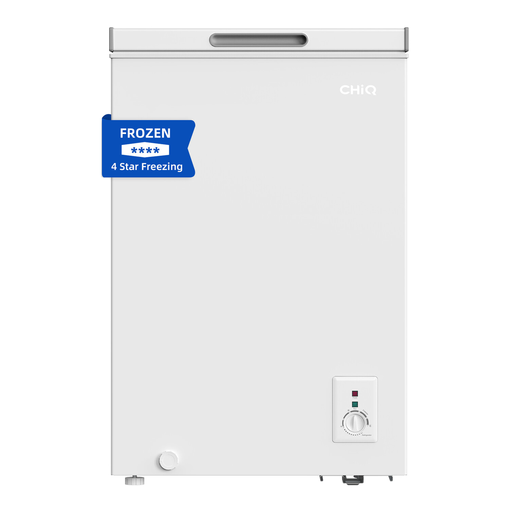
For smaller batches of labelled slices, this compact model is worth checking against the available floor space and the number of containers you actually use.
Stated capacity: 99 litres; width: 54.5 cm; energy class: E. The JKR99DWE listing describes a counterbalanced lid. Allow for the model’s required clearances and check its defrost instructions.
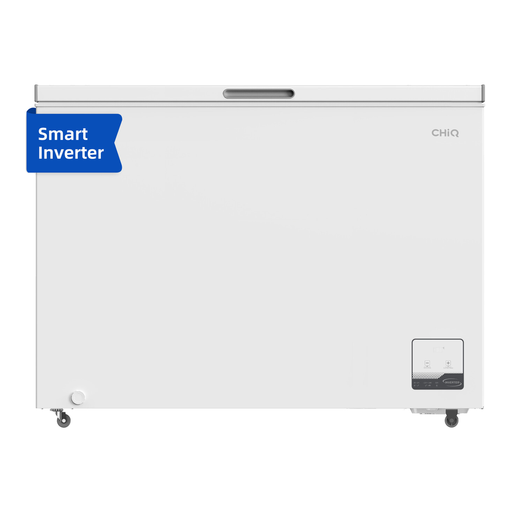 No image available
Consider this larger model only if the planned batches and other frozen items warrant its capacity and the shared kitchen can accommodate its footprint.
Stated capacity: 299 litres. Digital inverter is part of the listed model name; compare the exact energy information rather than assuming an efficiency advantage. Check installation clearances and defrost instructions as well.
Yes: choose a model whose stated ambient-temperature range covers the planned location. Beko says selected Freezer Guard models operate down to −15°C, but that does not apply to all chest freezers; the Indesit OS 2A 100 2 UK 2 listing says not to use that model in an unheated area.
Use sealed, labelled portion containers and assign baskets or clearly marked zones so users can find their food. If the cakes are supplied through a food business, Food Standards Agency MyHACCP guidance also calls for adequate freezing and frozen-storage arrangements, including temperature monitoring where necessary.
Compare the energy labels and product information sheets for the exact models under consideration, rather than judging electricity use by capacity or a feature name alone. The Department for Energy Security and Net Zero and the Office for Product Safety and Standards state that products within the relevant energy-labelling rules must have an accurate printed label.
If the activity is a food business, check the Food Standards Agency’s registration requirements before trading; ordinary private household sharing is not the same activity. The Food Standards Agency advises registering a food business with the local authority at least 28 days before trading or food operations begin.