Small-kitchen batch cook
You make tomato sauce in batches and need room for a freezer without blocking the kitchen or restricting its lid.


A compact chest freezer makes sense for batch-frozen tomato sauce if its footprint, ventilation space and upward-opening lid fit the kitchen. A 98–99 litre model is a starting point for occasional batches, but the space taken by your containers and access to individual portions matter too. If overhead clearance is limited, compare an undercounter upright freezer instead.
You make tomato sauce in batches and need room for a freezer without blocking the kitchen or restricting its lid.
You want occasional extra space for sauce, leftovers and groceries, with a way to keep smaller portions within reach.
You would rather keep the freezer outside the kitchen and need to check whether the exact model is suitable for that location.
Decide whether a top-opening appliance works in the available space before comparing capacity and day-to-day access.
Consider it when: You want dedicated space for sauce batches and can accommodate a top-opening appliance.
Allow for: Lid clearance and ventilation around the appliance; the Russell Hobbs RH99CF0E1W also requires manual defrosting, according to its manufacturer.
Consider it when: There is no room to open a chest-freezer lid, or you want drawer access to individual portions.
Compare carefully: Check each model’s usable storage space and dimensions against the containers you normally freeze.
| Concern | What to check | Who this matters to |
|---|---|---|
| Footprint and lid access | Measure width, depth, delivery route and space above the open lid; check the model’s ventilation instructions. | If cupboards or a narrow walkway restrict the position, I need a freezer I can open and load without obstructing the kitchen. Around 42% of consumers put physical fit first. |
| Capacity and portion access | Compare your usual sauce containers with the storage layout and check whether a basket is included. | When I freeze several batches, I need enough room for the containers and a practical way to retrieve one portion. For around 33% of consumers, storage and access are the primary concern. |
| Placement and upkeep | Compare energy-label information and defrost requirements; for an unheated location, check the exact model’s operating guidance. | If I will use an outbuilding or find defrosting difficult to arrange, the installation and upkeep conditions come first. They are the main concern for around 25% of consumers. |
Capacity does not show whether the freezer will block a walkway or whether the lid can open beneath a cupboard. Beko lists the CF4098 at 85 × 54.5 × 54.5 cm, while Russell Hobbs lists the RH99CF0E1W at 85 × 54.7 × 44.6 cm.
Mark out each candidate’s footprint, then check lid movement, ventilation requirements and the delivery route before ordering.
Low-ambient claims apply to specific models: Beko states that its CF4098 FreezerGuard operates down to −15°C, while Russell Hobbs describes the RH99CF0E1W as suitable for garage storage.
Check the exact model’s location and temperature guidance against the intended installation space.
Russell Hobbs specifies manual defrosting for the RH99CF0E1W. That affects how you plan to store frozen sauce while the appliance is emptied and cleaned.
Check the model’s defrost and drain instructions before deciding where it will go.
Allow time and temporary cold storage for the food during defrosting.
Energy Saving Trust describes the appliance rating scale as A to G; the letter alone does not tell you the energy use or capacity of the models you are comparing.
Read the energy-label information alongside capacity and dimensions, comparing models that meet the same storage need.
The CF4098 is a compact chest-freezer example for buyers considering kitchen or suitable outbuilding placement.
The RH99CF0E1W offers a 99-litre example to measure against a shallow kitchen space.
The JKR99DWE is another 99-litre chest-freezer option to compare with the available space.
These chest freezers range from a compact 99-litre option to larger models for consumers who also need substantial frozen-food storage. Measure the position and check your usual sauce containers before choosing capacity.
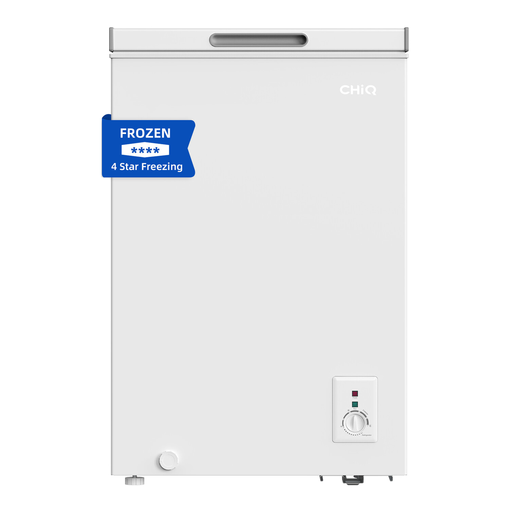 Image unavailable
Consider this compact-capacity model for sauce batches when its installation space allows the lid to open fully.
Joybuy describes the JKR99DWE as 54.5 cm wide and 83.5 cm tall, with freezer-to-fridge convertible operation and a counterbalanced lid. Check its full depth and installation clearances for your kitchen.
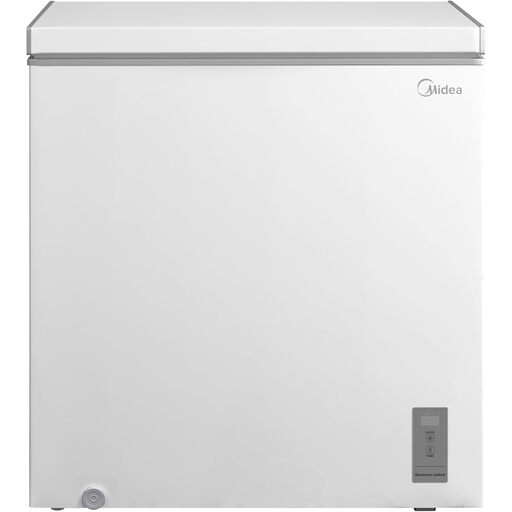 Image unavailable
Consider the stated 198-litre capacity if sauce batches share the freezer with other food and you have room for a larger appliance.
Measure the full installation position and lid-opening space rather than choosing by capacity alone.
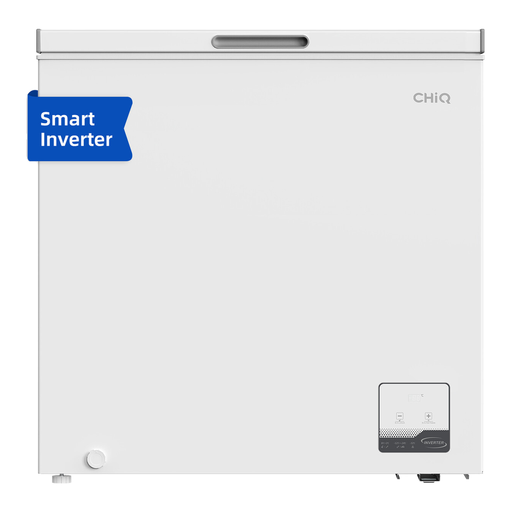 Image unavailable
The stated 199-litre capacity is worth considering if you need more storage than a compact sauce-batch freezer provides.
Check whether its complete footprint, ventilation requirements and open lid work in your kitchen before choosing the larger size.
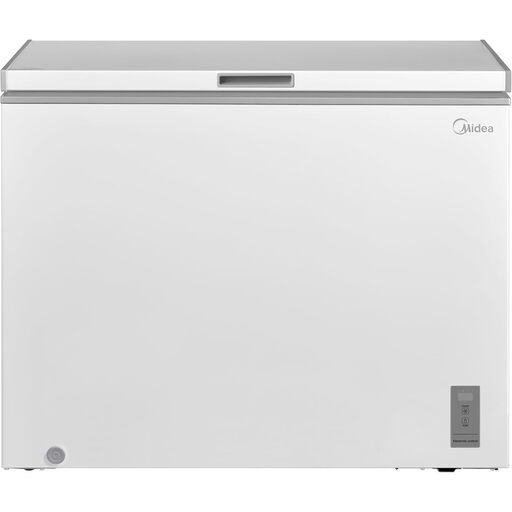 Image unavailable
Consider the stated 249-litre capacity only if your sauce batches and other frozen food call for that much storage and the appliance fits the intended space.
Measure the installation position, delivery route and lid-opening clearance carefully for this larger option.
Measure the full floor position, the route into the kitchen and the space needed to open the lid. Check the exact model’s installation instructions for ventilation clearance as well; space around a closed appliance is not the whole fit test.
It may be enough for occasional batches, but the litre figure cannot tell you how many of your containers will fit. Compare their dimensions with the freezer’s storage layout and allow for any other food you intend to keep there.
Outbuilding suitability matters if you plan to use the freezer in an unheated location, not simply because it is a chest freezer. For a garage or similar space, follow the exact model’s stated operating-temperature and installation guidance.
Cool cooked sauce promptly and cover it before storing it in a fridge or freezer. Guy’s and St Thomas’ NHS Foundation Trust advises cooling cooked food within two hours in its food-safety guidance for people receiving chemotherapy; follow any more specific advice applicable to your household.
Check the energy label alongside capacity when comparing freezers that could meet your storage needs. UK guidance from the Department for Energy Security and Net Zero and the Office for Product Safety and Standards says that products within the energy-labelling rules must display the label at the point of sale, including on a website.