
24/7 Customer Support

Free returns

Same-day & Next-day Delivery

Quality Guaranteed

Unlock Your Welcome Offers: FREE Delivery | Up to 80% OFF | Free 30-day JoyPlus trial
Download the APP
Chestnuts can be a convenient snack, a baking ingredient or a useful addition to savoury dishes. However, products sold as chestnuts are not always interchangeable. A pouch of peeled chestnut kernels may be ready to eat, while whole raw chestnuts require preparation. Pack sizes, processing methods and storage instructions can also affect value and convenience.
This guide explains what to check before buying chestnuts, from ingredient lists and texture to portion size and recipe suitability.
Whole chestnuts with shells usually need cutting and cooking before eating. Ready-to-eat chestnuts, roasted chestnuts and cooked chestnuts have already been processed, but the exact format still matters.
Always check the usage instructions rather than relying only on front-of-pack wording such as “natural” or “traditional”.
Descriptions such as sweet, soft, roasted or premium may help set expectations, but the ingredient list gives more useful information. Several products in this selection contain chestnuts as the only ingredient, with no added sugar, oil, salt or preservatives listed.
For a simple snack, look for:
Chestnuts are tree nuts for allergen purposes, so read the packaging carefully if you have an allergy or are preparing food for someone else.
A small chestnut snack pack may be convenient for one serving, but several small packs can cost more per 100g than a larger pouch. Conversely, a 300g pack may be poor value if it will not be consumed promptly after opening.
Check whether the product is:
This is particularly important for households buying chestnuts for lunchboxes, office snacks or batch cooking.
For a minimally processed option, select products with a short ingredient list. A declaration such as Chestnuts: 100% means there are no listed added ingredients. This does not necessarily mean every product has the same texture: roasting, cooking and packaging can all affect softness and flavour.
If you want chestnuts for baking, porridge or desserts, kernels that are soft enough to mash may be more practical. For stuffing, stews or salads, whole cooked chestnuts can retain a more useful shape.
Nutrition panels make comparisons easier than pack size alone. In the products listed here, energy values range from 170 to 245 kcal per 100g, while fat figures range from 0g to 2g per 100g. Carbohydrate content is comparatively higher, ranging from 33g to 50g per 100g across the supplied labels.
These figures are not a recommendation for a particular diet. They simply help you compare products and plan portions. If fibre matters to you, check the label: examples in this selection list around 5g of dietary fibre per 100g, while some products do not provide a fibre figure.
Choose the format according to how you will use the chestnuts:
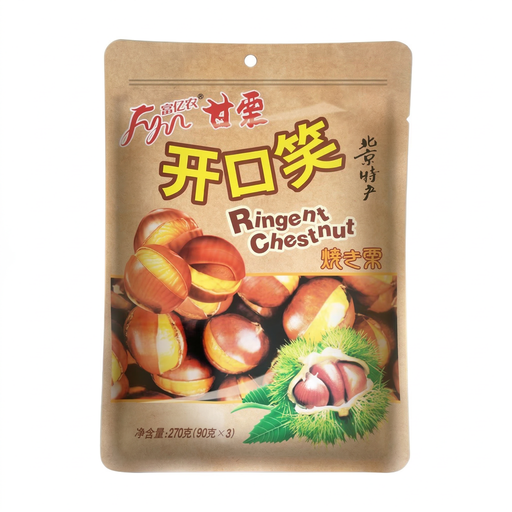
Why This Fits Their Persona: Three packs provide 270g in total, making this a practical starting point for snackers who want separate portions without committing to a large multipack.
The pre-cut shells make access easier than preparing unprocessed whole chestnuts, while the ingredient declaration lists chestnuts only.
270g total quantity; pre-cut format; 100% chestnuts; ready to eat according to the supplied instructions.
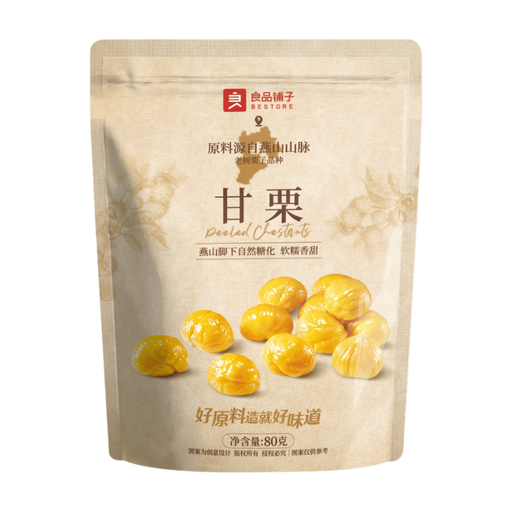
Why This Fits Their Persona: This compact bag suits shoppers prioritising a soft, naturally sweet and powdery texture for direct eating or adding to desserts.
The 80g quantity is clearly stated, helping prevent shoppers from mistaking a small snack bag for a cooking-sized pack.
100% sweet chestnuts; ready to eat; suitable for baking, porridge or desserts; 245 kcal per 100g on the supplied nutrition panel.
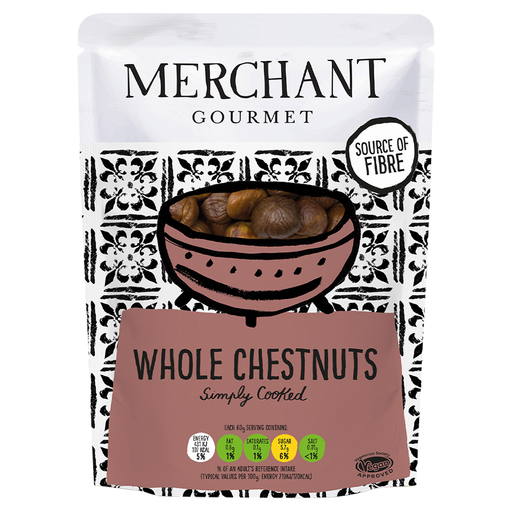
Why This Fits Their Persona: Home cooks can use whole cooked and peeled chestnuts in stuffings, soups, stews, cakes, pâtés and vegetable dishes without shelling raw produce.
The pouch specifies that the chestnuts are cooked and peeled, and gives clear post-opening guidance: refrigerate unused contents and consume within 3 days.
180g whole pieces; one listed ingredient; 5.3g dietary fibre per 100g; usable straight from the pouch or gently heated.
We have compiled a complete, real-time list of products that fully satisfy these strict selection criteria and UK safety regulations.
For a natural chestnut snack, ready-to-eat kernels in 80g to 120g packs are easy to keep in a desk drawer, lunch bag or cupboard. Products such as Be&Cheery Chestnut Kernels 80g, Bestore Smiling Chestnuts 120g and Three Squirrels Chestnut Kernels 100g are designed for direct eating.
For baking, look for soft peeled chestnuts that can be chopped, mashed or blended into cakes, pastries and desserts. Larger packs such as 7FRESH Chestnut Kernels 300g may be more suitable when several portions are required.
For soups, stuffings and stews, whole cooked chestnuts are usually more convenient than small snack pieces. Check the drained weight where applicable, and follow the pouch instructions for heating and storage.
Although many products originate in China and may be described as Chinese chestnuts, country of origin is not a complete guide to flavour or texture. Compare the processing method, ingredients and nutrition panel instead.
Yes. Ready-to-eat chestnuts and peeled chestnut kernels can be chopped, mashed or added directly to recipes. Whole cooked chestnuts are particularly useful when you want visible pieces in stuffing, soup or a stew.
Follow the individual pack instructions. Many snack packs advise consuming the contents soon after opening and storing them in a cool, dry place before opening. Merchant Gourmet Whole Chestnuts specifies refrigeration for unused contents in a sealed container and consumption within 3 days.
The supplied nutrition panels list between 0g and 2g of fat per 100g, depending on the product. However, chestnuts contain carbohydrates, so compare the full nutrition table and portion size rather than focusing on one figure alone.