People looking for a chew before training
If you have already arranged any food you need, a small pack of gum may suit a journey from work to the gym or a place in your gym bag. Choose it for flavour and convenience rather than fuel.


Choose a compact sugar-free gum pack for flavour and a convenient chew, not as a replacement for a pre-workout snack. University College London Hospitals NHS Foundation Trust describes pre-exercise snacks containing carbohydrate, with protein included for some timings; if you need food before training, plan that separately. Compare pack format and ingredients before choosing gum, particularly if phenylalanine, soya or prolonged chewing matters to you.
If you have already arranged any food you need, a small pack of gum may suit a journey from work to the gym or a place in your gym bag. Choose it for flavour and convenience rather than fuel.
If your question is what to eat before exercise, consider food or drink separately from gum. University College London Hospitals NHS Foundation Trust describes carbohydrate-containing pre-exercise snacks, with the composition depending on timing.
Read the exact pack if sweeteners, phenylalanine or soya matter to you. If chewing aggravates jaw symptoms, a non-chewing option may be more appropriate; United Lincolnshire Hospitals NHS Trust advises avoiding gum as part of self-care for temporomandibular-joint problems.
Decide whether you need a snack or simply want gum, then compare the pack and label for the gum you would carry.
| Priority | What to check | Your needs |
|---|---|---|
| Food before exercise | Keep gum separate from your food choice. University College London Hospitals NHS Foundation Trust describes snacks 60–90 minutes before exercise that include carbohydrate and protein with minimal fat; its guidance for some 15–30-minute glucose-management snacks specifies faster-acting carbohydrate. | If I need food before training, I want to plan it rather than count a piece of gum as my snack. |
| Pack format | Check the piece count and whether the pack is a bottle or individually wrapped pieces. Sainsbury’s lists relevant Extra bottles with 30 or 46 pieces; those counts do not define the physical size of each piece. | A bottle may suit my bag or desk, but I might prefer wrapped pieces if I do not want to carry a bottle. |
| Ingredients and warnings | Read the current label for sweeteners, allergens and phenylalanine warnings. The Extra bottles described by Sainsbury’s warn that excessive consumption may produce laxative effects; NHS guidance says aspartame is unsuitable for people with phenylketonuria (PKU). | I want to check the particular flavour and pack, especially if an ingredient or warning affects my choice. |
| Chewing and disposal | Consider whether chewing provokes jaw symptoms. United Lincolnshire Hospitals NHS Trust advises avoiding gum in self-care guidance for jaw-joint problems; the Department of Agriculture, Environment and Rural Affairs advises putting used gum in a bin. | If chewing makes my jaw uncomfortable, I would choose something that does not require chewing. I also need somewhere to put the gum afterwards. |
Gum can provide flavour, but it does not serve the same purpose as the carbohydrate-containing pre-exercise snacks described by University College London Hospitals NHS Foundation Trust.
Choose any food or drink you need for the session separately; add gum only if you want a chew.
The Extra products listed by Sainsbury’s have different formulations and carry warnings relevant to sweeteners and phenylalanine.
Read the label on the exact pack, particularly if you need to check aspartame, soya or the excessive-consumption warning.
United Lincolnshire Hospitals NHS Trust identifies constant gum chewing as a habit associated with jaw-joint dysfunction and advises avoiding gum as part of self-care.
If chewing provokes symptoms, stop chewing and consider a non-chewing option; seek individual clinical advice if symptoms persist.
A higher count is not necessarily the more useful format if you would rather carry a smaller pack or a different type of container.
Compare the number of pieces, pack format, ingredients and how often you expect to use gum.
Sainsbury’s lists Extra sugar-free bottle lines with 30 or 46 pieces, including mint and Bubblemint varieties.
Sainsbury’s lists an Airwaves Menthol & Eucalyptus sugar-free gum bottle with 46 pieces and a stated pack weight of 64g.
Sainsbury’s category listing includes Mentos Pure Fresh gum in a 70g format.
These gum packs offer flavour and a portable chew for before or after training; they are not substitutes for food when you need a pre-workout snack. Compare the stated counts and pack formats rather than assuming every piece described as compact is physically mini-sized.
 No image available
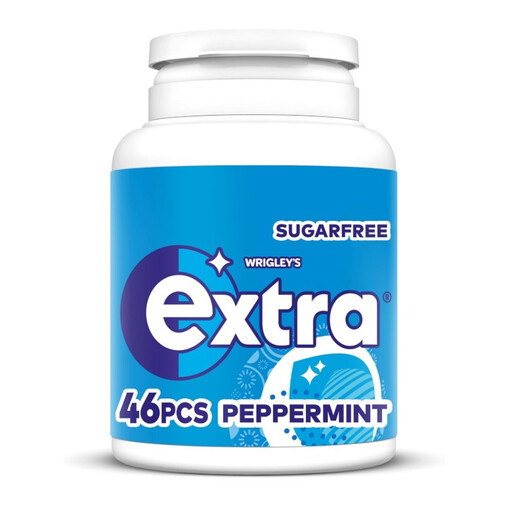
A peppermint gum bottle for carrying a chew when any pre-training food you need has been arranged separately.
Contains 46 pieces. Check the current pack’s ingredients and warnings if sweeteners or allergens matter to you.
 No image available
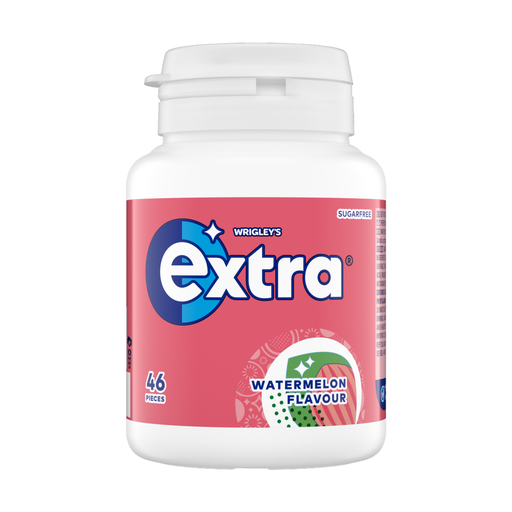
A watermelon-flavoured bottle option if you want gum for a journey to training rather than a snack.
The stated pack contains 46 pieces and weighs 64g. Check its current ingredients and warnings before choosing.
 No image available
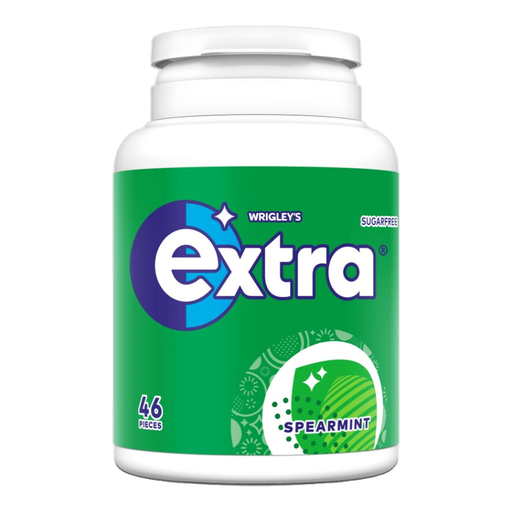
A spearmint-flavoured chew in a bottle for carrying to or from training, separate from any food you need beforehand.
Contains 46 pieces. Check the current pack label for ingredients and warnings relevant to you.
 No image available
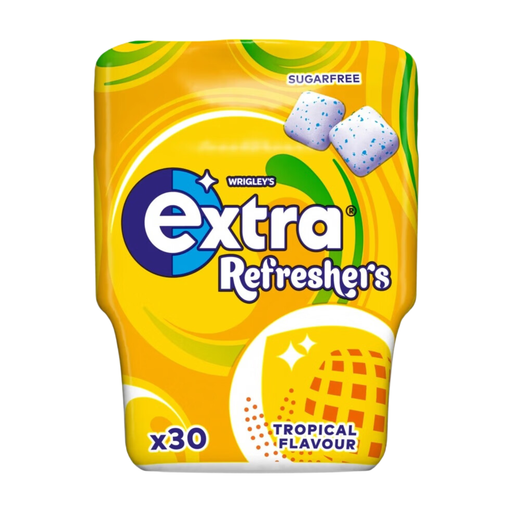
A tropical-flavoured bottle to consider if a 30-piece count suits how often you carry gum.
The stated pack weighs 67g. It is a gum choice, not a pre-workout food choice; read the current label for ingredients and warnings.
 No image available
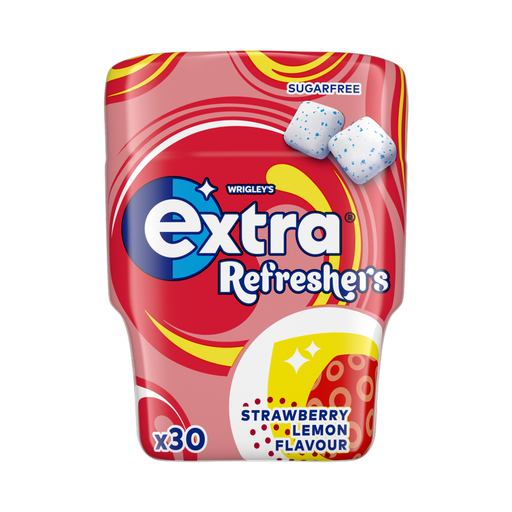
A strawberry-and-lemon gum pack for a chew before or after training, once any need for food has been considered separately.
Contains 30 pieces and weighs 67g. Check the current pack format if you specifically want a bottle, and read its ingredients and warnings if relevant.
No: choose gum for flavour or a chew, not in place of food you need before exercise. University College London Hospitals NHS Foundation Trust describes carbohydrate-containing pre-exercise snacks, with protein included at some timings; plan your snack separately from gum.
A bottle may suit you if you want to keep several pieces together in a bag, car or desk. Sainsbury’s lists relevant Extra bottles with 30 or 46 pieces; compare that count with your likely use and check the container if its shape or closure matters.
Check the exact pack’s sweeteners, allergens and warnings. The Extra products listed by Sainsbury’s carry excessive-consumption and phenylalanine warnings, while NHS guidance states that aspartame is unsuitable for people with phenylketonuria (PKU).
Do not keep chewing if it provokes symptoms. United Lincolnshire Hospitals NHS Trust identifies constant gum chewing as a possible contributing habit in jaw-joint dysfunction and advises avoiding gum as part of self-care; seek individual clinical advice for persistent symptoms.
Put used gum in a bin rather than leaving it outdoors. The Department of Agriculture, Environment and Rural Affairs explicitly advises people to bin their gum.