Families choosing snacks for young children
Keep chewing gum out of the snack choices for babies and young children. The NHS identifies it as a choking hazard for this age group.


If “dark” means a stated cocoa percentage, look for dark chocolate rather than chewing gum: Tesco lists the two as separate product categories, with cocoa percentages on chocolate. If you want gum instead, choose it for someone who can chew it safely; NHS guidance says babies and young children should not have chewing gum because it is a choking hazard. Check the exact chocolate pack for ingredients and allergen warnings when these matter.
Keep chewing gum out of the snack choices for babies and young children. The NHS identifies it as a choking hazard for this age group.
If the intended user can chew safely and the aim is to buy gum rather than chocolate, check the flavour and sugar-free wording on the specific pack. Tesco lists sugar-free gum products in its chewing-gum range.
If “dark” refers to cocoa content, look at dark-chocolate packs. Tesco’s dark-chocolate listings include products with stated cocoa percentages; the percentage on the chosen pack is the one to check.
Consider it when: The intended user can chew safely and wants gum, not a cocoa-based snack.
Trade-off: A sugar-free gum label does not provide the stated cocoa percentage a dark-chocolate shopper is looking for.
Consider it when: You want a chocolate snack with a declared cocoa percentage.
Trade-off: It is chocolate rather than gum, and the ingredients and allergen warnings vary by pack.
| Priority | What to check | Your needs |
|---|---|---|
| Product type | Read the pack name to distinguish gum from chocolate. For chocolate, check its stated cocoa percentage; Tesco lists these as separate categories. | If I mean chocolate when I say “dark”, I want a cocoa percentage on the product I buy. |
| Chewing safety | Do not choose gum for babies or young children: the NHS identifies it as a choking hazard. For an older child, assess their ability to chew safely and the planned setting. | I’m buying for a child, so a sugar-free label alone does not settle whether gum is suitable. |
| Allergens | Read the exact chocolate pack’s ingredients, highlighted allergens and any precautionary warning. An ASDA listing for a Lindt 70% bar, for example, carries a may-contain warning for nuts, milk, soya and sesame seeds. | Someone in the household has an allergy or intolerance, so I need to check the particular pack rather than choose by cocoa percentage alone. |
That can lead to buying gum when the intended snack is chocolate with a stated cocoa percentage. Tesco lists gum and dark chocolate separately.
Decide which product you mean first. If cocoa content matters, check the percentage on a dark-chocolate pack.
The NHS says babies and young children should not have chewing gum because it is a choking hazard.
Exclude gum for that age group. For an older child, consider their ability to chew safely and the setting before buying it.
The percentage does not tell you everything about the ingredients or allergen warnings. An ASDA listing for a Lindt 70% bar includes a may-contain warning covering several allergens.
Check the current label on the exact variety, particularly when buying for someone with an allergy or intolerance.
These are references for the gum route, not alternatives with a stated cocoa percentage. Tesco’s chewing-gum listing includes products from each range.
Tesco lists sugar-free Extra and Wrigley’s Extra chewing gum.
Tesco lists an Airwaves sugar-free chewing-gum multipack.
Tesco lists Mentos Pure Fresh Gum in its chewing-gum range.
These bars are options for shoppers who meant dark chocolate with a stated cocoa percentage when searching for a “dark” half-term snack. They are chocolate, not chewing gum.
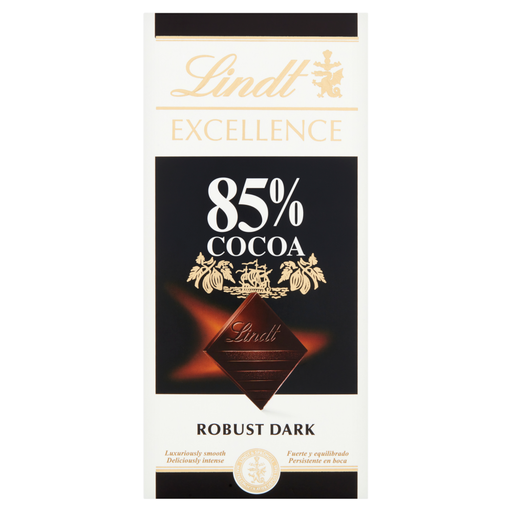 No image available
A chocolate-bar option when a stated cocoa percentage matters. The title specifies 85% cocoa and 100g; check the exact pack’s allergen information before buying for someone with an allergy.
 No image available
For a chocolate snack rather than gum, the title specifies 85% and a 90g bar. The product information flags possible almonds, hazelnuts, milk and nuts; check the exact pack if allergens matter.
 No image available
Another chocolate-bar option with a stated cocoa percentage: the title specifies 85% cocoa and 100g. The product information says it may contain cereals containing gluten, milk, nuts and peanuts; check the exact pack.
 No image available
For choosing chocolate by its stated cocoa percentage, the title specifies 72% cocoa and 100g. The product information identifies soya and says it may contain milk, nuts, peanuts and cereals containing gluten; check the exact pack.
 No image available
A dark-chocolate option when you want a declared percentage rather than gum. The title specifies 70% and a 90g bar; the product information flags possible almonds, hazelnuts, milk and nuts, so check the exact pack if allergens matter.
Look for dark chocolate if a stated cocoa percentage is the requirement. Tesco lists chewing gum separately from dark chocolate and shows cocoa percentages on chocolate products; check the percentage on the specific pack you choose.
No. NHS guidance says babies and young children should not have chewing gum because it is a choking hazard; “sugar-free” does not change that guidance.
Read the exact pack’s ingredients, highlighted allergens and any precautionary allergen statement. For example, an ASDA listing for a Lindt 70% bar carries a may-contain warning for nuts, milk, soya and sesame seeds; do not assume another bar has the same warning.
No: gum is a product to chew, while a stated cocoa percentage describes chocolate. Decide which product you intend to buy, then check its pack details and, if buying for a child, whether it is suitable for that child.