Students planning a desk-side supply
If you want to decide how much gum to keep nearby, compare a 30-piece bottle, a 46-piece bottle and packs separated into 10 pieces each. These counts describe the supply, not the size of each piece.


Choose by how you plan to keep and use the gum: a 30-piece bottle gives you a smaller desk-side supply, a 46-piece bottle holds more in one container, and separate 10-piece packs can be set aside for different revision sessions. Piece count does not tell you whether the gum itself is mini. Check the exact pack’s ingredients and warnings, and do not rely on gum to improve exam results.
If you want to decide how much gum to keep nearby, compare a 30-piece bottle, a 46-piece bottle and packs separated into 10 pieces each. These counts describe the supply, not the size of each piece.
If you need to avoid soya or check phenylalanine-related warnings, read the current label for the exact flavour and format. Tesco and Sainsbury’s list such warnings on the Extra products discussed here.
If chewing aggravates jaw pain, clicking, stiffness or locking, pack format is less important than whether gum is suitable for you. NHS United Lincolnshire Hospitals advises people managing temporomandibular joint dysfunction to avoid chewing gum.
Start with the amount and format you would use during revision, then check the exact product’s label and whether chewing is comfortable for you.
| Priority | What to check | Your needs |
|---|---|---|
| Pack format | Compare piece counts and whether the gum comes in one bottle or separate packs. Confirm individual-piece size separately if you specifically want mini gum. | I want a defined amount at my desk, or unopened smaller packs that I can set aside for different sessions. |
| Sugar-free label | Check that the exact flavour and pack explicitly say sugar-free; do not assume every gum in a range has the same formulation. | After a revision snack, I would prefer an option labelled sugar-free. |
| Ingredients and warnings | Read the current ingredient list for soya and aspartame, and check phenylalanine and excessive-consumption warnings. The NHS says aspartame is unsuitable for people with phenylketonuria. | Before choosing a flavour, I need to know whether its ingredients or on-pack warnings affect me. |
| Chewing comfort | Consider whether repeated chewing aggravates jaw symptoms. NHS United Lincolnshire Hospitals advises avoiding gum when managing temporomandibular joint dysfunction. | If my jaw hurts, clicks or feels stiff while chewing, I would rather leave gum out of my revision routine. |
| Study expectations | Do not treat gum as an exam-performance product. A 2019 study indexed by ERIC described findings from two small adult experiments as initial support, not proof of better exam results. | I want to choose on taste, format and ingredients rather than expect gum to improve my marks. |
A 30-piece count describes how many pieces are in the pack, not their physical dimensions.
If bite-size pieces matter to you, check the exact pack or manufacturer’s product information for an individual-piece measurement or description.
The Extra product labels cited by Tesco and Sainsbury’s warn that excessive consumption may produce laxative effects.
Read the warning on your chosen pack rather than using its piece count as a target for a revision session.
The cited Extra listings include soya lecithin and phenylalanine-related warnings. The NHS states that aspartame is unsuitable for people with phenylketonuria.
Check the current label of the exact flavour and pack format you intend to use.
A 2019 study indexed by ERIC reported only initial findings from two small adult experiments; it does not establish an improvement in real exam results. Repeated chewing can also be uncomfortable for people with jaw symptoms.
Choose gum for its format and ingredients if you find chewing comfortable, not as a substitute for revision.
Tesco and Sainsbury’s list sugar-free Extra gum in bottle and multipack formats, including 30-piece, 46-piece and five-by-10-piece options.
Tesco lists Mentos gum in mint, cherry and tropical variants, including a 35-piece Spearmint pack.
Asda lists Trident Soft Gum Sugarfree Tropical Twist.
These options include two bottle sizes and a multipack of separate 10-piece packs for planning a revision supply. Check individual-piece size on the exact product if mini gum is essential.
 No image available
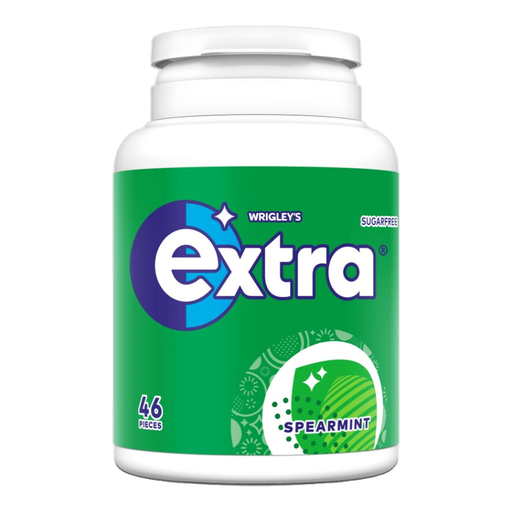
The 46-piece bottle keeps a supply in one container for repeated revision breaks. It is described as sugar-free; check the current pack for soya and phenylalanine-related warnings and its excessive-consumption warning. The count does not establish the size of each piece.
 No image available
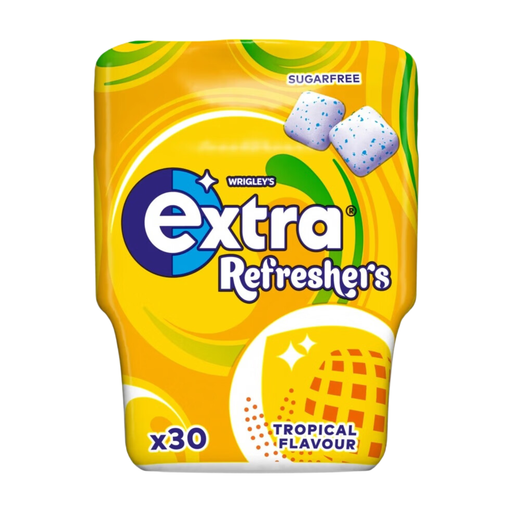
This bottle provides a 30-piece supply for a desk or bag. Its product information lists soya and aspartame, with phenylalanine-related and excessive-consumption warnings; check the current pack before use. Thirty pieces does not mean each piece is mini-sized.
 No image available
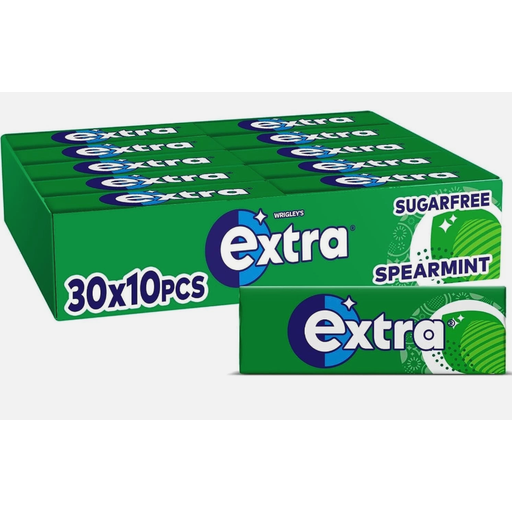
Separate 10-piece packs can be set aside for different revision sessions, but this is a larger overall supply of 30 packs and 300 pieces. The product information lists soya and a source of phenylalanine and warns that excessive consumption may produce laxative effects. The pack format does not establish individual-piece size.
Do not count on it to improve exam results. A 2019 study indexed by ERIC described findings from two small adult experiments as initial support, not proof of a benefit in real exams. Choose gum for its taste, pack format and ingredients instead.
Choose a product explicitly labelled sugar-free if that is the type of gum you want after eating. Check the exact flavour’s ingredients and warnings too; a sugar-free label alone does not tell you whether it suits your ingredient requirements.
Read the current ingredients and warnings on the exact pack before choosing it. The Extra listings cited by Tesco and Sainsbury’s include soya lecithin and phenylalanine-related warnings, while the NHS states that aspartame is unsuitable for people with phenylketonuria.
Avoid making repeated chewing part of your revision routine if it aggravates your jaw. NHS United Lincolnshire Hospitals advises people managing temporomandibular joint dysfunction to avoid chewing gum; seek advice from a dentist or GP if symptoms persist.