Students carrying gum between study locations
A divided pack lets you take a small portion in a bag or lunchbox and leave the rest elsewhere. Tesco lists Extra sugar-free gum in 5 × 10-piece formats.


Choose a divided sugar-free multi-pack if you want to carry one small pack between revision sessions; compare the number of packs, flavour and label for the exact variant. Do not choose gum on a promise of better exam performance: a 2015 article in BioMed Research International discusses alertness and attention in particular settings, not improved exam results. If chewing causes jaw discomfort, a larger supply is unlikely to suit an all-day chewing habit; NHS trust guidance identifies constant chewing as a possible contributor to jaw problems.
A divided pack lets you take a small portion in a bag or lunchbox and leave the rest elsewhere. Tesco lists Extra sugar-free gum in 5 × 10-piece formats.
Before choosing a larger supply, compare the exact variant’s ingredients, allergen statement and warnings. The Extra Bubblemint five-pack listed by ASDA contains soya and several sweeteners.
A multi-pack need not become an all-day chewing routine. United Lincolnshire Hospitals NHS Trust identifies constant chewing, including gum, as a possible contributor to temporomandibular-joint problems.
Start with where you will keep the gum, then check the exact pack label and whether chewing remains comfortable during study breaks.
| Priority | What to check | Your needs |
|---|---|---|
| Portable portions | Compare the number of separate packs and pieces per pack. Tesco lists Extra 5 × 10-piece formats; a bottle is a different way to store gum. | I want to take one small pack to a library, desk or lunchbox without carrying the whole supply. |
| Ingredients and warnings | Read the exact flavour’s ingredient list, allergen statement and pack warnings. ASDA’s Extra Bubblemint five-pack lists soya and aspartame. GOV.UK sets out phenylalanine wording for aspartame and a laxative-effect warning for foods with more than 10% polyols. | The ingredients matter to me, so I cannot assume that every sugar-free variant has the same label. |
| Sugar-free labelling | Check that the particular gum is labelled sugar-free rather than judging by a mint or fruit flavour. Read the nutrition information for that variant. | When choosing gum for repeated study breaks, I want to know what the pack says about sugars. |
| Study expectations | Choose a flavour you like without treating a focus claim as an exam-result claim. A 2015 BioMed Research International article discusses alertness and sustained attention in particular settings, not exam performance. | I want gum for the act of chewing or its flavour, not as a substitute for revision. |
| Jaw comfort | Consider how often you would chew, particularly if chewing brings on pain, clicking or stiffness. NHS trust guidance identifies constant chewing as a possible contributor to jaw problems. | If my jaw becomes uncomfortable, I would rather take a break from chewing than rely on a bigger pack. |
A bottle can stay at a desk, but it does not give you the same individually divided portions as a 5 × 10-piece multi-pack.
Choose the format around where you will use it: one small pack for a bag or lunchbox, or a single container for a fixed study spot.
Ingredients and warnings can differ by variant. ASDA’s Extra Bubblemint five-pack, for example, lists soya and aspartame.
Read the current label for the exact flavour and pack format, including allergens, sweeteners and any applicable warnings.
A 2015 BioMed Research International article discusses gum, alertness and attention in particular settings; it does not establish that a flavour improves exam results.
Choose menthol if you prefer its flavour, not because it promises better revision. Take a break from chewing if your jaw tires.
United Lincolnshire Hospitals NHS Trust identifies constant chewing, including gum, as a possible contributor to temporomandibular-joint problems.
Reduce or stop chewing if it causes pain, clicking, stiffness or locking, and seek appropriate advice if symptoms persist.
These examples illustrate pack formats and flavour choices; a brand name alone does not tell you whether a particular variant suits your needs.
UK grocery listings include divided Extra sugar-free gum packs in several flavours, including Tesco’s 5 × 10-piece formats and a seven-pack Extra Refreshers handy box listed by Sainsbury’s.
Tesco lists an Airwaves sugar-free five-pack for readers who prefer a menthol-style flavour and divided portions.
Tesco lists Mentos Pure Fresh 35-piece bottles as a single-container alternative to divided multi-packs.
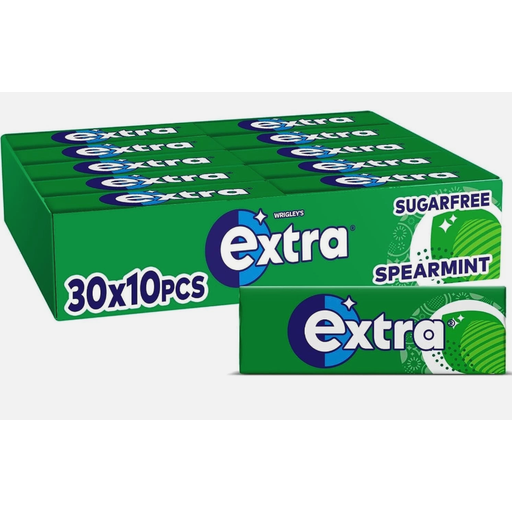
This divided spearmint multi-pack suits someone who wants to take a smaller pack to a study location while keeping the remaining packs elsewhere.
 No image available
The divided format lets you take one pack to a revision session rather than carry the full supply.
The product name specifies spearmint flavour and 30 packs of 10 pieces. Check the current pack label for ingredients, allergens and warnings before buying.
Choose a product explicitly labelled sugar-free if that is the type of gum you want; a mint or fruit flavour alone does not establish its sugar content. Gum does not replace brushing with fluoride toothpaste, and the NHS advises against having too much sugary food or drink.
Check the exact variant’s ingredients, allergen statement and warnings. ASDA’s Extra Bubblemint five-pack lists soya and aspartame; GOV.UK sets out phenylalanine wording for aspartame and a laxative-effect warning where foods contain more than 10% polyols.
Do not count on gum to improve exam performance. A 2015 article in BioMed Research International discusses associations with alertness and sustained attention in particular experimental and workday settings, not better exam results or a benefit from a specific gum.
Avoid making gum a constant revision habit if chewing causes jaw pain, clicking, stiffness or locking. United Lincolnshire Hospitals NHS Trust identifies constant chewing as a possible contributor to jaw problems; seek appropriate advice if symptoms persist.