What should you check?
Start with the exact pack and the eater’s allergy requirements. Compare pack counts and flavours only after that check.
| Priority | What to check | Your needs |
|---|
| Ingredients and allergens |
Read the current physical pack’s full ingredients list and emphasised allergens. Check the exact flavour and pack variant rather than transferring a decision from a different one. |
I need to know whether this particular pack contains an allergen the eater avoids. University Hospital Southampton NHS Foundation Trust advises checking ingredients every time because they can change. |
| Precautionary wording |
Look for relevant wording such as “may contain” and consider it alongside the ingredients. The Food Standards Agency explains that precautionary allergen labelling communicates possible unintended allergen presence. |
Even if an allergen is absent from the ingredients list, I need to assess any relevant precautionary statement using the eater’s individual allergy-management advice. |
| Pack format |
Compare the number of small packs and pieces per pack after the allergy check. Tesco lists an Extra White 6 × 10-piece pack; Sainsbury’s lists Extra White and Cool Breeze 5 × 10-piece packs. |
Five or six small packs might suit my planned lunchboxes or bags, but a convenient format does not tell me whether the gum is suitable for the eater. |
| Other pack warnings |
Read warnings as well as allergen information. Sainsbury’s Extra White listing warns that excessive consumption may produce laxative effects; its Cool Breeze listing states that it contains a source of phenylalanine. |
I want to check warnings relevant to the intended eater before buying several packs at once. |
Joybuy chewing gum options
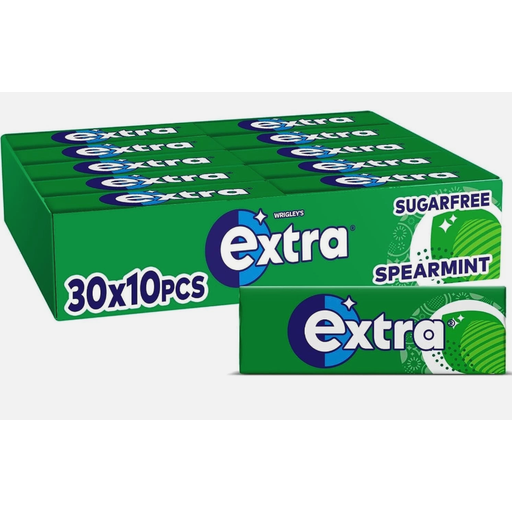
This Extra Spearmint multipack offers small packs for dividing between bags or lunchboxes. Its format does not replace checking the current physical pack for the intended eater.
 No image available
Wrigley Extra Sugar Free Spearmint, 30 × 10 pieces
The 30 small packs can be divided between lunchboxes or bags if this quantity suits the household. The product description identifies SOYA and warns that excessive consumption may produce laxative effects and that the gum contains a source of phenylalanine. For an eater avoiding soya, do not treat this as a suitable option; for any intended eater, check the current physical pack’s ingredients and precautionary wording against their individual requirements.
View on Joybuy
Questions about allergy checks
Does sugar-free chewing gum suit someone with a food allergy?
Sugar-free wording does not establish allergen suitability. Tesco and Sainsbury’s listings for the Extra multipacks discussed here identify soya; check the current physical pack against the eater’s known allergen.
Is a “free from” or vegetarian claim enough?
No single claim establishes suitability for every food allergy. Check what the claim covers, then read the full ingredients list and relevant precautionary wording for the exact pack against the eater’s requirements.
What does “may contain” mean on a gum pack?
It is precautionary allergen labelling: the Food Standards Agency says it communicates that one or more UK-regulated allergens could be unintentionally present. Assess wording relevant to the eater using their individual allergy-management advice.
Should I recheck gum I have bought before?
Yes. University Hospital Southampton NHS Foundation Trust advises reading ingredients every time because recipes and ingredients can change. Check the physical pack, even when its brand and flavour look familiar.
What else should I read besides the allergen information?
Read the product’s other warnings. Sainsbury’s Extra White 5 × 10-piece listing warns that excessive consumption may produce laxative effects, while its Cool Breeze 5 × 10-piece listing states that it contains a source of phenylalanine.


