
24/7 Customer Support

Free returns

Same-day & Next-day Delivery

Quality Guaranteed

Unlock Your Welcome Offers: FREE Delivery | Up to 80% OFF | Free 30-day JoyPlus trial
Download the APP
Buying chewy sweets and dog dental chews can look straightforward until you compare ingredients, pack sizes, textures and feeding instructions. A colourful pouch may offer less value than expected, while a dog dental stick designed for one weight range may be unsuitable for another.
Joybuy’s Product Recommendation Officer’s approach is simple: look past promotional language and check the details that affect everyday use.
A large sharing bag of sweets is not automatically better value if the product is difficult to reseal or the texture changes after opening. Compare the net weight, number of individually wrapped sweets and storage instructions. For chewing gum, a bottle containing 46 pieces may be more practical for regular use than several small packs, depending on your routine.
For dog treats, compare the number of sticks with the stated daily serving. A multipack may provide several weeks of use, but only if it matches your dog’s weight category.
Soft chew sweets and sour chewy sweets commonly contain sugar, glucose syrup, acids, oils, gelatine and flavourings. Some fruit-flavoured sweets also contain soya, milk traces or gelatine of animal origin. Always check the current packaging if you have allergies or follow a vegetarian or vegan diet.
Sugar-free chewing gum is not necessarily free from all sweeteners. Ingredients may include sorbitol, xylitol, maltitol, aspartame or acesulfame-K. These can affect people differently when consumed in large quantities. Keep chewing gum away from dogs, as some sweeteners can be dangerous to pets.
Dog dental chews are complementary foods rather than replacements for a balanced diet or professional veterinary care. Check cereal, meat, mineral and additive information before buying.
A soft chew sweets product may suit someone who prefers an easy, yielding texture, whereas a firmer chewy sweet provides a longer-lasting chew. For dogs, size is a safety and suitability issue rather than a flavour preference. A stick made for a large dog should not be substituted for small dog dental treats, and large breeds need appropriately sized large dog dental chews.
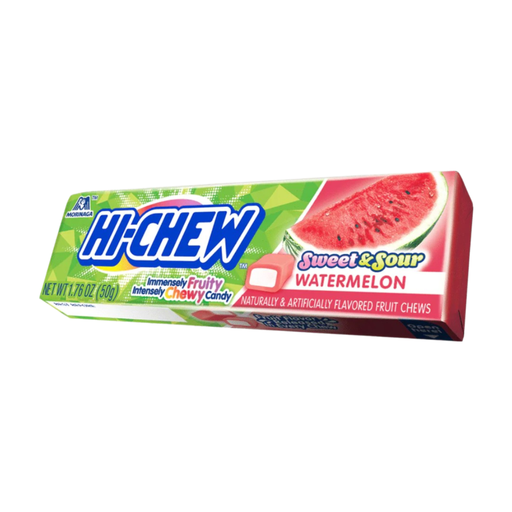
Why This Fits Their Persona: The 50g pack is suitable for trying a distinctive fruit flavour without committing to a large sharing bag. Individually wrapped pieces are practical for occasional treats or a lunchbox.
The stated 50g net quantity and ingredient list make it easier to judge portion size, sugar content and soya allergen information before buying.
Sweet-and-sour watermelon flavour; individually wrapped pieces; ready to eat.
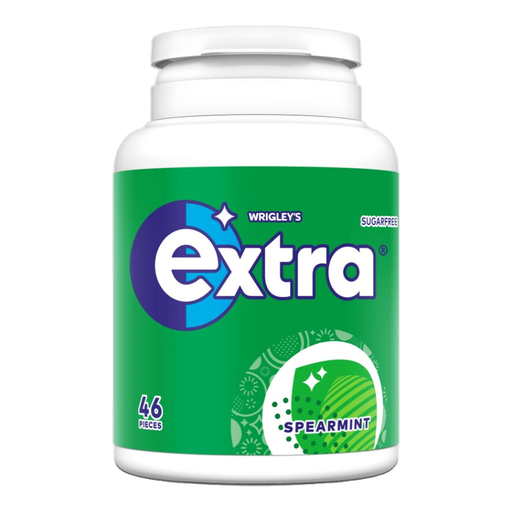
Why This Fits Their Persona: A bottle format suits commuters, office workers and anyone wanting a consistent supply of chewing gum after meals or while travelling around the UK.
The product is identified as sugar-free, but the listed sweeteners and soya allergen still need checking. This avoids treating “sugar-free” as the same as unrestricted consumption.
46 pieces per bottle; spearmint flavour; compact, portable format.
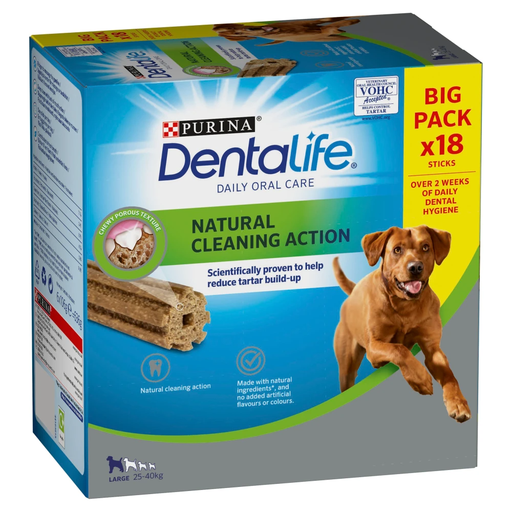
Why This Fits Their Persona: The 18-stick, 636g pack is designed for owners following a daily dog dental care routine with a large dog weighing 25–40kg.
The stated weight range and one-stick-per-day guidance help prevent the common mistake of choosing by breed name or pack appearance alone.
Porous chewy texture with ridges; low-fat formulation with no added sugar listed; 18 sticks.
For a small dog, consider the Dentalife Small Dog Treat Dental Chew 7 stick 115g, listed for small dogs, or the Pedigree DENTASTIX Daily Dental Chews Small Dog Treat 7 Sticks 110g, which specifies a 5–10kg range. Owners seeking a larger supply can look at the 30-stick Dentalife small-dog pack.
Check the label for age restrictions, feeding frequency, ingredients and storage. Supervise every chew, particularly if your dog eats quickly or has a history of swallowing treats whole. Tartar-control dog treats can form part of a routine, but they should not be presented as a substitute for veterinary dental care.
We have compiled a complete, real-time list of products that fully satisfy these strict selection criteria and UK safety regulations.
No. Sugar-free gum can contain several sweeteners and may include soya. Always read the ingredient and allergen information. Chewy sweets may contain gelatine, milk traces or other ingredients that do not suit every diet.
Use the feeding guide on the product label. Several products listed here recommend one chew daily for the stated dog-size range. Fresh water and supervision should always be provided.
Store confectionery in a cool, dry place away from direct sunlight and heat. Reseal open packs where possible. Keep dog dental chews in their original packaging and follow the storage instructions, expiry information and opening guidance.