Weekly lunchbox batch cooks
If you roast several portions at once, check how your usual trays fit on the shelves, whether the oven has fan cooking and how much cleaning the routine involves.


For one or two trays of chicken drumsticks, start with a fan-assisted single oven that fits your kitchen and your usual trays. A double oven becomes more useful when lunchbox preparation regularly overlaps with other dishes; whichever format you choose, check the chicken’s core temperature rather than relying on a programme or timer alone.
If you roast several portions at once, check how your usual trays fit on the shelves, whether the oven has fan cooking and how much cleaning the routine involves.
If checking doneness is your main concern, look for a usable timer and consider whether you would use an oven food sensor. You will still need to check the chicken’s core temperature correctly.
If drumsticks often cook alongside other foods, separate oven cavities may be more useful to you than extra functions in a single cavity.
Start with the amount you cook and the space available, then weigh food-temperature checking and clean-up against features you may rarely use. An oven timer helps organise a batch, but it cannot establish that the thickest part of a drumstick is safely cooked.
| Concern | What to check when buying | Who this matters to |
|---|---|---|
| Chicken doneness | Check the timer and whether a food sensor is included; plan to use a clean food thermometer correctly. | If I want reassurance that drumsticks are cooked through, I need a core-temperature check rather than a browned surface or an elapsed time. Around 40% of consumers put this need first. |
| Batch capacity | Compare your tray sizes with the cavity, shelf positions and documented fan or multi-level functions. | Cooking several lunch portions in one session matters more to me than adding another preset. For around 30% of consumers, fitting the batch is the primary concern. |
| Cleaning | Identify the cleaning system and check its instructions for the cavity, shelves and trays. | When I roast chicken regularly, dealing with baked-on fat can make the routine harder to keep up. Clean-up comes first for around 20% of consumers. |
| Other dishes | Check whether you need two cavities, then measure the housing space and confirm installation requirements. | If I prepare chicken while another dish needs its own oven space, separate cavities are worth considering. Around 10% of consumers make that flexibility their primary need. |
The outside can look ready before the thickest part of a drumstick has reached a safe core temperature.
Use a clean food thermometer in the thickest edible part. Food Standards Agency guidance for food businesses gives 70°C for 2 minutes or 75°C for 30 seconds as safe core-temperature and time combinations.
Built-in appliance and housing dimensions differ. Bosch lists the HBS573BB0B appliance at 595 × 594 × 548 mm, while Electrolux specifies a 590 × 560 × 550 mm built-in opening for the EOD6C46K2.
Measure the cabinet opening and check the exact model’s installation instructions, including depth, ventilation and door clearance, before ordering.
A stated number of cooking levels describes a manufacturer’s feature, not how every loaded tray will turn out. Which? assesses heat distribution and control accuracy in its independent oven testing.
Check whether your trays fit the stated shelf arrangement, and compare independent results for the exact model if they are available.
Bosch specifies electrician connection and no plug for the HBS573BB0B; the product information lists the Hotpoint DIH 10D B double oven as requiring hard-wiring. Connection requirements vary by model.
Check the chosen oven’s installation instructions and your existing arrangement before ordering or arranging installation.
These examples show features to compare on specific ovens, rather than a judgement about every model from each brand.
Relevant if you are comparing built-in ovens with fan-based multi-level cooking and cleaning features.
Relevant if your choice is between a single fan oven for batches and a double oven for separate dishes.
Relevant if you want to compare a built-in fan oven that includes a food sensor.
These choices include built-in single and double ovens, plus a freestanding cooker with a double oven. Choose the format that fits your kitchen and cooking routine before comparing individual features.
 No image available
Consider a double oven if drumsticks often need to cook alongside another dish. Check that the cabinet and electrical connection suit this built-in model before ordering.
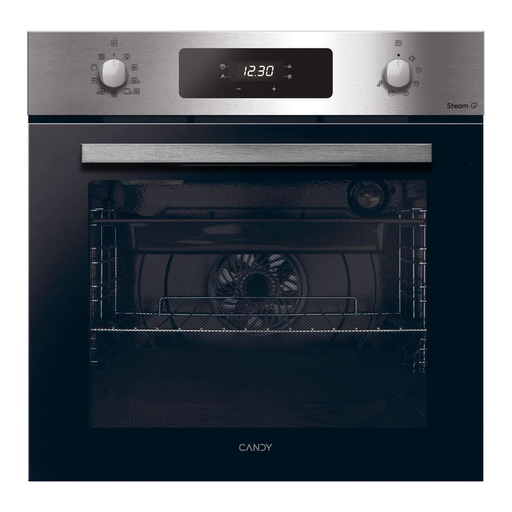 No image available
Consider this single electric oven if cavity clean-up is a priority in your roasting routine. Follow its manual for the pyrolytic cycle, and check the housing and electrical requirements before purchase.
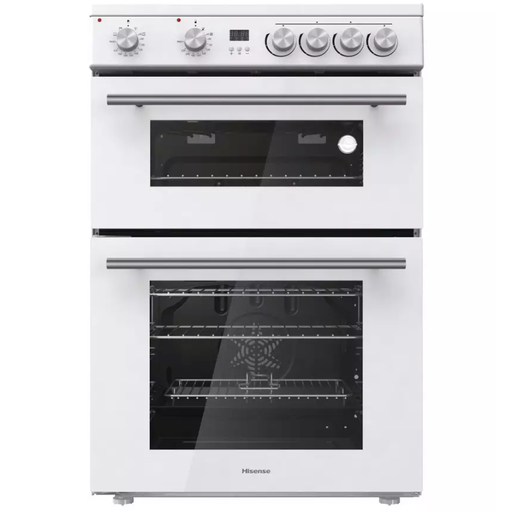 No image available
This freestanding cooker is an alternative if you need a double oven and a ceramic hob, rather than a built-in replacement. Confirm the available floor space and electrical installation requirements.
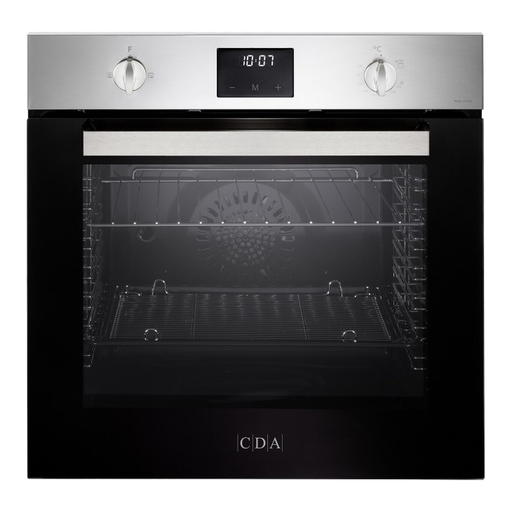 No image available
Consider this single oven only if a gas model suits your kitchen. Check the available gas supply, housing dimensions and installation requirements for the exact appliance.
 No image available
A single-oven format is worth considering when lunchbox batches do not call for a second cavity. Check cabinet fit, electrical connection requirements and the controls you need for timing each batch.
Checking the chicken’s core temperature matters more than choosing a particular oven preset. Food Standards Agency guidance for food businesses gives 70°C for 2 minutes or 75°C for 30 seconds as safe combinations; use a clean thermometer in the thickest edible part, away from the bone. An oven food sensor helps only when it is used and positioned correctly.
A single oven is a sensible starting point if you normally cook only one or two trays of drumsticks. Consider a double oven when you regularly need a separate cavity for other dishes, and check the cabinet and connection requirements before choosing one.
Plan how you will cool and store the cooked chicken, as well as how you will roast it. Food Standards Agency guidance for food businesses says cooked food that is not served immediately should be cooled as quickly as possible; it is not a reason to leave drumsticks out for an extended period before chilled storage.
A fan or multi-level setting does not guarantee identical results on every tray. Tray loading and placement matter, and Which? assesses heat distribution and control accuracy in its independent oven tests. Check the chosen model’s shelf guidance and verify the chicken’s core temperature.