Generously filled toastie makers
If cooked chicken, cheese or sauce makes your sandwich bulky, look at the plate depth and whether the toaster cuts and seals the bread. Even a deep-fill model needs enough space for its lid to close without force.


Choose a deep-fill, cut-and-seal toaster if containing a generously filled cooked-chicken toastie matters most; choose removable, dishwasher-safe plates if repeated clean-up is the bigger concern. A four-portion machine makes more sense when several people need toasties together, provided the cottage has room for it. Use cooked chicken as the filling and check that reheated food is steaming hot throughout.
If cooked chicken, cheese or sauce makes your sandwich bulky, look at the plate depth and whether the toaster cuts and seals the bread. Even a deep-fill model needs enough space for its lid to close without force.
For repeated use in a self-catering kitchen, removable plates may be easier to wash than cleaning around fixed plates. Check the exact model’s instructions before putting any part in a dishwasher.
A four-portion toaster can make several sandwiches in one batch, but it needs worktop and storage space. Check the appliance dimensions against the kitchen before choosing capacity over a smaller format.
For cooked-chicken toasties, decide whether filling containment, clean-up, batch size or storage is your main constraint; then check the exact model’s plates and kitchen requirements.
| Concern | What to check | Who this matters to |
|---|---|---|
| Filling containment | Look for deep-fill, cut-and-seal plates; check that the bread and filling let the lid close without force. | I want chicken and cheese in a sealed toastie rather than spilling onto the plates. Around 36% of consumers would put filling containment first. |
| Clean-up | Check whether plates are removable and whether the exact plates are dishwasher-safe. | After making several toasties with cheese or sauce, I would rather lift out the plates than clean around fixed edges. For around 29% of consumers, easier clean-up would be the main priority. |
| Batch size | Confirm the stated sandwich capacity and the appliance dimensions. | If everyone wants lunch together, I would prefer fewer batches, even if the machine takes more space. Serving several people at once would come first for around 21% of consumers. |
| Storage and other uses | Check stored dimensions and which plate types are supplied. | With little cupboard room, I would favour a compact appliance or one whose other plate formats I would actually use. Around 14% of consumers would make that their primary concern. |
Too much chicken, cheese or sauce can prevent the lid from closing and push filling onto the plates. Judge’s sandwich-toaster instructions advise against overfilling or forcing the lid.
Start with a moderate amount of cooked filling and close the lid without force, even when using deep-fill plates.
Four sandwiches in one batch may help with a group meal, but a larger appliance still needs room on the worktop and in storage.
Check the model’s dimensions and storage position against the cottage kitchen before prioritising batch capacity.
An appliance-ready indicator does not establish the temperature at the centre of a chicken filling. NHS reheating guidance says food should be steaming hot all the way through.
Use cooked chicken, allow enough time for the filling to heat and check the centre before eating.
A non-stick surface does not tell you whether its plates can be removed or put in a dishwasher. Russell Hobbs lists no dishwasher-safe parts for its 24550 model, while Breville specifies detachable dishwasher-safe plates for the VST082.
Follow the cleaning instructions for the exact model rather than relying on the term non-stick.
Its VST091 and VST082 are relevant to sealed, deep-fill toasties.
The 24550 is a deep-fill option for making up to four sandwiches at once.
The Snack Time SW343D40 suits someone considering paninis and waffles rather than only sealed triangular toasties.
The EK2143 combines toastie, waffle and panini plate formats.
The JEA102 is a compact option for making one sandwich.
These choices cover a sandwich maker and a compact microwave toastie maker. Check the cottage’s electrical setup or microwave before deciding which format you can use.
 No image available
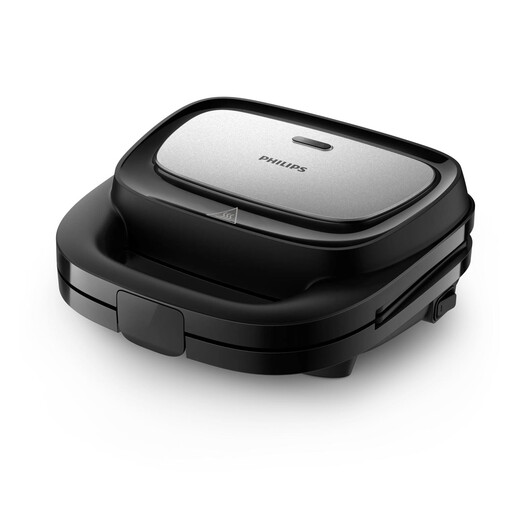
Consider this sandwich maker if a sealed chicken toastie is the aim, but check that its plate depth suits your filling and allow for separate batches when serving a group.
Its stated EU power cord calls for a suitable adapter for UK use; confirm that the arrangement is appropriate for the cottage supply before using it. Check the plate-cleaning instructions if dishwasher use matters.
 No image available
This compact, dishwasher-safe toastie maker is a microwave option, not a standalone electric sandwich toaster.
Before choosing it for a cottage, confirm there is a microwave and that it meets the product’s stated maximum of 1200 W. If a sealed, generously filled toastie or several portions at once matter, check its plate design and batch capacity before buying.
Use cooked chicken as the filling rather than relying on a sandwich toaster to cook raw chicken: Judge’s sandwich-toaster instructions specify pre-cooked meat fillings. When reheating food, NHS guidance says it should be steaming hot all the way through.
Check that the appliance’s power requirements suit the cottage and place it on a stable, dry, level surface, as Breville instructs for its VST082. For a microwave toastie maker, confirm that the cottage has a suitable microwave instead of assuming it works as a standalone toaster.
Removable plates are useful when repeated toastie-making leaves cheese or sauce to clean up, whether you wash the plates by hand or use a dishwasher where the model permits it. Breville specifies dishwasher-safe detachable plates for the VST082, but cleaning instructions differ between models.