Regular one-tray roast cooks
If chicken and vegetables usually share one tray, focus on a fan cooking function, space for your tray and controls you find straightforward. A second cavity may add little to your usual routine.


If you usually cook one chicken-and-vegetable traybake, start with a built-in single oven whose fan function and usable tray space suit the meal. Consider a double oven when you regularly need to cook another dish separately; steam and cleaning features are optional, while cabinet fit and electrical compatibility need checking for any model.
If chicken and vegetables usually share one tray, focus on a fan cooking function, space for your tray and controls you find straightforward. A second cavity may add little to your usual routine.
If the traybake often cooks alongside a dish needing another temperature or timing, independently controlled cavities may be useful. Which? notes that double ovens allow multiple dishes to cook at once.
If reaching into the oven or cleaning up after roasting is a recurring frustration, compare door access and cleaning systems. Check what each cleaning cycle still requires you to do, as well as the model’s installation requirements.
Check whether your tray fits and how you will use the cavity before deciding whether a second oven or a cleaning feature is worth prioritising.
| Concern | What to check | Who this matters to |
|---|---|---|
| Even roasting | Check the exact model’s fan or hot-air functions and available shelf positions. Bosch and Beko describe such functions on their respective oven ranges; the function name alone does not establish how a particular traybake will cook. | When chicken and vegetables share a tray, I want heat to reach the food across the tray without relying on a programme name as a promise of results. Even roasting is the primary concern for around 33% of consumers. |
| Tray space and separate dishes | Compare your tray with the usable cavity and shelf layout. If considering a double oven, measure each cavity separately; Which? notes that built-under double ovens typically have smaller individual cavities than a single oven. | If I regularly cook a side dish at another temperature, I need to know whether a second cavity helps without leaving too little room for the chicken tray. Separate cooking space comes first for around 27% of consumers. |
| Cleaning after roasting | Check whether the model offers a wipe-down steam-clean assist, a pyrolytic cycle or another cleaning system, and read its instructions. AEG describes pyrolytic cleaning as leaving ash to wipe away. | After a roast leaves grease and baked-on residue, I care about the work needed to clean the cavity before using it again. Easier cleanup is the main priority for around 20% of consumers. |
| Installation fit | Compare the required cabinet opening, connection instructions and electrical load with your kitchen. Electrical Safety First advises reviewing an oven’s power requirements before choosing it. | I cannot choose an oven on cooking features alone if it may not fit the housing or suit the electrical supply. Physical and electrical compatibility is the primary concern for around 20% of consumers. |
Bosch lists a GB plug for the HHF113BR0B, while its HQA534BB3B and Neff’s B54CR71N0B are listed without plugs and require electrical connection by an electrician.
Check the installation instructions, electrical load and required cabinet opening for the exact model before arranging installation.
A second cavity helps when dishes need separate settings, but it does not turn both cavities into one large roasting space. Which? notes that built-under double ovens typically have smaller individual cavities than a single oven.
Measure the roasting tray against the cavity in which you plan to cook the chicken.
An oven function does not establish that the thickest part of the chicken has cooked adequately. Food Standards Agency MyHACCP guidance cites 70°C for two minutes as a normal cooking condition that kills Salmonella and Campylobacter.
Follow appropriate cooking guidance and check the chicken itself rather than judging it by the oven setting or browned skin alone.
Steam-assisted cleaning and pyrolytic cleaning work differently. Beko describes SimplySteam as softening residue, while AEG describes its pyrolytic cycle as leaving ash to wipe away.
Read the chosen model’s cleaning instructions, including any preparation and wiping required after a cycle.
Bosch offers relevant single-oven examples for comparing straightforward fan cooking with added-steam functions.
The CIMY91 is a built-in multifunction single oven to consider for fan-assisted roasting and steam-assisted cleaning.
The B54CR71N0B is relevant when access to a roasting tray and cleaning features carry particular weight.
The GA5PB50FAB is an example for comparing a food sensor and pyrolytic cleaning with steam-related cooking functions.
These built-in single and double ovens relate to one-tray roasting or cooking another dish separately. Compare the usable space, cooking functions and installation instructions of the exact model before deciding.
 No image available
Consider a double oven if a separate dish regularly needs its own cavity. Check that your roasting tray fits the main cavity and confirm the cabinet and electrical requirements.
 No image available
This double-oven format is worth considering when a traybake and another dish need separate cooking space. Compare your tray with the main cavity and check the housing and connection instructions.
 No image available
A single cavity is a route for cooking one chicken-and-vegetable traybake at a time. The stated capacity is 65 L; check your tray’s fit, the cooking functions and the exact connection instructions.
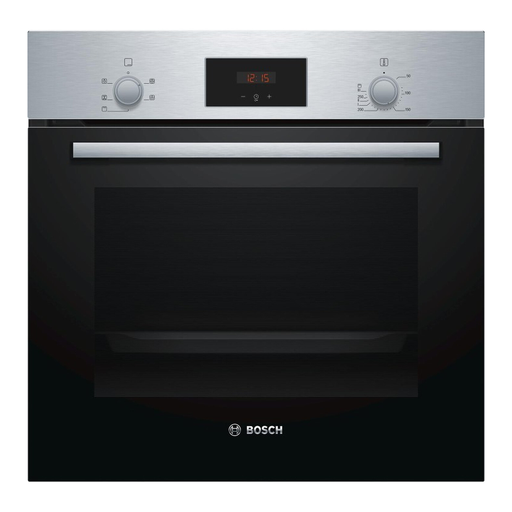 No image available
For a regular one-tray roast, Bosch lists 3D Hotair on this model. Check the tray and cabinet measurements, and use the model’s installation instructions to confirm its electrical connection.
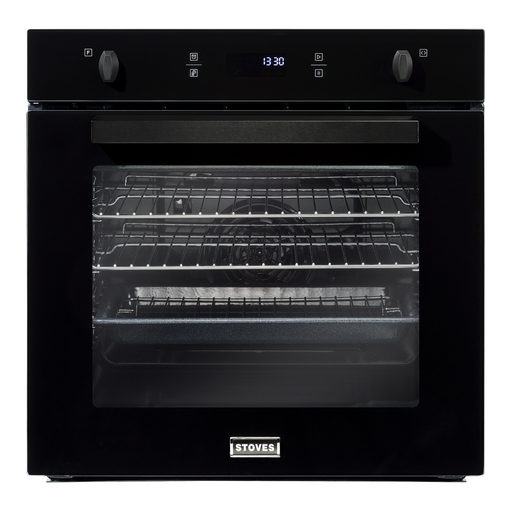 No image available
Consider this single-oven format if a pyrolytic cleaning option matters alongside one-tray cooking. Check the usable cavity and tray dimensions, and confirm the installation and cleaning instructions.
No; steam is an optional, model-specific feature rather than a requirement for this meal. Start by checking the fan cooking function and tray space. Bosch describes Hotair Steam as distributing heat and humidity in its HQA534BB3B, but that does not establish a better result for every traybake.
A double oven is useful when the chicken traybake regularly cooks alongside a dish needing separate settings. For one tray, compare the usable space in a single oven first; Which? notes that built-under double ovens typically have smaller individual cavities than a single oven.
Check the chicken itself, particularly its thickest part, rather than relying on an oven programme or browned skin. Food Standards Agency MyHACCP guidance cites 70°C for two minutes as a normal cooking condition that kills Salmonella and Campylobacter; follow appropriate cooking guidance for the chicken you are preparing.
No; check the exact model’s installation instructions and your kitchen’s electrical supply before ordering. Bosch lists a GB plug for the HHF113BR0B but specifies electrical connection by an electrician for the HQA534BB3B. Electrical Safety First advises reviewing an oven’s power requirements before choosing it.
Choose according to the cleaning process you are prepared to follow. Beko describes SimplySteam as softening residue for wiping, while AEG describes pyrolytic cleaning as leaving ash to wipe away; check the exact model’s instructions before deciding.