Shared-screen gaming households
Parents or carers who want most play to happen in a common room and need to understand how family settings work when several people use the device.


For a child playing online in a shared home, consider a console connected to the communal television when play should happen mainly in one room, a tablet or phone when a personal portable screen matters, or a gaming laptop when computer-based games and wider computing are needed. Before choosing, check that the intended games work on the device and that the household can set up the relevant child account, communication controls and rules for where and when it is used.
Parents or carers who want most play to happen in a common room and need to understand how family settings work when several people use the device.
Households considering a tablet or phone for individual use, with app, content, communication and timing settings to arrange alongside it.
Carers whose choice depends on how a child account handles chat, privacy, age-appropriate access and playtime on the intended platform.
Consider it when: The household wants play centred in a common room rather than on the child’s own screen.
Bear in mind: Nintendo UK says Switch parental controls apply to the console and everyone using it, while PlayStation’s controls are tied to accounts.
Consider it when: The child needs an individual screen that can be used away from the television.
Bear in mind: Apple Screen Time and Google Family Link depend on the device and family setup; game accounts may need their own settings too.
Consider it when: Computer-based games and other household computing are part of the same device decision.
Bear in mind: Managing a Windows child account, installed software and the browser the child uses becomes part of the setup.
| Concern | What to check | Who this matters to |
|---|---|---|
| Place of play | Whether play will use a shared television; whether local multiplayer needs another controller. | If I want gaming to stay mainly in a common room, a shared-screen setup matters more than portability. Around 31% of consumers put that shared-room arrangement first. |
| Personal portability | Whether the intended games run on the tablet or phone, and which device and game-account controls apply. | When my child needs an individual screen away from the television, I need to plan where and when they can use it. For around 23% of consumers, personal portability is the primary concern. |
| Accounts and communication | How child accounts, chat, privacy, content and playtime settings work on the intended platform; whether settings apply per account or per console. | If my child will interact with other players, I want the controls to apply to the account they actually use. Account and communication settings come first for around 31% of consumers. |
| Computer-game flexibility | Whether the required games work on the laptop, and how Windows family settings and browser filtering will be configured. | When computer-based games and other computing need to share one device, I must be ready to manage its software and accounts. Around 15% of consumers prioritise that flexibility. |
PlayStation’s UK guidance says age ratings indicate content suitability, not how difficult a game is to play.
Check the rating and content descriptors, then assess the game’s controls and online features separately.
PlayStation controls are tied to accounts, and Xbox child settings rely on the child being linked to the family setup. Using a different profile can mean the intended settings do not apply.
Set up the child’s account and test the settings while signed into that account before regular play.
UK government guidance says parental controls are helpful but cannot address every aspect of a child’s online activity.
Check the device, platform and game settings that apply, consider home-broadband controls, and agree household rules for online play.
Google says system apps cannot receive Family Link app limits. Microsoft’s web and search filtering also depends on the supported browser and signed-in account.
Test the particular apps, games and browser the child will use rather than relying on a general parental-control label.
A console and portable-console route for households considering Nintendo Switch or Nintendo Switch 2.
A console route for families planning to manage play through child accounts.
A console route for households using Microsoft family accounts, including those also considering Windows devices.
An iPad or iPhone route for households able to maintain Apple’s family and Screen Time setup.
A family-settings route to consider with supported Android tablets or phones and ChromeOS devices.
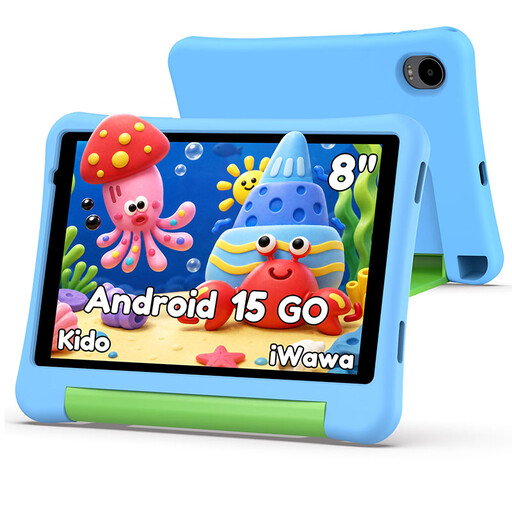
This tablet is a personal-screen option for a child playing away from the shared television. Check the intended online games and family-control setup before treating it as a fit for your household.
 No image available
An individual tablet screen to consider when the child needs portable access rather than a shared television.
The listed configuration includes Android 15, a Unisoc T310 processor, 3GB RAM, 32GB storage, a 5000mAh battery and a blue protective case.
Check whether its Child Lock feature covers the account, communication and playtime settings you need. Confirm that the intended online games work on the tablet and that its Wi-Fi connectivity meets their requirements.
No power adapter is included; check what adapter is needed.
Use a child account linked to the adult’s family setup where the platform supports it, rather than letting the child use an adult profile. PlayStation says its controls are account-based, and Xbox requires a child account linked to an adult account for its family setup; Nintendo UK says Switch parental controls instead apply to everyone using the console.
Check the settings for voice and text chat, player interaction and profile visibility on the child’s actual account. PlayStation’s communication restrictions can disable text and voice chat with other players, while Xbox privacy settings govern who can communicate or interact with the child. Check any separate communication features in the intended game too.
Not necessarily: the settings depend on the device ecosystem and the accounts in use. Apple says Screen Time can manage apps, content, communications and device-use timing on iPhone and iPad; Google Family Link offers limits on supported Android and ChromeOS devices, but Google says system apps cannot receive app limits.
No. UK government guidance says parental controls can help but cannot address everything, so test the relevant settings before regular use and agree household rules about where, when and how the child plays online.
No. PlayStation’s UK guidance says age ratings concern content suitability, not difficulty or playability. Check the rating and descriptors for content, then assess the game’s controls and online features separately.