Choose a tablet whose child account and parental controls your household can set up and maintain: iPad uses Apple Family Sharing and Screen Time, while Android tablets can use Google Family Link on compatible devices. A child-focused mode can provide a more contained interface, but it does not replace account supervision. Check the exact device and software requirements, then test the restrictions before handing the tablet over.
Who needs which setup?
Parents who want remote approvals
If you want to approve downloads or purchases and adjust limits from your own device, start with the child-account requirements. Apple Support describes Family Sharing controls, while Google describes supervision through Family Link; available functions depend on the setup and device.
Families sharing a tablet
A separate child account or profile matters when adults and children use the same household device. It helps keep the child’s permitted apps and settings distinct from an adult’s access; check which profiles the particular tablet allows.
Carers who want a contained child interface
Amazon Kids profiles and Samsung Kids are options to examine if approved content and time limits are priorities. Check the exact device’s child-mode features alongside its account and purchase settings.
What matters when choosing?
iPad with Family Sharing
Choose when: Your household can give the child their own Apple Account and manage Screen Time through a Family Sharing group.
Check: Apple says the updated control experience has software-version requirements across the family group, and some controls vary by device, region and child age.
Android with Family Link
Choose when: The child can sign in with a supervised Google Account on the intended tablet and you want to manage its supported account and app controls.
Check: Google says functions vary by device; its screen-time limits require Android 7 or later, and system apps cannot have app limits.
| Concern |
What to check |
Who this matters to |
| Remote supervision |
Check that the child can use a separate supervised account on the intended tablet and that the adult’s device can manage the controls needed. |
If I need to approve apps and adjust limits after setup, the account arrangement matters more than a child-themed home screen. Around 33% of consumers would put ongoing remote supervision first. |
| Contained child interface |
Check child-mode support on the exact model, the child’s age eligibility and which apps or content the adult can approve. |
For a younger child, I may want an interface that opens onto approved content rather than an adult’s usual apps. A contained interface would be the primary concern for around 27% of consumers. |
| Separate access on a shared tablet |
Check how child accounts and device profiles work; Google’s Family Link settings do not apply to another profile where the child’s account is not signed in. |
When several people use the tablet, I need the child’s access kept distinct from an adult’s account. Around 20% of consumers would make that separation their first priority. |
| Household routine |
Check case fit for the exact model, plan where charging will happen and test the restrictions before use. |
If the tablet will move around the household, I need a manageable way to protect, charge and check it regularly. Practical day-to-day setup would come first for around 20% of consumers. |
Setup mistakes to avoid
-
Leaving the tablet on an adult account
Apple Support says a child should have their own Apple Account, while Google’s Family Link controls depend on the child using their supervised account. An unrestricted adult account does not provide the intended separation.
Create the child account during setup, add it to the relevant family arrangement and check which account is signed in before the child uses the tablet.
-
Assuming Family Link works identically on every Android tablet
Google says supervision can vary by device. A Family Link-managed child account requires Android 5.1 or later; screen-time limits require Android 7 or later.
Check the proposed model’s Android version and profile behaviour, then test the controls on the profile the child will use.
-
Treating child mode as the whole setup
Child-facing interfaces have different account and age conditions. Amazon directs under-13 Fire tablet users towards a Child Profile, and Samsung says its Galaxy child-account controls require One UI 6.1 or later.
Check the exact model’s child mode, then review account supervision, purchases and browser or content settings separately.
-
Setting restrictions without trying them
Which? cautions that parental controls are not foolproof. UK government guidance recommends checking that controls work and revisiting them as a child’s access changes.
Before handover, try a restricted app or website, an approval request and a time limit. Review the settings after changes to apps, profiles or the child’s needs.
Relevant brands to consider
Apple
An iPad route for households prepared to use Family Sharing, a separate Child Account and Screen Time.
- Apple Support describes controls for apps, websites, communication, device time, and content and privacy settings.
- Check software versions across the family group and the controls available for the child’s device, region and age.
Samsung
A Galaxy route for households considering an Android tablet with Samsung’s child-account or Samsung Kids features.
- Samsung UK describes child-account controls and a Samsung Kids environment with limits and approved apps, contacts and media.
- Samsung says Galaxy child-account controls apply only on Galaxy devices running One UI 6.1 or later; confirm the features on the exact model.
Amazon
A Fire tablet route for carers considering an Amazon Kids profile and Parent Dashboard controls.
- Amazon describes daily limits, bedtimes, pauses and age filters in Parent Dashboard.
- For children under 13, Amazon directs carers to a Child Profile rather than the parental controls intended for adult profiles used by people aged 13 and over.
Joybuy tablets for child-focused use
These child-oriented tablets are options to examine if a contained interface is part of your plan. Before choosing either one for supervision, confirm how its child account or lock works and whether it supports the parental controls your household intends to use.
 No image available
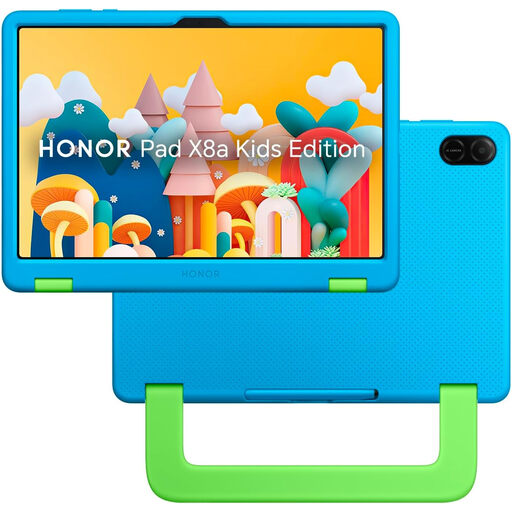
HONOR X8A Kids 11-inch WiFi, 128GB, Space Grey
Consider this model if you want a child-oriented interface: its description presents Kids Mode and configurable child access. Check the exact account setup, Android version and intended remote-control functions before relying on them.
11-inch model with WiFi and 128GB storage.
View on Joybuy
 No image available
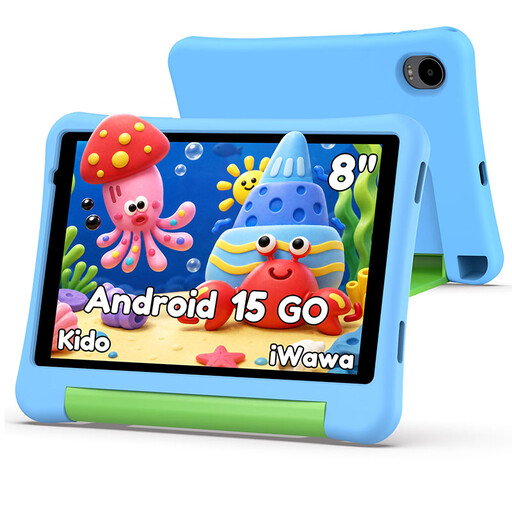
Alldocube Kido 8-inch tablet with blue case, 3GB+32GB
Consider this child-oriented tablet if a protective case is part of your household setup. Its title lists a child lock, but check the available controls, separate-account options and Family Link compatibility for this model before choosing it for supervision.
Android 15; 8-inch display; 3GB RAM and 32GB storage. The title lists a blue protective case and states that no adapter is included, so check that you have a compatible charging adapter.
View on Joybuy
Questions about supervised tablets
Can a child use an iPad without sharing my Apple Account?
Yes. Apple Support says a child should have their own Apple Account; set up Family Sharing and add or create the Child Account there to use the relevant family controls.
Can I manage a child’s Android tablet from an iPhone?
Google says parents can use the Family Link app on an iPhone or iPad to manage a supervised device remotely. The child still needs a supervised Google Account on a compatible Android tablet; check the functions available on that device.
What Android version do Family Link screen-time limits need?
Google says screen-time limits require Android 7 or later. System apps cannot have app limits, so check the tablet’s version and the particular apps you intend to limit.
Are child modes and parental controls enough by themselves?
No. UK government guidance says parental controls cannot address everything: check that settings work before handover, consider other ways the child goes online and keep reviewing the arrangement together.


