Choose the account and parental-control ecosystem before choosing the hardware for a child who plays online. Look for a separate child account, suitable age settings, communication controls and purchase approvals that your household can maintain. A console, tablet or computer may each meet those needs, but controls can depend on the account, browser, store or individual game; Nintendo Switch restrictions also apply to the console rather than to each user.
Who needs to check these controls?
Parents managing online chat and multiplayer
If a child plays with friends or other players, the decision goes beyond whether a device runs the game. Check how its child account handles contacts, communication and multiplayer, as well as the game’s own settings.
Families setting routines and purchase approvals
Carers who want limits on play time, content and child-initiated purchases need to know which settings an adult can manage and which store or service each approval covers.
Households sharing a device across ages
When siblings or adults use the same hardware, find out whether restrictions follow each child account or apply to everyone using the device. Nintendo says Switch parental controls are set for the console, not for individual users.
What matters when choosing?
Start with where the child will play, then check whether the account setup and controls work for the people sharing that device.
Console or handheld console
Consider when: Gaming on a dedicated device is the main use, and the household can set up its family accounts and online-play rules.
Trade-off: PlayStation uses separate child accounts, while Nintendo says Switch restrictions apply to the whole console; some online games also require a service membership.
Tablet
Consider when: The child will use games alongside other apps and the family can maintain a supervised child account.
Trade-off: Apple’s remote family controls require Family Sharing, while Google Play purchase approvals cover Google Play billing rather than every payment route.
Computer or laptop
Consider when: A Windows computer will also be used for gaming and the household wants Microsoft family-account controls.
Trade-off: Microsoft web filtering depends on account sign-in and supported browsers; a child with administrator access can change Family Safety settings.
| Concern |
What to check |
Who this matters to |
| Child accounts and age settings |
Check for a separate child account, an adult manager and age settings that apply to the child. |
When my child starts playing online, I want their own age and account to shape what they can access, rather than using my adult profile; around 31% of consumers put child-account and age settings first. |
| Communication and multiplayer |
Check controls for chat, friends and multiplayer, then review the intended game’s own settings. |
If my child plays with people outside our household, I want to decide who can contact them; around 31% of consumers prioritise communication and multiplayer controls. |
| Time, content and purchases |
Check whether limits cover the device or individual apps, and which billing system purchase approvals cover. |
Keeping play within a household routine while limiting unsuitable content and unapproved purchases matters to me; around 25% of consumers put these controls first. |
| Shared-device setup |
Check whether restrictions apply per child or per device. On Windows, check account permissions and browser requirements. |
When younger and older players share a device, I need to know whether the youngest child’s restrictions will also limit everyone else; around 13% of consumers put shared-device practicality first. |
Setup mistakes to avoid
-
Expecting an adult account to work as a child account
PlayStation, Apple and Google tie important child-specific controls to supervised accounts or a family setup. Letting a child use an adult account can undermine the age and approval settings the household intended to use.
Before choosing a device, check which adult and child accounts its ecosystem requires, and register the child with the correct age.
-
Assuming one filter covers every browser and payment route
Microsoft says Family Safety web filtering requires a signed-in account and supported browser. Google says Family Link purchase approvals apply only to Google Play billing.
Check the browser, game launcher and store the child will actually use, rather than relying on a device-level setting alone.
-
Overlooking controls shared by every console user
Nintendo says Switch parental controls apply to the console, not to individual users. Restrictions chosen for a younger child therefore affect others using that console.
For a mixed-age household, set the console restrictions with the youngest regular player in mind and check which additional Nintendo Account family settings apply.
-
Assuming online play needs only the device and game
PlayStation says most PS4 and PS5 online multiplayer games require PlayStation Plus. Nintendo says many Switch and Switch 2 games require Nintendo Switch Online, although there are exceptions.
Check each intended game’s online-play requirement before settling on a platform.
Relevant ecosystems and brands
PlayStation
A console ecosystem built around an adult family manager and separate child accounts.
- PlayStation says family managers can restrict child-account communication, play time, content and spending.
- Each child needs a separate account for PlayStation online services. PlayStation says most PS4 and PS5 online multiplayer games also require PlayStation Plus.
Xbox
A console ecosystem with Microsoft family settings that can also be relevant to a household using Windows.
- Xbox describes family settings for screen time, content, spending requests, friends, communication and multiplayer.
- Microsoft web filtering depends on signed-in accounts and supported browsers. On Windows, Microsoft warns that a child with administrator access can change Family Safety settings.
Nintendo
A Switch or Switch 2 route for households considering portable and home-console gaming.
- Nintendo describes app-based restrictions for play time, age ratings and communication.
- Switch parental controls apply to the console rather than each user. Nintendo says many online games require Nintendo Switch Online, with exceptions.
Apple
An iPad ecosystem for a child using games alongside other apps.
- Apple describes Screen Time controls for downloads, purchases, communication, apps and content.
- Remote family management requires Family Sharing and the child’s own Apple Account; individual games may have separate online-community settings.
Google
Family Link supervision for a child’s supported Android device or Chromebook.
- Google describes supervised-account, app and screen-time controls, alongside restrictions for its services.
- Google Play purchase approvals apply to Google Play billing, not automatically to payments through other stores or services.
Tablet choices on Joybuy
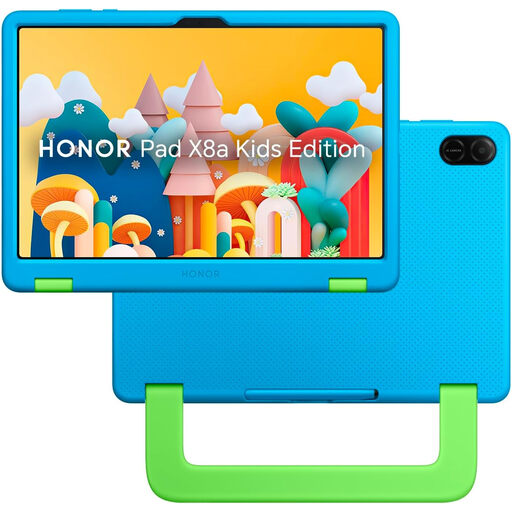
This tablet is a device choice for families considering games alongside children’s apps. Before choosing it for online play, check how its account setup and each intended game handle chat, multiplayer and purchases.
 No image available
HONOR X8A Kids 11-inch WiFi tablet, 128GB, Space Grey
For families considering a child’s tablet for games and other apps. Check the intended games’ communication settings and which purchases the child-account setup can manage.
11-inch display; WiFi; 128GB storage.
View on Joybuy
Common questions
Does my child need a separate account for parental controls?
Use a separate child account where the chosen ecosystem requires one for child-specific controls. PlayStation requires separate child accounts for its online services; Apple’s remote family controls require the child’s own Apple Account in Family Sharing, and Google Family Link supervision is tied to the child’s Google Account.
Will console controls prevent contact from strangers in every game?
Do not rely on console settings alone to govern every game’s communication. Check the child account’s friend, chat and multiplayer restrictions, then review the intended game’s own chat and cross-network settings before online play.
Does online multiplayer require a subscription?
That depends on the platform and game. PlayStation says most PS4 and PS5 online multiplayer games require PlayStation Plus; Nintendo says many Switch and Switch 2 games require Nintendo Switch Online, but identifies exceptions including some free-to-play games. Check the intended game’s requirements.


