Choose a white-and-wholemeal wrap if you want both types of flour in the recipe; choose a plain white wrap if that is the format you want, or compare wholemeal-labelled packs if their ingredients and fibre figures matter more to you. For a children’s party, decide on portion size and check the exact pack rather than relying on its name or colour. The cited blended wraps contain wheat, so check guests’ requirements, fillings and serving arrangements before preparing food for anyone with an allergy.
Who is choosing the wraps?
Organisers planning portions
Mini wraps can be served as smaller individual portions, while regular wraps leave more room for a filling. Mission’s Wheat & White range includes both sizes, so check the number and size of wraps against your serving plan.
Organisers comparing recipes
If the balance of flours or fibre figure matters to you, read the exact pack’s ingredients and compare nutrition per 100 g. A wholemeal product name does not, by itself, tell you whether the recipe also contains white flour.
Organisers accommodating allergies
Ask a child’s parent or carer about the foods they need to avoid. Check wraps and fillings together, and plan how food will be prepared and served: Leeds Teaching Hospitals NHS Trust warns that buffet food can come into contact with allergens through shared plates and cutlery.
What should you check before buying?
Start with the portions you plan to serve, then compare the exact recipes and instructions for the packs on your shortlist.
| Priority |
What to check |
Your needs |
| Portion size |
Check the wrap count and pack weight. Sainsbury’s lists Mission Wheat & White as six mini wraps in a 186 g pack or six regular wraps in a 367 g pack. |
I’d use smaller wraps for individual portions; for larger filled wraps, I’d check the regular size. |
| Flour blend |
Read the ingredient list rather than judging by colour or name. Sainsbury’s lists white and wholemeal wheat flour in Mission Wheat & White; M&S and Asda also list both flour types in the cited wholemeal-labelled wraps. |
If I’m buying a white-and-wholemeal blend, I want to confirm that the exact recipe contains both. |
| Fibre comparison |
Compare figures on the same per-100 g basis. The cited labels give 3.3 g for Mission Wheat & White, 7.2 g for M&S Wholemeal Tortilla Wraps and 6.9 g for The Bakery at Asda Wholemeal Wraps. |
Fibre is part of my choice, so I’ll compare labels without assuming that differently sized wraps have the same amount per piece. |
| Allergens and serving |
Check the current labels of the wrap and every filling. The cited blends contain wheat; Leeds Teaching Hospitals NHS Trust also advises care with cross-contact at buffet parties. |
A guest needs to avoid a particular ingredient, so I’ll confirm their requirements with their parent or carer and arrange food and serving equipment accordingly. |
| Preparation ahead |
Follow the chosen wrap’s opened-pack directions and the fillings’ storage instructions. Asda specifies refrigeration and use within 24 hours after opening for its cited wraps; M&S specifies an airtight container and use within two days for its product. |
I’m preparing food before the party, so the opening time, storage and journey to the venue all affect which pack is practical. |
Common planning mistakes
-
Assuming “wholemeal” means no white flour
The cited M&S and Asda wholemeal wraps list both wholemeal and white wheat flour. Sainsbury’s separately specifies 62% wholemeal wheat flour for its cited own-label wraps; the product names do not describe identical recipes.
Read the ingredients on the pack you intend to serve, then use its per-100 g label if you want to compare fibre.
-
Comparing mini and regular wraps per piece alone
Sainsbury’s lists 3.3 g fibre per 100 g for both cited Mission Wheat & White sizes, but 1 g per mini wrap and 2 g per regular wrap. The individual wraps are different sizes.
Use per-100 g figures to compare the labelled recipes and per-wrap figures to plan portions.
-
Checking the filling but not the shared platter
A suitable filling does not change the wheat ingredients in a wrap. Leeds Teaching Hospitals NHS Trust also warns about allergen cross-contact through plates and cutlery at buffet parties.
Confirm the guest’s requirements with their parent or carer, check the complete food and plan separate preparation or serving where needed.
-
Applying one pack’s storage directions to another
The cited Asda wraps specify refrigeration and use within 24 hours after opening; the cited M&S wraps specify an airtight container and use within two days.
Plan when to open the chosen pack and follow its own directions, as well as those for the fillings.
Brands and ranges to compare
Mission
The cited Wheat & White range offers mini and regular six-packs for different portion plans.
- Sainsbury’s lists white and wholemeal wheat flour in the cited products, with 3.3 g fibre per 100 g for both sizes.
- Both cited sizes contain wheat; their per-wrap nutrition differs because the wraps are different sizes.
M&S
Its cited Wholemeal Tortilla Wraps contain a blend of white and wholemeal flour despite the wholemeal name.
- M&S lists 7.2 g fibre per 100 g for this product.
- Once opened, M&S directs shoppers to use an airtight container and eat the wraps within two days.
Asda
The cited Bakery at Asda eight-pack is another wholemeal-labelled wrap made with wholemeal and fortified wheat flour.
- Asda lists 6.9 g fibre per 100 g for this product.
- Its label gives wheat and additional precautionary cereal-allergen information, and directs refrigeration and use within 24 hours after opening.
Sainsbury’s
Its cited own-label wholemeal wraps offer a recipe comparison; its wrap range also includes plain and mini formats.
- Sainsbury’s lists 62% wholemeal wheat flour and 10.1 g fibre per 100 g for the cited wholemeal eight-pack.
- That product carries additional manufacturing-related allergy warnings. Check its current label rather than treating it as the same recipe as a Wheat & White wrap.
Old El Paso
Its cited whole-wheat tortillas provide a different recipe to compare with white-and-wholemeal blends.
- Old El Paso lists 68% whole wheat flour and 5.5 g fibre per 100 g for its cited eight-pack.
- The manufacturer advises that reformulation can change ingredients, nutrition or allergens, so check the current pack.
Tesco
Tesco’s cited wrap range includes own-label plain white, mini white and wholemeal formats, alongside Mission Wheat & White.
- Those listed formats offer different portion and recipe choices to check.
- Compare the exact product labels; a range listing does not make the Tesco own-label wraps equivalent to Mission’s blend.
A Joybuy option for a different requirement
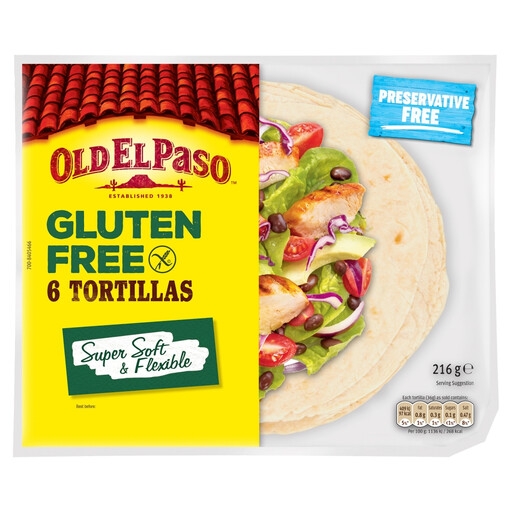
The product below is a gluten-free tortilla wrap to consider when planning food separately for a guest who needs to avoid gluten. It is not a white-and-wholemeal wheat blend; check its current label, fillings and suitability for that guest’s specific allergies.
 No image available
Old El Paso Gluten Free Tortilla Wraps 216g
A gluten-free wrap option for planning a separate serving, rather than a mixed-flour wheat wrap. Check the current pack and every filling against the guest’s requirements, particularly if they have more than one allergy.
View on Joybuy
Questions about serving party wraps
Does Wheat & White mean gluten-free?
No. Sainsbury’s ingredient listings for the cited Mission Wheat & White wraps include wheat flour and wholemeal wheat flour. For a guest who must avoid gluten, check a separately suitable product’s current packaging and all the fillings.
Do I need to cook tortilla wraps before filling them?
Follow the directions on the pack you choose. The cited Mission listings provide optional warming methods; warming a wrap does not replace the storage instructions for a chilled filling.
Can I prepare filled wraps before travelling to the party?
Yes, if you can follow the chosen wrap’s opened-pack directions and the fillings’ storage requirements throughout preparation and travel. For packed food that needs keeping cool, East Lancashire Hospitals NHS Trust advises refrigeration until departure and transport in a cool bag with an ice pack.
What should I check when a child with an allergy is attending?
Ask their parent or carer which foods must be avoided, then check the current labels of both wraps and fillings. Plan preparation and serving too: Leeds Teaching Hospitals NHS Trust warns that shared plates and cutlery can cause cross-contact at buffet parties.
What changes if the wraps are going into school?
Check the school’s allergy arrangements and any requirements for the child receiving the food before packing it. Department for Education allergy-safety guidance applies to schools in England; it does not establish one prohibited-food list for every school or private party across the UK.


