
24/7 Customer Support

Free returns

Same-day & Next-day Delivery

Quality Guaranteed

Unlock Your Welcome Offers: FREE Delivery | Up to 80% OFF | Free 30-day JoyPlus trial
Download the APP
Choosing children’s arts and crafts kits can seem straightforward until you compare age labels, materials, clean-up requirements and the amount of usable content. A low-priced box may contain only a few minutes of activity, while a colourful set may be unsuitable for a toddler because of small parts or difficult tools.
This guide helps parents, grandparents, carers, teachers and gift buyers compare kids’ colouring sets, DIY craft kits for kids and creative supplies for different ages and settings.
Washable ink can be easier to remove from skin and fabrics, but it does not mean every surface will remain mark-free. Ink left to dry, porous upholstery and painted walls may still be difficult to clean. Check the stated washability rating and plan to use a wipe-clean mat, washable tablecloth or protective clothing.
For travel or carpeted rooms, products designed to work only on dedicated paper can offer more controlled use than conventional felt-tip pens or paints.
A 24- or 72-colour set may look generous, but younger children may need chunky tools and simple activities rather than a large palette. Conversely, older beginners may quickly outgrow toddler colouring supplies with limited colour choices.
Consider the child’s grip, attention span, preferred activity and whether the kit includes enough paper, templates or projects to justify the price.
A craft kit labelled for children aged three or above may still include pointed tools, small pieces, ceramic parts or components that require adult supervision. Always read the product warning, recommended age and contents before buying.
For children under three, look for clearly age-appropriate washable crayons, large-format tools and activities without detachable small parts. Store all art supplies securely after use.
Toddlers generally benefit from jumbo crayons, round-barrel markers and short, easy-grip pencils. Chunky tools can be simpler for developing hands to hold than slim conventional pencils.
Older children and adults may prefer standard wooden coloured pencils with stronger cores, sharper points and a wider range of techniques, such as layering, hatching and shading.
For everyday drawing, check whether the ink is water-based, odourless and described as washable. A washable formulation may reduce clean-up, but fresh marks should still be wiped promptly with water where the instructions recommend it.
For mess-free art activities, water-reveal books and special-paper marker systems are practical choices. Water Magic books use a refillable water pen, while Colour Wonder markers are designed to show colour on their compatible paper rather than ordinary household surfaces.
A kit with multiple activity sheets, cards or pre-cut pieces can be more useful than packaging with a large-looking box but little content. For holidays, train journeys and restaurant visits, consider compact travel art activities with no batteries, glue or loose wet materials.
Teachers and larger families may find bulk scratch notes, multi-colour pencil tins or activity packs more suitable for repeated sessions.
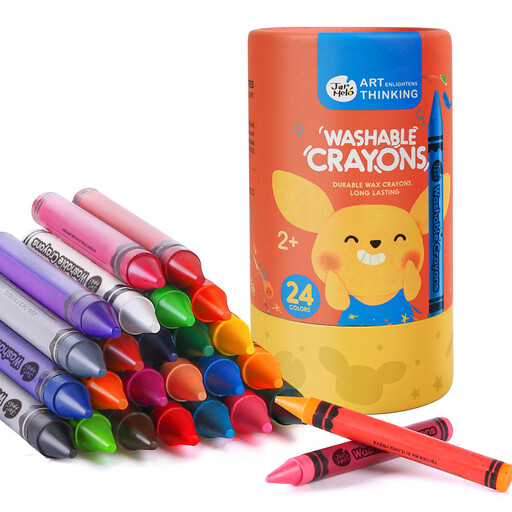
Why This Fits Their Persona: A practical starting point for toddlers, home use or classroom sharing, with 24 colours and a chunky format for small hands.
The product description specifies washable, non-toxic materials and a jumbo shape, addressing difficult grip and clean-up concerns. Marks should still be cleaned promptly.
24 assorted colours; chunky crayon shape; suitable for home, classroom and early creative play.
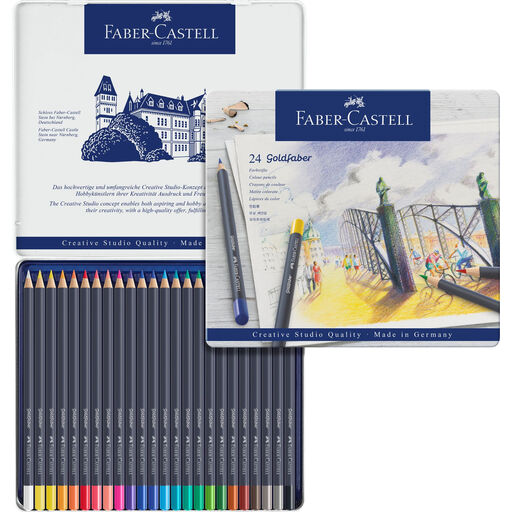
Why This Fits Their Persona: Suited to older children, students and adults who want more control for detailed colouring, sketching and creative projects.
Rather than selecting a set solely for colour count, this option lists a 3.3 mm lead and suitability for layering, hatching and blending.
Tin of 24; 3.3 mm lead; described as smudge-resistant and water-resistant for controlled drawing.
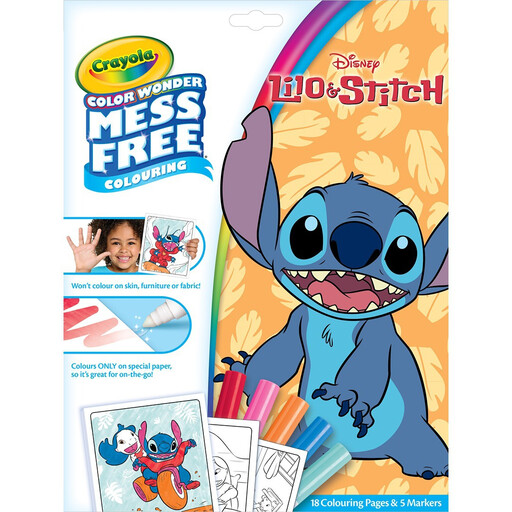
Why This Fits Their Persona: A compact choice for journeys, waiting rooms and quiet indoor play where avoiding marks on clothing, seats and tables matters.
The clear ink is designed to appear on special Colour Wonder paper, reducing the risk of ordinary ink marks. It is still labelled with a small-parts warning.
Compact format; themed colouring scenes; suitable from age three according to the listed product information.
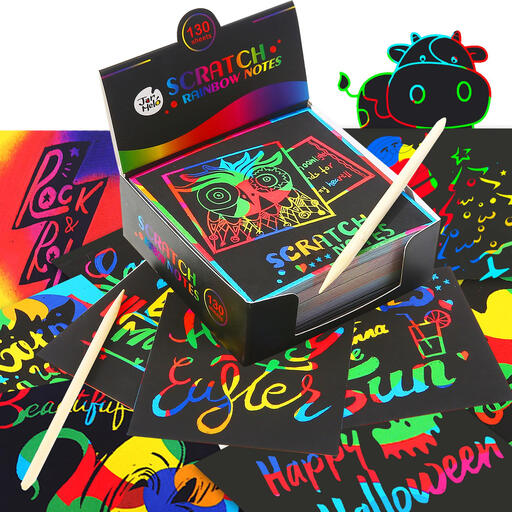
Why This Fits Their Persona: Useful for families, classrooms, parties and older beginners seeking a repeatable, dry activity with a substantial number of sheets.
The set provides 130 pre-cut sheets, avoiding the limited-project problem found in some small craft boxes. The wooden stylus requires supervision with younger children.
130 sheets; no wet paint or glue; includes a wooden stylus; listed for ages three and above.
Before ordering children’s arts and crafts kits, check:
We have compiled a complete, real-time list of products that fully satisfy these strict selection criteria and UK safety regulations.
Choose large, easy-grip tools such as jumbo washable crayons or dot markers for toddlers. Avoid products with small detachable components, pointed tools or complex instructions. Adult supervision remains important, even when a product is labelled washable or non-toxic.
Water-reveal colouring books, special-paper colouring sets and compact foil art kits are practical options because they avoid liquid paint and usually need limited equipment. Check the number of included pages and whether the kit contains loose pieces before packing it for a journey.
Recap pens tightly, store crayons and pencils in a dry container, keep paper flat and clean fresh marks promptly. For reusable water colouring books, allow pages to dry fully before closing them. Choosing a kit with refillable, reusable or high-volume contents can also reduce the cost per activity.