
24/7 Customer Support

Free returns

Same-day & Next-day Delivery

Quality Guaranteed

Unlock Your Welcome Offers: FREE Delivery | Up to 80% OFF | Free 30-day JoyPlus trial
Download the APP
Watching a child ride their first bike is a milestone moment. But choosing the right one can feel overwhelming. The market is filled with options and it's easy to fall into common traps that lead to frustration for both you and your little one. As the Joybuy Product Recommendation Officer, my role is to help you navigate these choices with practical, objective advice, ensuring you find a safe and enjoyable bike that's worth your investment.
Before you start browsing, let's look at the most common pitfalls that catch parents out:
To make an informed decision, focus on these three non-negotiable factors. Getting these right is more important than any flashy accessory.
While manufacturers provide age and height guides, the single most important measurement for a safe fit is your child's inseam. This is the distance from the floor to their crotch.
Wheel sizes like a 14 inch kids bike or a 16 inch kids bike are general indicators, but always cross-reference with the inseam and seat height measurements.
The material of the frame has a significant impact on the bike's weight and your child's riding experience.
Understanding the brakes is crucial for safety.
Based on these practical criteria, here are a few options matched to different needs and stages of a child's cycling journey.
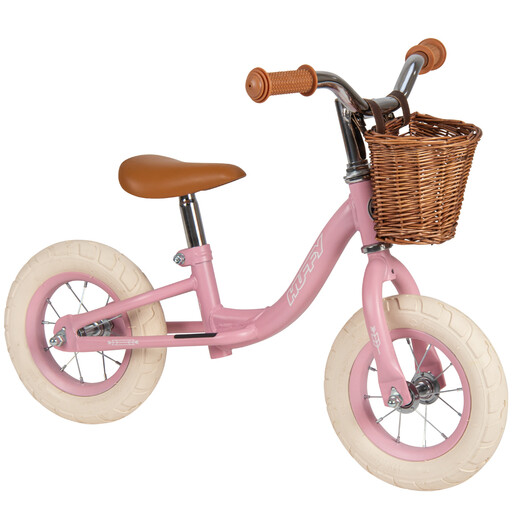
Why This Fits Their Persona: This is an ideal toddler bike for building core skills. The focus is purely on balance and steering, which are the hardest parts of learning to ride. Its charming vintage look and simple design make it approachable and fun for the youngest riders.
As a dedicated balance bike, it completely sidesteps the "stabiliser trap" by teaching proper balance from day one. Its lightweight frame avoids the "heavy bike" pitfall, making it easy for a small child to manage.
Focuses on developing coordination and balance skills. The sturdy but light frame is designed specifically for children from age 2, ensuring it is easy to handle.
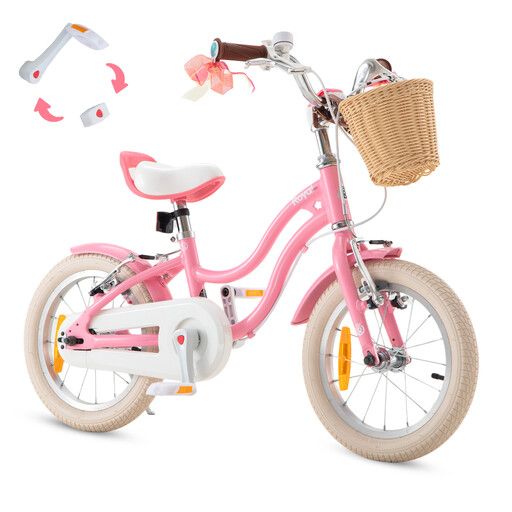
Why This Fits Their Persona: For the parent seeking maximum value and versatility, this bike offers a 2-in-1 design. It functions as a balance bike and can be converted to a pedal bike without tools, thanks to a quick-release crank system. This is a practical choice for a child's entire learning journey.
This design directly addresses the "grows with them" myth by providing two distinct functions in one frame. It also avoids the stabiliser issue by allowing a child to master balance first, then add pedals when they are ready.
Features a patent-pending 2-in-1 crank system for tool-free conversion. The premium aluminium frame is lightweight (9.2kg), making it easy to control in both modes.
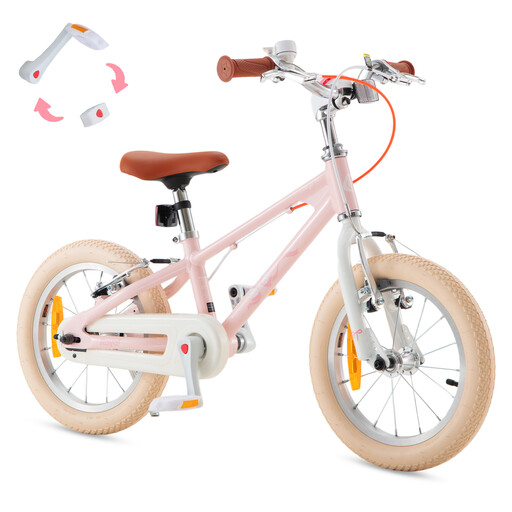
Why This Fits Their Persona: For a child who has mastered balancing and is ready for a more capable pedal bike, this 16 inch kids bike is an excellent step up. It's one of the lightest options available, making it perfect for longer rides in the park. The appealing pink bike for girls design with a basket is a popular choice.
Its ultra-light aluminium frame (net weight 7.8 kg) is a direct counter to the "heavy bike" pitfall, promoting confidence and control. The height-adjustable saddle and handlebars provide a genuine solution to the "grows with them" problem.
Extremely lightweight frame for easy handling. Equipped with dual hand V-brakes, which helps children master the braking system they will use on future bikes.
We have compiled a complete, real-time list of products that fully satisfy these strict selection criteria and UK safety regulations.
The most reliable method is to measure their inseam. Have your child stand straight against a wall with their shoes on. Place a thin book between their legs, spine up, and raise it gently until it meets their crotch. Measure the distance from the top of the book's spine to the floor. Compare this measurement to the bike's minimum seat height to ensure a proper fit.
For developing core cycling skills, a balance bike is widely considered a more effective starting point. It isolates the skill of balancing, which is the most challenging part of learning to ride. Children who start on balance bikes often transition to a pedal bike more quickly and confidently, sometimes skipping stabilisers altogether.
This depends entirely on their growth and confidence, not their age. A child is ready to move up a size when they have nearly maxed out the seat and handlebar height on their current bike. When they sit on the larger bike, they should still be able to touch the ground with at least the balls of their feet for safety. Rushing to a larger size can make the bike difficult to control and unsafe.