
24/7 Customer Support

Free returns

Same-day & Next-day Delivery

Quality Guaranteed

Unlock Your Welcome Offers: FREE Delivery | Up to 80% OFF | Free 30-day JoyPlus trial
Download the APP
Choosing children's building toys can be harder than it appears. A colourful box may suggest hours of creativity, yet the actual play value can depend on age suitability, piece size, storage and how easily a child can build without constant adult help.
For parents, grandparents and gift buyers, three common traps are worth avoiding:
The right choice balances the child’s age, interests, available space and preferred style of play.
Always check the manufacturer’s recommended age and the warning label. Building toys containing small pieces should not be given to children below the stated age. For example, the LEGO Friends and LEGO Disney sets listed here carry small-parts choking warnings and are designed for children aged 4+, 6+ or 9+, depending on the model.
For children aged 3 to 5, look for larger components, simple construction and easy-to-hold shapes. Magnetic building blocks may be suitable from age 3 when the product is clearly labelled for that age group, but adults should still inspect pieces regularly. Do not use any magnetic toy if a tile is cracked, split or loose.
ABS plastic is commonly used in magnetic building blocks and construction toys. Smooth or rounded edges can make pieces more comfortable to handle, but buyers should still check the product information for:
A product description alone should not replace checking the physical packaging and instructions. Keep magnetic pieces away from very young children and seek medical advice immediately if a magnet may have been swallowed.
Think about where the toy will be used and stored. A 150-piece set can offer more scope for group play, but it also needs a container and enough floor or table space. A compact 58-piece set with a storage pouch may be more practical for holidays, visits to grandparents or small bedrooms.
Dimensions matter for finished models, too. The LEGO Friends Nature Glamping Cabin measures over 13 cm high, 14 cm wide and 8 cm deep, while the LEGO Disney Princess Cinderella Animal Friends Castle measures over 18 cm high, 22 cm wide and 9 cm deep. Checking these figures helps avoid an unsuitable display or storage footprint.
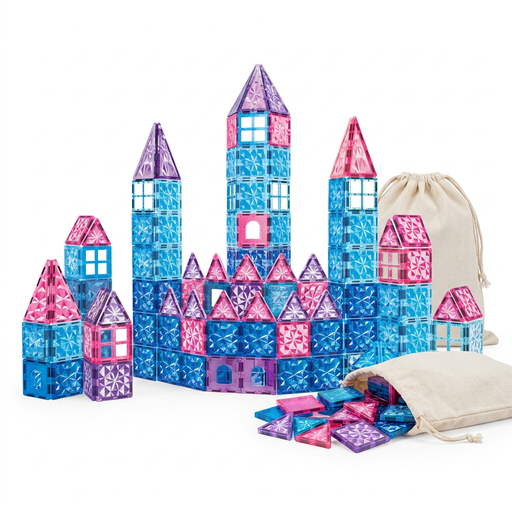
Why This Fits Their Persona: A manageable starter collection for families wanting to introduce magnetic building blocks without committing to a large set. The storage pouch also suits travel, visits and tidy-up routines.
The 58-piece count is clearly stated, so buyers can set realistic expectations instead of assuming a large construction collection. The pouch helps reduce misplaced pieces.
Diamond-surface tiles, reinforced magnets and a stated ABS construction. The set introduces basic shapes, colours and simple structures.
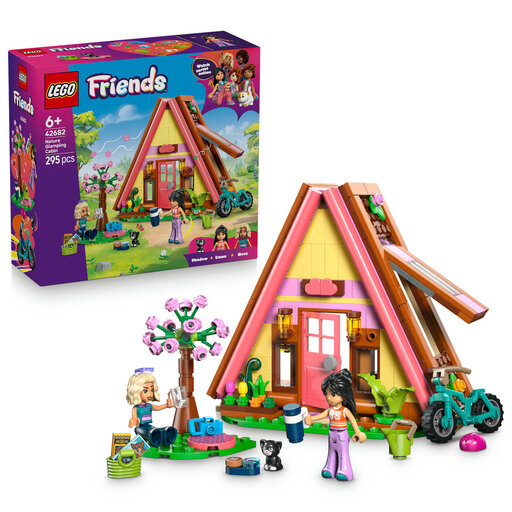
Why This Fits Their Persona: Suitable for children aged 6+ who enjoy guided construction combined with character-led role play, nature themes and detailed accessories.
It offers more than a decorative model: the cabin includes beds, a kitchen, garden, mountain bike, mini dolls, pet figure and storytelling accessories.
Contains 295 pieces, includes pictorial and 3D app instructions, and creates a 13 cm-high A-frame cabin with multiple play areas.
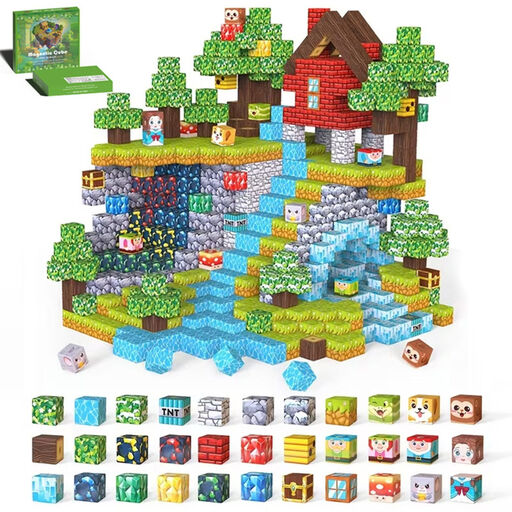
Why This Fits Their Persona: A practical match for children from age 3 who repeatedly build, rebuild and share construction play with siblings or friends.
The larger 150-piece format gives regular builders more components to combine, reducing the need to buy several small starter sets.
The product is described as an ABS construction toy with rounded edges and a natural design, with scope for spatial and fine-motor play.
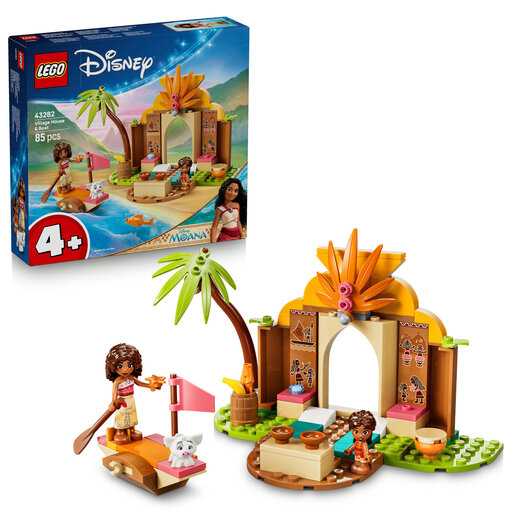
Why This Fits Their Persona: A suitable birthday-gift direction for Disney fans aged 4+ who prefer accessible building followed by pretend play.
Starter Bricks and pictorial instructions address the frustration trap for younger builders, while the house and boat provide more than a single display model.
Contains 85 pieces, two mini dolls and a Pua figure, with a rotating palm tree, kitchen, sleeping area and removable-oar boat.
We have compiled a complete, real-time list of products that fully satisfy these strict selection criteria and UK safety regulations.
For children aged 3 to 10, the most suitable choice will change quickly as confidence develops. A younger child may need larger parts and adult support, while an older child may prefer detailed models, more complex instructions or a set that can connect with an existing collection.
Some are labelled for children from age 3, but suitability depends on the individual child and the product design. Check the recommended age, inspect the magnets and supervise play. Keep pieces away from children who still put objects in their mouths.
Many construction sets do not require batteries. Character playsets with lights or sounds may need them; for example, the Mickey Mouse Deluxe Clubhouse Playset requires three AAA batteries, which are not included. Battery-free sets are simpler for travel and do not create ongoing battery costs.
Use a lidded container or the supplied storage pouch, separate small figures from standard pieces and check the floor after play. Store magnetic tiles flat or in their pouch, and remove any damaged component before the next play session.