
24/7 Customer Support

Free returns

Same-day & Next-day Delivery

Quality Guaranteed

Unlock Your Welcome Offers: FREE Delivery | Up to 80% OFF | Free 30-day JoyPlus trial
Download the APP
Choosing children's dress-up costumes can look simple until you compare sizing, fabrics, accessories and safety information. A costume that appears impressive online may be uncomfortable after ten minutes, difficult to wash or unsuitable for the child’s actual age.
For UK parents, grandparents and gift-givers, the sensible approach is to match the costume to the child, occasion and expected frequency of use. Whether you are looking for kids' fancy dress costumes for Halloween, a World Book Day outfit, a birthday present or everyday imaginative play, these checks can help prevent wasted spending.
Age ranges are useful starting points, but children of the same age can have noticeably different heights and builds. A costume labelled “3–4 years” may fit one child comfortably and feel restrictive on another.
Check the seller’s size information where available, and consider the clothes the child will wear underneath. This is particularly relevant for kids' Halloween costumes, which may need to fit over a jumper or warm layers during outdoor trick-or-treating.
A costume can include masks, headpieces, chokers, charms, chains or small pretend-play tools. These details may complete a character look, but they can also be easy to lose or unsuitable for younger children.
Look carefully at what is included and whether accessories are detachable. Product warnings should be read before purchase, especially where the listing identifies small parts, choking hazards or a need for direct adult supervision.
Many children's character costumes use polyester, plush fabric, printed panels or attached trims. These materials may require surface cleaning, sponge cleaning or hand washing rather than a standard washing-machine cycle.
If the costume is intended for repeated use, review the care instructions before ordering. A surface-washable outfit may be practical for occasional parties, while a machine-washable role-play set may better suit regular play.
The product’s stated age range should be treated as a safety and fit guide, not merely a marketing label. For example, a costume for children aged 1–2 years may have a different construction from one designed for children aged 7–8 years.
For toddler dress-up costumes, prioritise simple fastenings, easy access for changing and freedom around the arms and legs. For older children, adjustable ties, elasticated sections or removable layers can make the costume more adaptable.
Soft polyester is common in children's character costumes because it is lightweight and can accommodate printed designs. However, the garment should still allow the child to walk, sit, dance and play without catching at the feet or restricting the shoulders.
For active occasions such as school events, carnivals and themed parties, look for flexible clothing, comfortable waistbands and accessories that do not interfere with movement. A costume that looks detailed but is difficult to move in may receive little use.
Check whether the product includes small accessories, cords, masks or detachable components. Follow the product warning, remove all packaging and keep costumes away from fire, candles and naked flames.
Costumes should be used according to the stated age guidance and under adult supervision where recommended. Battery-operated accessories also require extra care: keep new and used batteries away from children and follow the manufacturer’s disposal guidance.
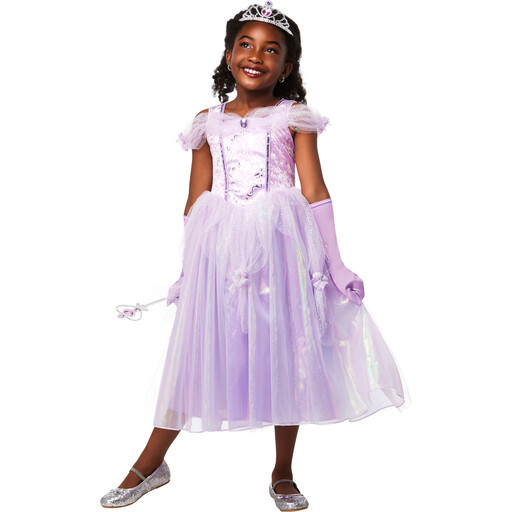
Why This Fits Their Persona: A straightforward choice for a first princess outfit, particularly for home play, birthday parties or occasional fancy-dress events.
The listing states the intended 3–4 years range, lightweight fabric and simple fastenings. Surface washing guidance helps set realistic care expectations.
Purple princess styling, soft lightweight fabric and a design intended for easy dressing.
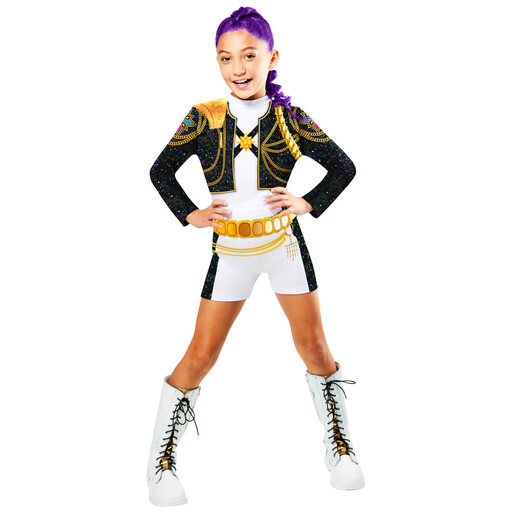
Why This Fits Their Persona: Suits older children who want a more complete character transformation for dance-inspired play, parties or fan-themed events.
The set lists its individual components, including the jacket, printed top, shorts, chains, belt and leg warmers, so buyers can see what is actually included.
A multi-piece outfit in soft 100% polyester, with a golden performance jacket and flexible shorts.
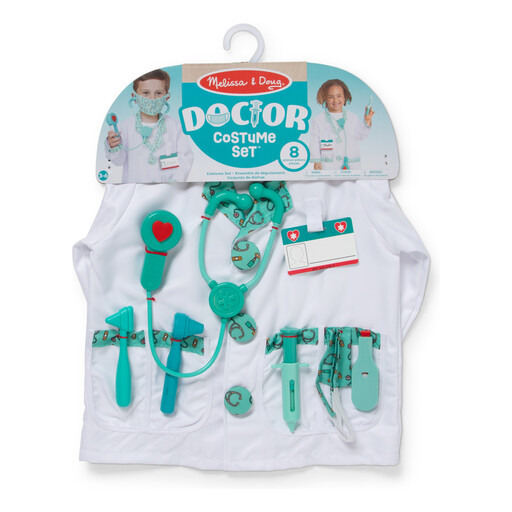
Why This Fits Their Persona: Designed for children who return to role-play regularly and enjoy structured doctor, nurse or caring scenarios rather than a single event.
The listing identifies the intended fit for children from age 3 and explains that the jacket is machine washable, while accessories can be wiped clean.
Includes a coat, mask, thermometer, reflex hammer, ear scope, syringe, name tag and sound-effect stethoscope.
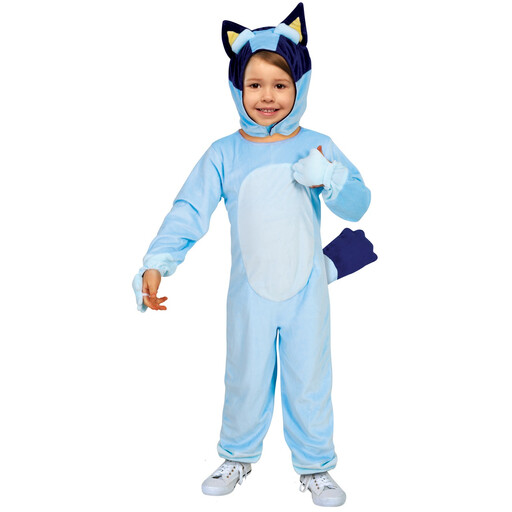
Why This Fits Their Persona: A cosy option for younger children who prefer familiar character play at home, on playdates or at relaxed themed gatherings.
The detachable headpiece is identified separately, and the product warning recommends direct adult supervision and keeping the costume away from fire.
Soft jumpsuit construction, detachable plush headpiece and a character design suitable for active imaginative play.
We have compiled a complete, real-time list of products that fully satisfy these strict selection criteria and UK safety regulations.
Start with the stated age range, then compare the garment measurements with the child’s height and build if provided. Avoid buying several sizes too large, as loose hems, sleeves or accessories can make movement harder. For colder UK events, allow room for a thin layer without making the costume excessively loose.
Follow the individual care label. Some costumes are surface washable or sponge clean only, while others allow hand washing or machine washing. Remove detachable accessories first where appropriate, and allow the costume to dry fully before storing it.
Many are suitable for imaginative play, but suitability depends on the product warning, age guidance and construction. Supervise younger children around small parts, masks, cords and detachable headpieces. Store accessories securely after play and keep all costumes away from open flames and heat sources.